

The global scientific community focuses its attention on an astronomical event with a set date: an asteroid, provisionally designated as 2023 DW, has a trajectory that indicates a possibility, albeit remote, of impact with the lunar surface in 2032. Embora the probability of collision is low and constantly revised with new observations, the mere prospect mobilizes researchers and space agencies around a rare opportunity to study and understand celestial phenomena.
This hypothetical scenario, which has been monitored by astronomers since its detection, offers fertile ground for improving orbital and impact prediction models. Mais than a risk, the potential occurrence represents an invitation to intensify space surveillance and the development of new observation tools. Lua, due to its proximity and lack of significant atmosphere, is a natural laboratory for directly observing the consequences of collisions.
Scientists seek more precise data to accurately determine the object’s trajectory. Qualquer impact, even a small one, on Lua, which is a geologically stable celestial body without atmospheric or erosive processes, can leave marks for millions of years, revealing information about the history of the solar system.
The asteroid 2023 DW and its trajectory
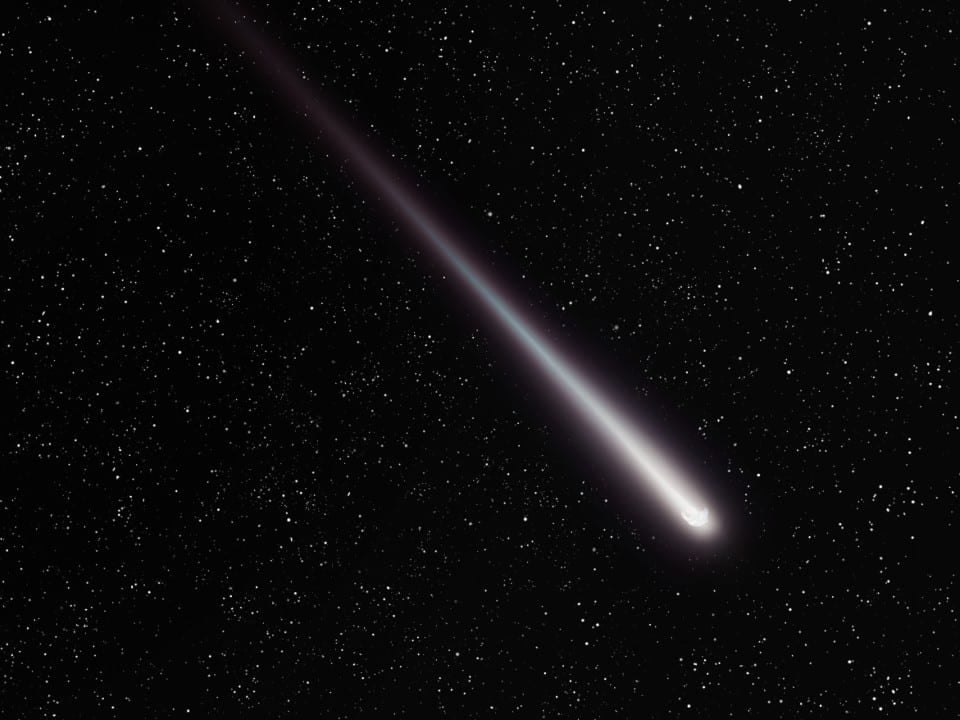
Asteroid 2023 DW was initially identified with an orbit that crosses that of Terra, and consequently, that of Lua. Desde its discovery, observatories around the world have dedicated time to refining the calculations of its trajectory, reducing initial uncertainties. With each new measurement, the margin of error regarding its path is reduced, allowing more accurate projections about the possibility of approach or impact.
Tracking objects like 2023 DW is crucial for planetary security, even if the primary focus in this case is Lua. Detailed analysis of their composition and characteristics through spectroscopy and other observational techniques can provide valuable information about asteroids near Terra, including the origin of rocky material in space and its evolution over time.
Window of opportunity for lunar science
The prospect of a lunar impact, although likely, opens a unique window of opportunity for planetary geology and astrophysics. By monitoring a collision event, researchers could collect real-time data on the energy released, the debris plume, and the formation of new craters. Tais observations offer a valuable counterpoint to studies of ancient craters and computer modeling.
This situation encourages the planning of future lunar missions with instruments capable of analyzing the impact site before and after. Understanding the behavior of lunar materials under extreme collision conditions could have implications for habitat construction and resource exploration on Lua, setting the stage for a more sustainable human presence.
Space observation challenges and technologies
Observing asteroids and predicting impacts requires cutting-edge technologies and a global monitoring network. Terrestrial and space-based Telescópios, such as Hubble and the future James Webb, play a key role in detecting and characterizing these objects. Além Additionally, advanced orbital calculation algorithms are constantly improved to process large volumes of astronomical data and project trajectories with greater precision.
The development of new reconnaissance missions, such as those employing small probes or CubeSat satellites, could be accelerated to study specific asteroids up close. Essas technologies would allow for a more detailed analysis of the surface, composition and density of 2023 DW, offering data that would be impossible to obtain from remote observations of Terra alone. The complexity of tracking requires a collaborative effort between different nations and institutions.
Historical precedents for celestial impacts
The history of the solar system is punctuated by countless celestial impacts, and Lua itself is a visual testament to this dynamic, with its densely cratered surface. Studying these cosmic scars reveals catastrophic events that shaped the worlds we know, including the formation of Terra itself and the emergence of life. Comparar what is expected from 2023 DW with past events helps to calibrate models and theories.
On a smaller scale, Terra and Lua are constantly hit by smaller meteoroids, many of which do not cause significant damage. However, larger events, such as the one believed to have caused the extinction of the dinosaurs, demonstrate the transformative power of cosmic impacts. Monitoring objects like 2023 DW is a way to learn more about the frequency and characteristics of these events.
Accumulated knowledge about past collisions, obtained through analysis of lunar rocks returned by Apollo missions and meteorite studies, is vital to interpreting data from an eventual impact in 2032. Cada event adds a piece to the puzzle of planetary evolution and the origin of essential elements and compounds.
The contribution of future lunar missions
With the renewed interest in lunar exploration, several missions are being planned and executed by space agencies from different countries. Programas like NASA’s Artemis aim to establish a sustainable human presence on Lua, and this initiative could benefit immensely from the opportunity to study a real-time impact. Instrumentos to be sent to Lua, including seismographs and high-resolution cameras, could be strategically positioned.
In addition to manned missions, robots and exploration vehicles are destined to map the lunar surface and analyze its composition. Information about the topography and geology of the location where an impact is possible would be crucial for predicting ejecta dispersal and crater formation. Esses data can help identify the best areas for future lunar bases, protecting them from similar events.
International collaboration in sharing observation data and coordinating future missions is a key element. With satellites in lunar orbit and rovers on the surface, the ability to record and analyze an impact would be unprecedented. Este type of research can deepen understanding of the internal dynamics of Lua and the formation of its crust.
Potential discoveries from the event
A lunar impact in 2032, if it occurs, could reveal information about the deepest layers of Lua, by exposing subsurface material that would normally be inaccessible. Analysis of the composition of the ejecta could offer clues about the lunar formation and the presence of resources, such as frozen water, in regions below the surface. Seria a natural excavation of gigantic proportions.
Furthermore, the event could generate seismic waves that would be detected by lunar seismographs, allowing scientists to obtain data on the internal structure of Lua, from its mantle to its core. The way these waves propagate through the celestial body would reveal details about its density and composition, improving current geophysical models and offering a clearer view of the evolution of Terra’s natural satellite.
International collaboration boosts research
The surveillance and study of objects close to Terra and Lua are efforts that have transcended national borders, uniting scientists and space agencies in a global collaboration. Compartilhar data and knowledge about asteroid 2023 DW is essential to maximize the chances of observation and extract the maximum learning from this possible event. The cooperation reflects a collective commitment to planetary security and the advancement of space science.



