
Djokovic beats Sinner in epic battle and disputes Australian Open title against Alcaraz By Thiago Lemos
6 min read
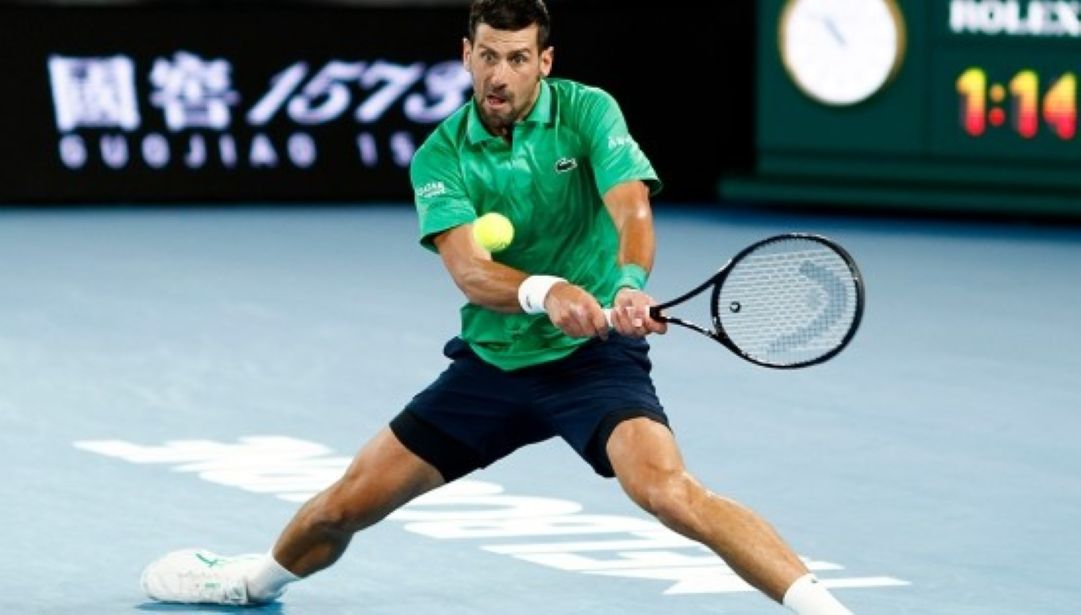 |
Novak Djokovic is back in the Australian Open decision after overcoming the current two-time champion and 9 minutes on Rod Laver Arena.
With the victory in Melbourne, the experienced 38-year-old player ended a negative streak of five consecutive defeats against the Italian, who occupies second place in the ATP. The triumph guarantees the tournament’s ten-time champion the chance to compete for his 11th Austrália trophy and the 25th Grand Slam title of his career, seeking to expand his historic record in the sport.
Classification was secured after a display of physical and mental resilience, where the Serb saved 16 of 18 break points throughout the match. The result puts Djokovic face to face with the current world number 1, Carlos Alcaraz, who advanced to the final after defeating the German Alexander Zverev in another five-set semi-final played on the same day.
- Novak Djokovic reaches his 39th career Grand Slam final.
- Sérvio maintained his 100% record in the semifinals at Australian Open.
- Head-to-head against Sinner now records 6 wins for the Italian and 5 for the Serbian.
- Men’s final will be played on Sunday, at 7:30 pm Melbourne local time.
Uh, yeah. Today was pretty cool.#AO26 pic.twitter.com/5YRWdtPQd2
— #AusOpen (@AustralianOpen)January 30, 2026
Technical balance and physical overcoming in Melbourne
The duel started with Jannik Sinner demonstrating the favoritism built in the last two years of dominance on the professional circuit. The Italian broke Djokovic’s serve in the second game of the match and quickly opened up a 3/0 lead, closing the first set in 38 minutes without facing any major difficulties.
The veteran’s reaction came in the second half, when Novak raised the level of his returns and achieved his first break in the fourth game. Mesmo under constant pressure, he saved crucial break opportunities in the sixth game and used his experience to level the match, igniting the crowd in the main stadium.
In the third set, balance prevailed until the tenth game, when Sinner took advantage of an unforced error from his opponent to close at 6/4. The scenario seemed unfavorable for the Serb, who showed signs of fatigue in the Australian heat, but the dynamic changed again at the beginning of the fourth stage with an early break in favor of Djokovic.
Serb’s resilience guarantees turnaround in decisive set
Djokovic’s strategy in the fourth set was based on shortening the points and taking more risks when going up to the net to avoid long exchanges at the back of the court. Ele confirmed his services with authority and, despite Sinner’s efforts to try to recover the deficit in the eighth game, the Serb maintained his focus to take the decision to the fifth set.
The final set was a test of nerves for both athletes, with Sinner wasting five break chances in the first games. Djokovic aproveitou a única oportunidade de quebra que teve no sétimo game, após uma dupla falta do italiano, e sacou para a vitória salvando três break points consecutivos quando perdia por 0/40 no oitavo game.
The victory was sealed on the third match point, provoking an effusive celebration from the tennis player who had not reached an Major final since Wimbledon 2024. The statistical performance showed that, although Sinner had more winners (72 against 46), the efficiency of
History of clashes and rivalry against Alcaraz
The reunion between Novak Djokovic and Carlos Alcaraz marks the dispute between two distinct generations that dominate the top of world tennis. The Spaniard leads the ranking and is coming off a victory over the Serbian in the semifinals of the US Open in 2025, while the Serbian beat his rival in the quarterfinals in Melbourne last year.
In overall history, Djokovic has a narrow advantage with five wins in nine matches played against the young 22-year-old talent. This Sunday’s final will carry significant historical weight as Alcaraz seeks to become the youngest man to complete the Grand Slam in his career by winning all four major tournaments.
For the Serb, the title represents the definitive consolidation of his longevity, and he could become the oldest champion of Era Aberta in Australian Open. Fitness will be the main focus for both finalists, as this year’s two semi-finals required a maximum effort of five sets to be set in Melbourne Park.
Preparation for Sunday’s decision at Rod Laver Arena
The tournament organizers confirmed that the men’s final will start at 7:30 pm, Melbourne local time, with a closed roof expected if temperatures exceed safety limits. Djokovic highlighted in an interview after the game that he will need “all the fuel possible” to face the physical intensity proposed by Alcaraz’s game.
Australian Open’s medical department monitors the physical condition of both players, as Alcaraz showed signs of cramps during the semi-final against Zverev. Djokovic, in turn, demonstrated gastric discomfort during the third set against Sinner, but stated that he was recovered for the decisive duel that ends the competition.
Recent statistics indicate that the winner of the first set in this rivalry has won around 75% of head-to-head matches played on fast courts. Sports analysts predict a tactical game, where Djokovic’s return ability will constantly test the Spaniard’s aggressive serve and drop shot variations.
Impact on records and world ranking scores
Regardless of the result of the final, Novak Djokovic guaranteed a return to the top 3 of the ATP rankings in the next official update. Caso wins the 11th title, it will reduce the points difference between Sinner and Alcaraz, keeping alive the dispute for the leadership of the season that is only in its first month of official competitions.
Achieving the 25th Grand Slam would further isolate the Serb as the biggest winner of all time in singles, surpassing the mark of Margaret Court. On the other hand, Alcaraz’s title would confirm the definitive change of guard in the sport, with Grand Slam’s ninth consecutive title won by him or by Jannik Sinner.
- Djokovic seeks his 105th victory in official matches at Australian Open.
- Alcaraz attempts his first title in Melbourne to complete the Majors collection.
- Prize money for the male champion exceeds the mark of 3 million Australian dollars.
- The final will be broadcast to more than 200 countries simultaneously on Sunday.
The final challenge against the new generation of tennis
Novak Djokovic described the feeling of reaching another final as “surreal”, especially after a year of 2025 without Grand Slam titles. The Serb highlighted that facing Alcaraz and Sinner in sequence in the same tournament is the biggest physical challenge that a tennis player can face today, given the ball speed imposed by young people.
The strategy for Sunday should involve variations in rhythm and intensive use of slices to take comfort from Alcaraz on the baseline. The Spaniard, known for his exceptional court coverage, will need to deal with the pressure of facing the biggest winner in the tournament’s history in his favorite “backyard”, where Djokovic has never lost a final.
The Australian public, which has a historically up and down relationship with the Serbian, showed massive support during the semi-final against Sinner. A full house is expected at Rod Laver Arena to witness what could be one of the last major clashes of Grand Slam between the Serbian legend and the Spanish phenomenon.
Tactical aspects that defined the semi-final against Sinner
Detailed analysis of the confrontation against Sinner reveals that Djokovic chose to play more on the court in the final sets to pressure the Italian’s second serve. Essa tactical change resulted in greater efficiency in returns, forcing Sinner to make mistakes in moments when the young player is normally solid.
Another determining factor was the use of the net, where Djokovic won more than 70% of the points in which he rose to volley or finish with smashes. Essa controlled aggression prevented Sinner from establishing the aggressive pace of play that led him to win the last five meetings between the two athletes on the circuit.
The experience in managing time between points also favored the Serb in moments of greatest heat and intense physical exhaustion. Ele soube usar os intervalos permitidos para recuperar o fôlego e desestabilizar o ímpeto do adversário, que parecia mais apressado para fechar o jogo quando liderava por dois sets a um na contagem geral.











