

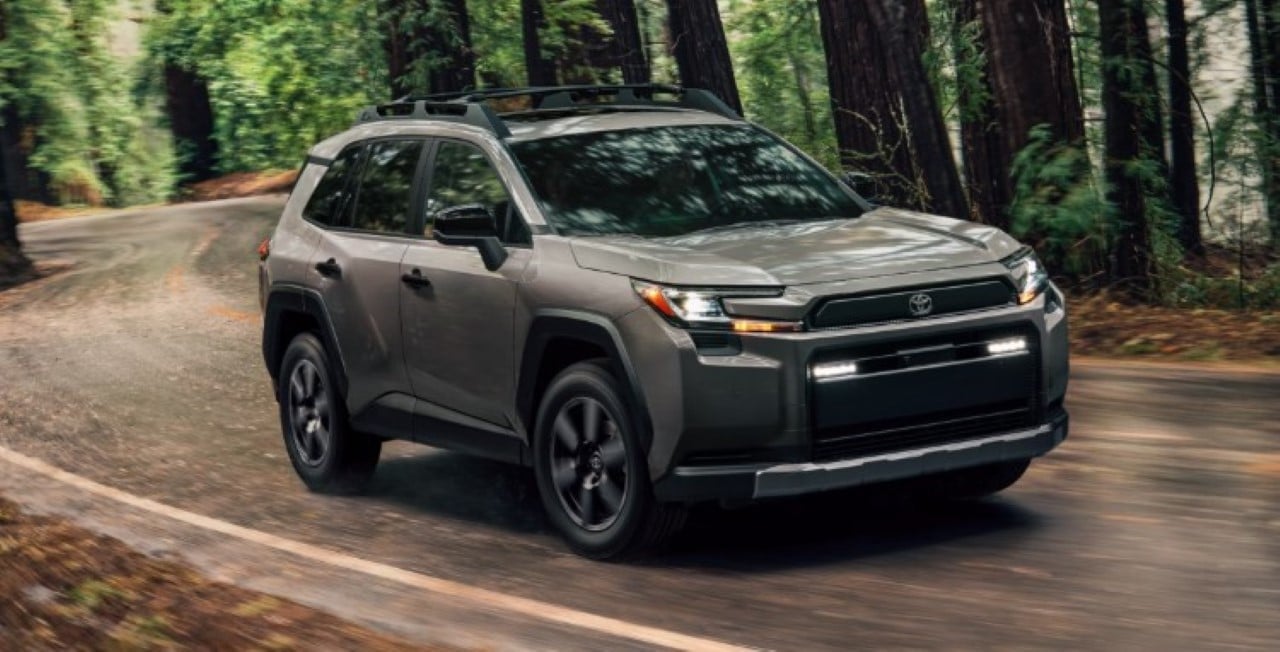
Toyota officially presented the sixth generation of the RAV4, one of the best-selling SUVs globally, which arrives with significant updates in terms of engine, technology and safety. The model reaffirms the Japanese brand’s commitment to electrification, with a renewed focus on hybrid and plug-in hybrid (PHEV) systems that offer more power and efficiency. With more than 15 million units sold since its launch in 1994, the RAV4 seeks to consolidate its leadership in the segment.
Orders for the new model are scheduled to begin in selected markets from January, with first deliveries expected in the northern hemisphere summer. The new generation arrives at a crucial moment, where the RAV4 regains its leading position in global sales after a period of strong competition from fully electric models. The Toyota strategy is clear: combine known reliability with a technological leap to attract both loyal customers and new consumers looking for an electrified and versatile vehicle.
The vehicle maintains its balanced dimensions, measuring 4.60 meters long, 1.85 meters wide and 1.66 meters high, ensuring good urban maneuverability and generous internal space for five occupants. The ground clearance of 18.7 centimeters is maintained in all versions, preserving the SUV’s ability to face slightly uneven terrain, a feature valued by its owners.
Modernized exterior design
The look of the sixth generation RAV4 received more aggressive and contemporary lines. At the front, the headlights adopt a new format with full LED technology, integrated into a mostly closed front grille that displays hexagonal patterns, reinforcing the brand’s visual identity. Esses elements not only modernize the appearance, but also contribute to better aerodynamic efficiency.
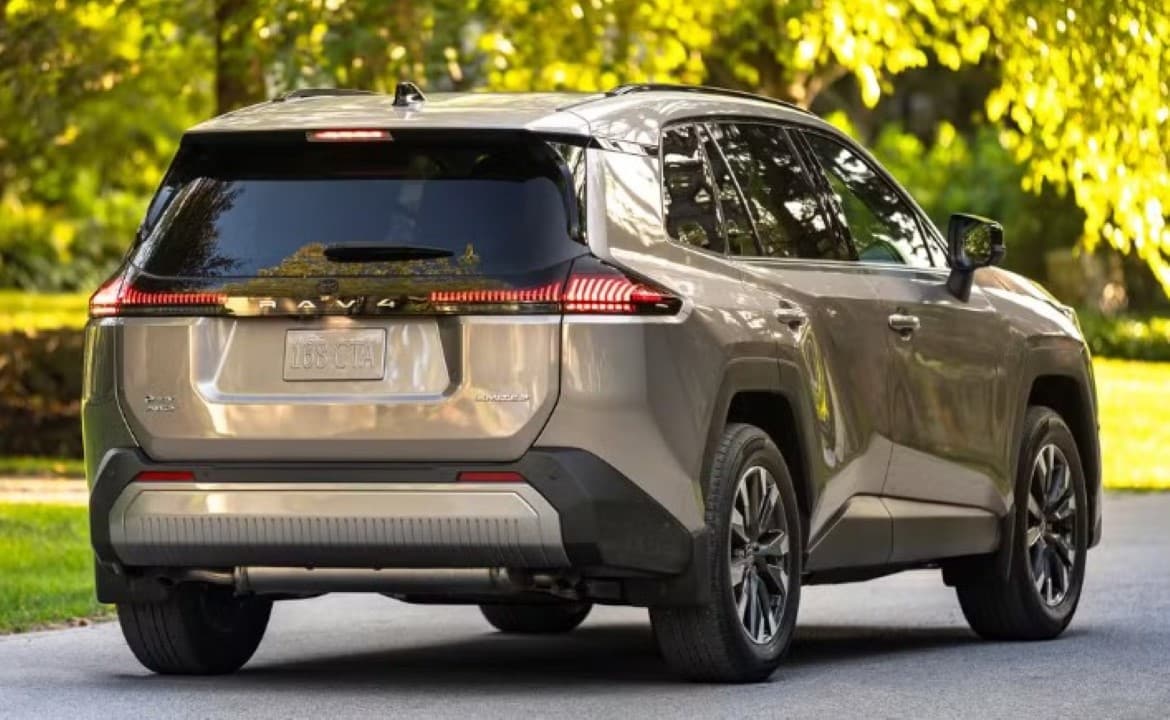
At the rear, the lights have been redesigned and are now visually connected by a bar that crosses the trunk lid, where the model name is highlighted. The rear bumper incorporates a diffuser that optimizes air flow, resulting in less noise at high speeds and a slight reduction in fuel consumption. Essas changes give the RAV4 a more robust and sophisticated presence, without drastically altering the silhouette that established it.
The improved aerodynamic coefficient is a direct result of these changes, which were carefully studied to reduce drag. The wheels, which can reach 20 inches in the most equipped versions, complete the aesthetic package and contribute to the SUV’s imposing stance on the road.
Technological and spacious interior
The cabin of the new RAV4 has evolved significantly, with a more vertical layout that facilitates access to controls. The 12.3-inch digital instrument panel remains, but the central entertainment system screen has grown to 12.9 inches and now operates with Toyota’s new ARENE operating system. The interface is more intuitive and offers remote updates (over-the-air), as well as advanced integration with smartphones.
The ARENE multimedia system represents a major step forward for the brand, providing a more fluid and connected user experience. Entre convenience features include an induction cell phone charger, a head-up display that projects information onto the windshield and a premium sound system as an optional item in top versions. On-board comfort has also been improved, with soft-touch materials on the dashboard and doors, elevating the perception of quality.
Space for rear seat passengers has been slightly increased, mainly benefiting leg comfort for adults. The front seats can be heated and ventilated, depending on the version, ensuring a pleasant journey in any weather. Attention to detail is evident in the finish and assembly, maintaining the standard of durability expected from an Toyota.
Efficient hybrid powertrain
The RAV4’s engine range continues to focus on the 2.5-liter gasoline engine, which works in conjunction with optimized electric units. The conventional hybrid version (HEV) delivers a combined power of 183 horsepower with front-wheel drive, being capable of accelerating from 0 to 100 km/h in 8 seconds and recording an average consumption of 4.9 liters per 100 km.
The plug-in hybrid (PHEV) options are the big highlight, offering 268 horsepower in front-wheel drive configuration and an impressive 308 horsepower with the AWD-i all-wheel drive system. The most powerful version accelerates from 0 to 100 km/h in just 5.8 seconds, a remarkable performance for a family SUV. Essa performance places the RAV4 PHEV as one of the fastest in its segment, combining efficiency with a dynamic driving experience.
A 22.68 kWh battery guarantees a minimum electric range of 100 kilometers in the combined cycle, allowing most daily journeys to be made without consuming gasoline. The recharging system has been improved, accepting up to 11 kW in alternating current (AC) and 50 kW in direct current (DC), which allows 80% of the charge to be recovered in approximately 30 minutes on a fast charger.
Adaptable load capacity
The trunk offers 514 liters of capacity in conventional hybrid versions, a generous volume suitable for the needs of a family. Nas plug-in hybrid configurations, due to the presence of the larger battery, the space is slightly reduced to 446 liters. Ainda therefore, the compartment is large and functional, with a flat floor that makes it easier to accommodate long objects when the rear seats are folded down.
With the rear seats folded down, the total cargo capacity reaches 672 liters up to the roof, transforming the RAV4 into an extremely versatile vehicle for transporting luggage or equipment. The electrically operated trunk lid with hands-free function is available on mid-range and higher-end versions, adding an extra layer of convenience in everyday life.
Enhanced security suite
The new generation RAV4 is equipped with the latest version of Toyota Safety Sense. The active safety package has been expanded and now includes up to 15 driving assistants. Entre new features include the improved pedestrian detection system for low-light conditions and rear cross-traffic assistance with automatic braking.
The body structure uses ultra-high-strength steel at strategic points, increasing torsional rigidity and protection in the event of a collision. Testes Preliminaries indicate that the model should achieve the maximum rating in the main global security institutes. Itens as side air curtains and central airbags complement passive protection, while the automatic emergency call system becomes standard across the range.
Versions and market positioning
The line will be divided into four main finish levels: Advance, Spirit, Limited and GR Sport. The entry-level version Advance already includes 18-inch wheels, parking sensors and heated front seats. The Spirit adds two-tone paint, 20-inch wheels and, optionally, a panoramic sunroof.
The Limited and GR Sport configurations are exclusive to the most powerful engines with all-wheel drive. The GR Essa variety allows the customer to choose the configuration that best suits their profile, whether focused on comfort, luxury or sportiness.
Prices and availability
At Europa, starting prices start at approximately 43,500 euros for the entry-level hybrid version. The plug-in variant, in turn, starts at around 46,500 euros, before the application of government incentives. The pricing strategy keeps the RAV4 competitive against its main rivals.
For the Brazilian market, the arrival of the new model is scheduled for the second half of 2026, although the official schedule has not yet been released by Toyota of Brasil. The expectation is that the automaker will continue to invest heavily in electrified versions, in line with the growing demand for more sustainable vehicles in the country.



