


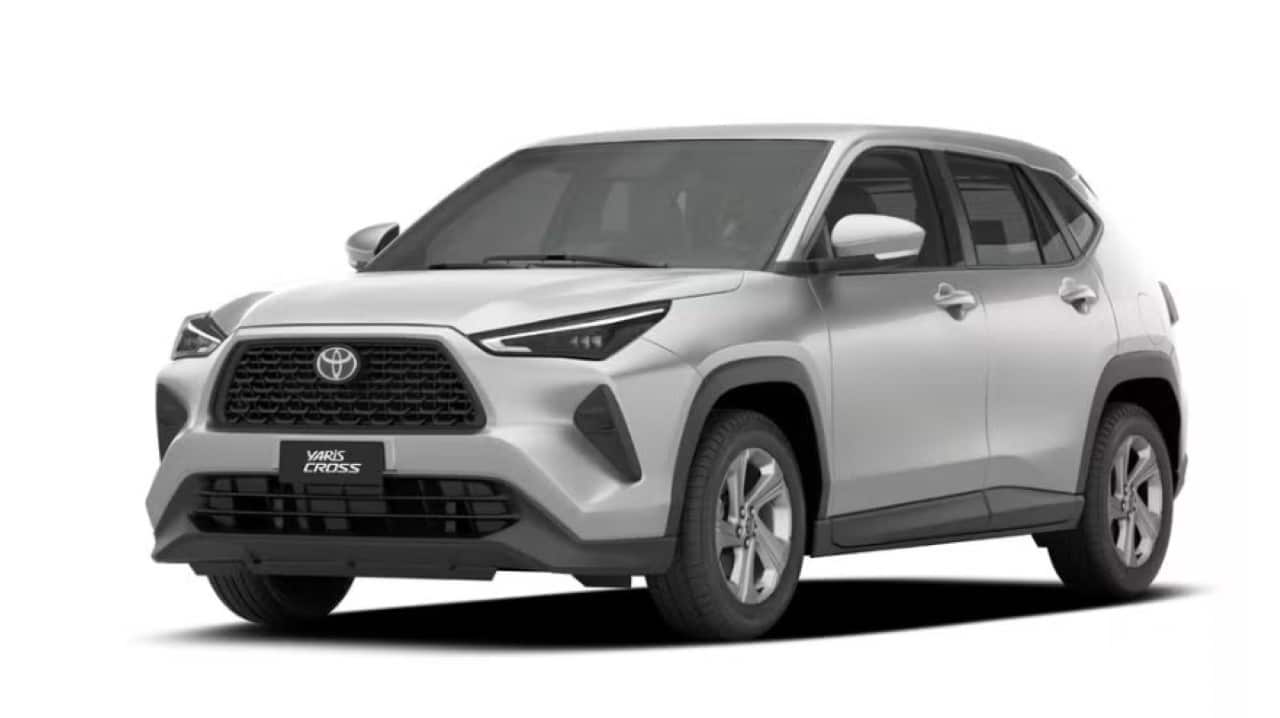
The compact SUV segment, one of the hottest in the national automobile market, is preparing for a new chapter of intense rivalry with the official arrival of the Toyota Yaris Cross XR. Posicionado to compete directly with already consolidated models, the launch of the Toyota promises to redefine the options for consumers looking for a vehicle that combines versatility, technology and a robust equipment package. The Japanese automaker is betting on an aggressive strategy to capture a significant share of this market.
With the arrival of the Yaris Cross XR scheduled for April, the Toyota enters into a direct dispute with the recently launched Honda WR-V and the popular Nissan Kicks. The brand’s move aims not only to expand its portfolio, but also to offer a strong alternative within an extremely competitive price range, where every detail, from the engine to the standard items, can be decisive for the consumer’s choice.
The expectation is that competition will benefit customers, with automakers seeking to offer more technology and safety at more attractive prices. The arrival of the Yaris Cross XR forces Honda and Nissan to reevaluate their strategies, which could result in new versions or updates to their models to maintain competitiveness. The scenario for the coming months points to a fierce competition, with offers and conditions that should attract the attention of those planning to purchase a new SUV.
Price and version analysis
The Toyota Yaris Cross XR hits the market with a launch price of R$149,990, a value that strategically positions it at the heart of the compact SUV segment. With this pricing, Toyota seeks to attract consumers who value the brand’s reliability, but who are also looking for a complete package of equipment and technology. The strategy is clear: offer a competitive vehicle that balances cost and benefit to directly challenge its main rivals. Este price positioning places the Yaris Cross XR in direct confrontation with the intermediate and top versions of other models, making the purchasing decision even more based on the details of each vehicle, such as engine, internal space and list of standard equipment. The automaker is betting that the combination of a modern design with the traditional durability of its products will be an important differentiator to win the public’s preference, even in a scenario of strong competition where prices are very similar.
Motorization and performance in focus
Under the hood, the Toyota Yaris Cross XR is equipped with a 1.5 flex naturally aspirated engine, capable of generating up to 122 horsepower and 15.3 kgfm of torque. Este engine is associated with a CVT automatic transmission that simulates seven speeds, a set that aims to provide a balance between performance suitable for urban and highway use and efficiency in fuel consumption. The Toyota focuses on smooth and comfortable driving, characteristic of its vehicles.
On the other hand, the Honda WR-V uses a 1.5 engine, also aspirated, which delivers slightly higher power, with 126 horsepower and 18.5 kgfm of torque. Acoplado to a CVT transmission, this engine provides more vigorous performance, which can be a decisive factor for consumers looking for a more sporty drive. The WR-V stands out for its agility, being one of the most powerful options in the category.
The Nissan Kicks, in its top-of-the-line version, has a 1.6 aspirated engine that develops 113 horsepower and 15.3 kgfm of torque, numbers similar to those of the Yaris Cross. The Nissan model also uses a CVT transmission, focusing on smooth and economical driving. Although the Embora is the least powerful of the three, the Kicks makes up for it with a good suspension set-up and handling that pleases many drivers.
Comparison of consumption and efficiency
One of the most important points for consumers of compact SUVs is fuel efficiency, and in this regard, the competition is fierce. The Toyota Yaris Cross XR presents promising official numbers. With gasoline, the model records a consumption of 12.6 km/l in the city and 14.3 km/l on the highway. Quando fueled with ethanol, the figures are 8.8 km/l in the urban cycle and 10.2 km/l on highways.
The Honda WR-V also demonstrates good energy efficiency. Utilizando gasoline, the Honda SUV achieves 12 km/l in the city and 12.8 km/l on the highway. With ethanol in the tank, urban consumption is 8.2 km/l, while highway consumption reaches 8.9 km/l. Although its numbers are slightly lower than those of the Toyota rival, the WR-V offers the highest power in the category, a trade-off that can be considered by many.
In turn, the Nissan Kicks stands out as one of the most economical of the trio, especially with gasoline. The model records 11.3 km/l in the city and 13.7 km/l on the highway with fossil fuel. Quando the fuel chosen is ethanol, consumption is 7.8 km/l in the urban cycle and 9.4 km/l on the highway.
These numbers show that the three vehicles were designed with a focus on economy, seeking to meet the demand of a public that uses cars daily and is concerned about fueling costs. The choice between them may depend on each driver’s usage profile, which may prioritize the lowest absolute consumption or a more balanced balance with performance.
Dimensions and internal space
In terms of dimensions, the Honda WR-V stands out as the largest of the trio, measuring 4.32 meters long, 1.79 meters wide and with a wheelbase of 2.65 meters. Essas measures translate into excellent interior space for occupants, especially in the rear seat. Além Furthermore, its trunk is the most generous in its category, with a capacity of 458 liters, ideal for families and those who need a lot of luggage space.
The Toyota Yaris Cross XR has slightly more compact measurements, measuring 4.31 meters long, 1.77 meters wide and with a wheelbase of 2.62 meters. Seu trunk has a capacity of 400 liters, a volume suitable for daily use and short trips. The Nissan Kicks, 4.30 meters long and with a wheelbase of 2.62 meters, offers an intermediate trunk with 432 liters, ensuring a good balance between passenger space and cargo capacity.
Equipment and finishing
All three SUVs come well equipped in their comparable versions. Eles offers LED headlights and taillights as standard, which guarantee a modern look and improve safety and visibility. Rodas 17-inch alloy wheels are also standard, giving the vehicles a sportier and more robust appearance. Inside, the Yaris Cross XR and WR-V feature a finish with soft-touch materials on the dashboard, providing a feeling of greater refinement.
The Nissan Kicks, on the other hand, differentiates itself with an interior finish that mixes leather on part of the dashboard, giving a touch of sophistication. Regarding the seats, the Yaris Cross XR and Kicks offer synthetic leather coverings, while the WR-V in the EXL version also adopts the material, ensuring more comfort and practical cleaning for the occupants.
Technology and connectivity
Connectivity is an essential item in modern cars, and the three models are well served with state-of-the-art multimedia centers. The Tanto, the Yaris Cross XR and the WR-V come with a 10-inch screen, while the Kicks uses a 9-inch one. Todas are compatible with Android Auto and wireless Apple CarPlay, allowing for easy integration with smartphones. The big difference of the Yaris Cross XR is the presence of a fully digital instrument panel, which gives a more technological and modern look to the vehicle’s interior.
Active and passive security
In terms of safety, the three SUVs offer a robust standard package, including six airbags, stability and traction controls, and ABS brakes with electronic brake distribution. The Toyota Yaris Cross XR stands out for including advanced driving assistants, such as adaptive cruise control, which raises the level of comfort and safety on trips. The Honda WR-V has the Honda Sensing package, which includes emergency braking and lane keeping assist. Já o Nissan Kicks offers braking assistant and a camera with 360-degree vision, which makes maneuvering in tight spaces easier.



