
Serious lithium battery failure leads BYD to recall 89,000 Qin Plus DM-i vehicles in China


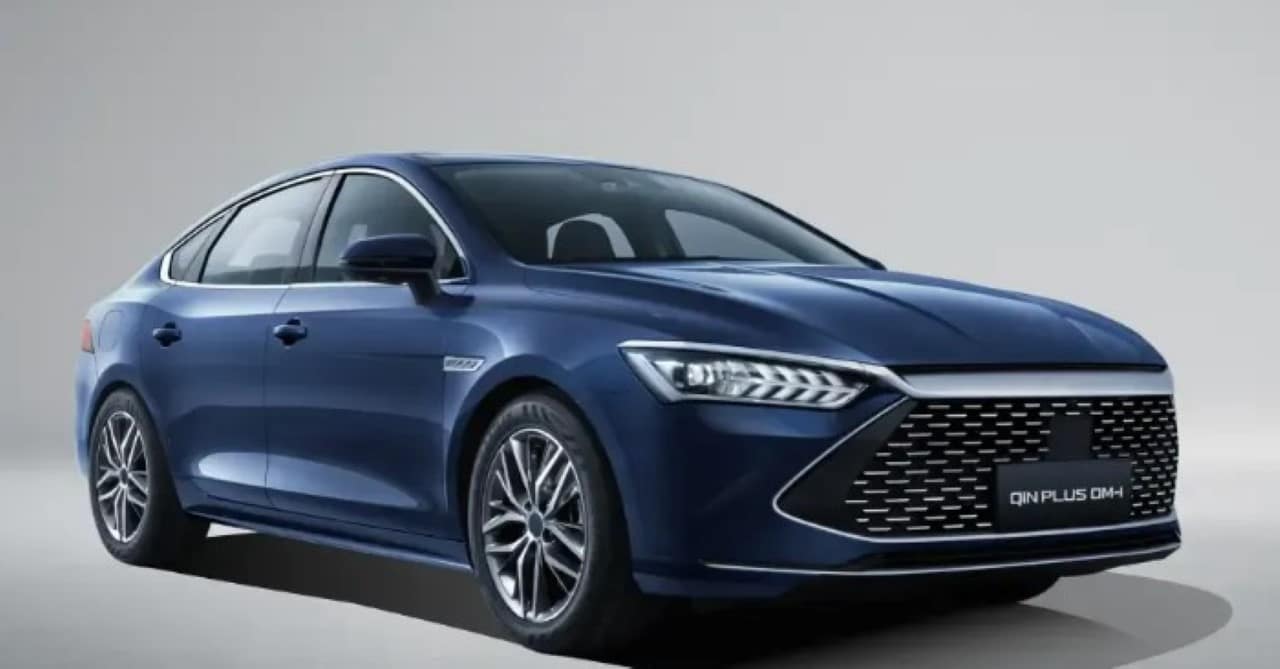
BYD, one of the world’s largest electric vehicle manufacturers, announced a large-scale recall on China involving 88,981 units of its popular plug-in hybrid sedan, the Qin Plus DM-i. The measure was motivated by a serious fault detected in the lithium battery pack, which could compromise the safety and operation of the cars. The affected vehicles were produced between January 2021 and September 2023.
The call was formally registered with Administração Estatal for Regulação of Mercado of China (SAMR), the regulatory body for product quality and safety in the country. Segundo the official statement, the defect is related to an inconsistency in the manufacturing of the battery voltage acquisition wiring harness. Esta failure can lead to incorrect management system readings, resulting in potential loss of power while driving and, in extreme cases, increasing the risk of an adverse thermal event.
The company highlighted that, although the probability of failure is low, the recall is a preventative measure to ensure the safety of all its customers. BYD has committed to carrying out the necessary repairs at no cost to the owners of the vehicles involved in the campaign.
The risk associated with manufacturing inconsistency
The root cause of the problem lies in the assembly of the wiring harness inside the high voltage battery pack. According to official documents, a variation in the manufacturing process can cause the harness to be pressed abnormally, affecting its durability and the accuracy of information sent to the vehicle management system (BMS).
Over time and continued use, this condition can lead to component degradation, disrupting correct communication about the state of charge and health of the battery cells. The main risk is a sudden interruption of the energy supplied to the electric motor, which could cause the vehicle to stop unexpectedly, increasing the risk of accidents, especially at high speeds.
BYD’s proposed solution for affected vehicles
To solve the problem, BYD outlined a two-pronged action plan. The first step consists of a remote software update (Over-the-Air – OTA) for all affected vehicles. Este new software improves the battery management system algorithms, allowing more accurate and earlier detection of possible anomalies in the wiring harness, alerting the driver through the instrument panel.
The second, and most crucial, step involves the physical inspection of vehicles at authorized dealerships. Technicians will check the integrity of the battery pack and, if any non-compliance or damage to the electrical harness is identified, the part will be replaced free of charge. The manufacturer assured that all owners of cars included in the recall will be notified to schedule the service.
Context of other automaker recalls
This recall of the Qin Plus DM-i is not an isolated case for BYD in recent months, indicating a period of challenges related to quality control amid its rapid production expansion. In October of the previous year, the company had already recalled more than 115 thousand units of the Tang DM-i and Yuan Pro models due to a potential fire risk also related to the battery system.
Previously, in September, a recall for more than 96,000 units of the Dolphin and Yuan Plus models was issued due to a different problem, related to a power converter component that could overheat. Somando the three campaigns carried out in a short period, the number of BYD vehicles recalled for repair exceeds the 300 thousand units mark, reflecting the increasing vigilance of Chinese regulators on the safety of new energy vehicles.
Regulatory surveillance at China
The Chinese market, being the largest in the world for electric vehicles, has increasingly strict regulation by agencies such as SAMR. The safety of lithium-ion batteries has become a point of focus for authorities due to previous incidents involving several brands. Inspection ranges from uniformity in the production process to the integrity of management systems, which are crucial to preventing failures.
Large manufacturers like BYD, CATL and CALB are under constant scrutiny to ensure their manufacturing processes and quality control meet the highest standards. The Chinese government’s objective is clear: to mitigate the risks associated with battery technology to strengthen consumer confidence and sustain the country’s leadership in the global automotive electrification sector.
Procedures for affected owners
BYD will begin contacting owners of the nearly 89,000 Qin Plus DM-i vehicles involved in the coming weeks, through its official channels, including apps and correspondence. The company advises car owners to check whether their vehicle is included in the recall via the brand’s official website or by contacting the customer service center, using the vehicle identification number (VIN).
While the OTA software update can be performed remotely as long as the vehicle is connected to a 4G or 5G network, physical inspection and eventual component replacement will require a visit to an authorized dealer. BYD reinforced the importance of responding to the call to ensure the safety and good functioning of the car in the long term.
BYD sales on the rise despite challenges
Despite news about the recall, BYD’s sales numbers remain robust. In October, the automaker’s global sales registered a significant increase compared to the same month of the previous year, totaling more than 441 thousand units. Este volume is mainly driven by plug-in hybrid models (PHEV), which represented more than 214 thousand units sold, a growth of 31%.
Sales of 100% electric vehicles (BEV), in turn, also showed solid progress, reaching almost 223 thousand units. The popularity of hybrid models reflects a consumer preference in the Chinese domestic market for vehicles that combine electrical efficiency with the extended range of a combustion engine, a strategy that has guaranteed BYD a strong leadership position.



