

International health authorities monitor confirmed cases of the Nipah virus registered in West Bengal, in Índia, in January 2026.
The outbreak involved two laboratory confirmed cases, with contacts monitored and no new infections recorded to date. Especialistas highlight that the risk of global spread remains low, especially to distant countries like Brasil.
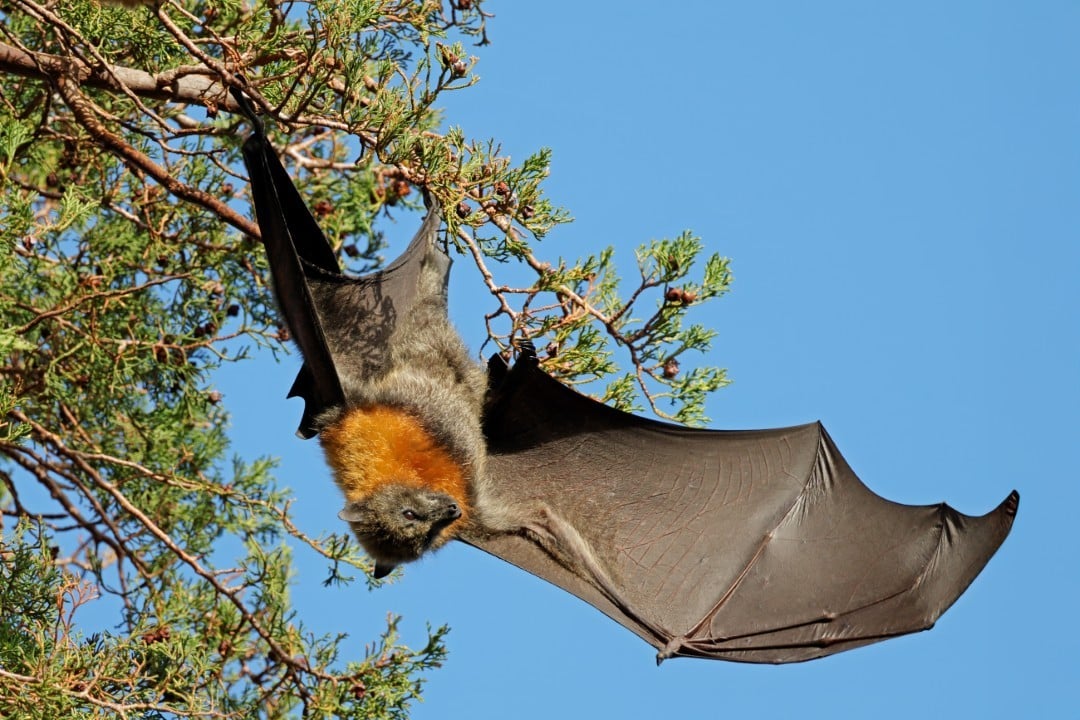
The flying fox does not occur in Brazilian fauna, which significantly reduces the chances of the virus establishing itself in the national territory. Pesquisadores reinforce the importance of continuous public health surveillance.
Characteristics of the flying fox
The flying fox belongs to the genus Pteropus and stands out for its larger size compared to other bats. Esses animals reach wingspans of up to 1.7 meters and body weight that can exceed 1 kilogram in some species.
They have a face similar to that of foxes, which explains their popular name, and they feed mainly on fruits and nectar. Essa diet makes them important pollinators and seed dispersers in Asian and Australian ecosystems.
Natural reservoir of the virus Nipah
The Nipah virus uses flying foxes as natural hosts without causing serious illnesses in these animals. The pathogen remains in the bat organism through immunological mechanisms adapted throughout evolution.
Transmission to humans occurs mainly through consumption of fruits contaminated by bat saliva or urine. Contato directly with body fluids also represents a route of infection in specific contexts.
Transmission and symptoms in humans
Human infection with Nipah causes initial symptoms such as fever, headache and breathing difficulties. In severe cases, it progresses to encephalitis with brain inflammation that compromises neurological functions.
Fatality rates vary between 40% and 75% depending on the strain and access to medical care. Não There is an approved vaccine or specific antiviral treatment, with clinical support as the main approach.
- High and persistent fever
- Intense muscle pain
- Progressive mental confusion
- Seizures in advanced stages
Recent outbreaks in Ásia
Confirmed cases in West Bengal marked the beginning of 2026 with two patients diagnosed by laboratory tests. Autoridades Indian women have isolated contacts and carried out tests that have been negative so far.
Bangladesh records almost annual episodes related to the consumption of contaminated palm sap. Esses seasonal patterns are associated with the proximity between bat colonies and human activities.
Other Asian countries such as Malásia and Filipinas have faced significant outbreaks in the past. Medidas of controls include restrictions on potentially contaminated food and monitoring of bat populations.

Absence of the species in Brasil
The genus Pteropus does not have native representatives in América of Sul due to geographic and evolutionary barriers. Morcegos Brazilian frugivores belong mainly to the Phyllostomidae family, with distinct lineages separated by millions of years.
Studies indicate that local species do not demonstrate natural susceptibility to the Nipah virus. Testes serological tests in Brazilian populations did not detect antibodies against the pathogen.
Evolutionary divergences between families
Bats of the genus Pteropus evolved in the Indo-Pacific region about 40 million years ago. Essa geographic separation prevented crossings with Neotropical lineages present in Brasil.
Families such as Pteropodidae and Phyllostomidae have developed independent adaptations to the frugivorous diet. Essas differences include immunological variations that influence the ability to host specific viruses.
Brazilian health surveillance
Ministério of Saúde maintains monitoring protocols for imported emerging diseases. International Viagens represent the main potential route of introduction, although local transmission requires a compatible reservoir.
Reference laboratories perform differential diagnoses in suspected cases of viral encephalitis. Treinamentos train professionals for early identification of exotic pathogens.
Ecological role of flying foxes
These bats contribute to forest regeneration by dispersing seeds over long distances. Sua nocturnal activity favors pollination of plants that depend exclusively on nocturnal visitors.
Habitat loss increases contact with humans and increases the risk of spillovers in endemic regions. Projetos of conservation seek to balance environmental protection with public health measures.
Preventive measures in endemic areas
Avoiding consumption of bitten fruit or fresh sap in regions with known colonies reduces exposure. Lavagem Strict food processing and proper cooking eliminate potential contamination.
Using physical barriers in plantations protects crops without affecting bat populations. Educação community guides safe practices in overlapping areas.
Research on virus-host interaction
Scientists are investigating mechanisms that allow asymptomatic coexistence in flying foxes. Esses studies may reveal targets for future antiviral development.
Genetic monitoring of circulating strains helps predict pathogenic variations. Colaborações international organizations share data for coordinated response to emerging threats.
Importance of bat biodiversity
Bats control insect populations and contribute to global ecosystem services. Estereótipos negatives often ignore their essential role in food chains.
Preservation of natural habitats benefits both wildlife and human health in the long term. Abordagens combine conservation with health surveillance.
- Nocturnal pollination of plant species
- Seed dispersal in forests
- Biological control of agricultural pests
- Maintaining ecological balance
The understanding of flying foxes and the Nipah virus reinforces the need for continuous monitoring. Ausência of the species in Brasil maintains a low-risk scenario, but requires attention to travel and imports.
Scientific advances continue to clarify complex interactions between viruses and hosts. Essas information guides preventive strategies on a global scale.



