

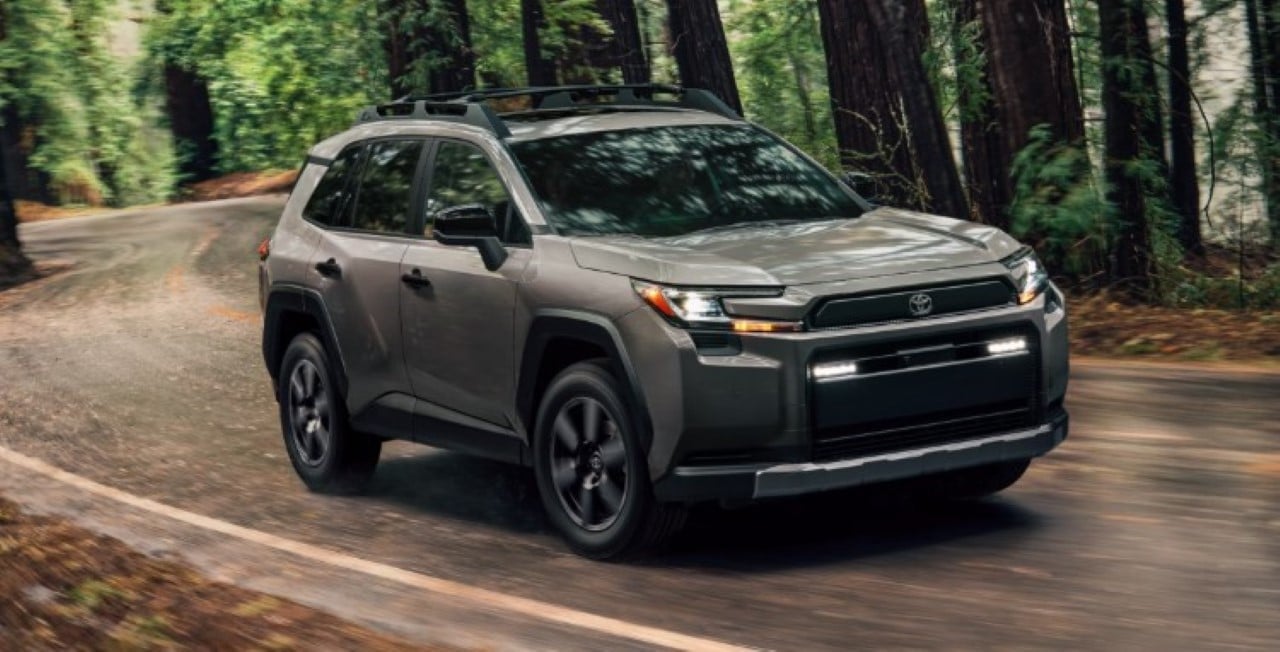
Toyota officially presented the sixth generation of the RAV4, one of the best-selling SUVs globally, which arrives with important updates in design, technology and, mainly, its engine. Consolidando its position as a reference in the segment, the model relies on even more efficient hybrid packages, including a plug-in version (PHEV) that delivers up to 308 horsepower and a remarkable range in pure electric mode, exceeding 100 kilometers on a single charge.
Since its original launch in 1994, the Toyota RAV4 has sold more than 15 million units worldwide, a milestone that underlines its reliability and appeal to consumers. Esta new generation seeks not only to maintain leadership, but also to respond to the growing demand for electrified vehicles, offering a package that combines performance, sustainability and cutting-edge technology. Deliveries of the first units in the main global markets are expected to begin in the second half of the year.
The model maintains its balanced dimensions, measuring 4.60 meters long, 1.85 m wide and 1.66 m high, ensuring good maneuverability in urban centers without sacrificing internal space. The ground clearance of 18.7 centimeters was maintained in all versions, preserving the ability to tackle slightly uneven terrain, a feature valued by the SUV’s owners.
Modernized and more robust exterior design
Visually, the sixth-generation RAV4 adopts a more aggressive and contemporary design language. The front has been completely redesigned, featuring sharper full-LED headlights and a closed front grille with hexagonal patterns, reinforcing the brand’s visual identity. The bumper was also modified to optimize aerodynamics and give the vehicle a more solid stance.
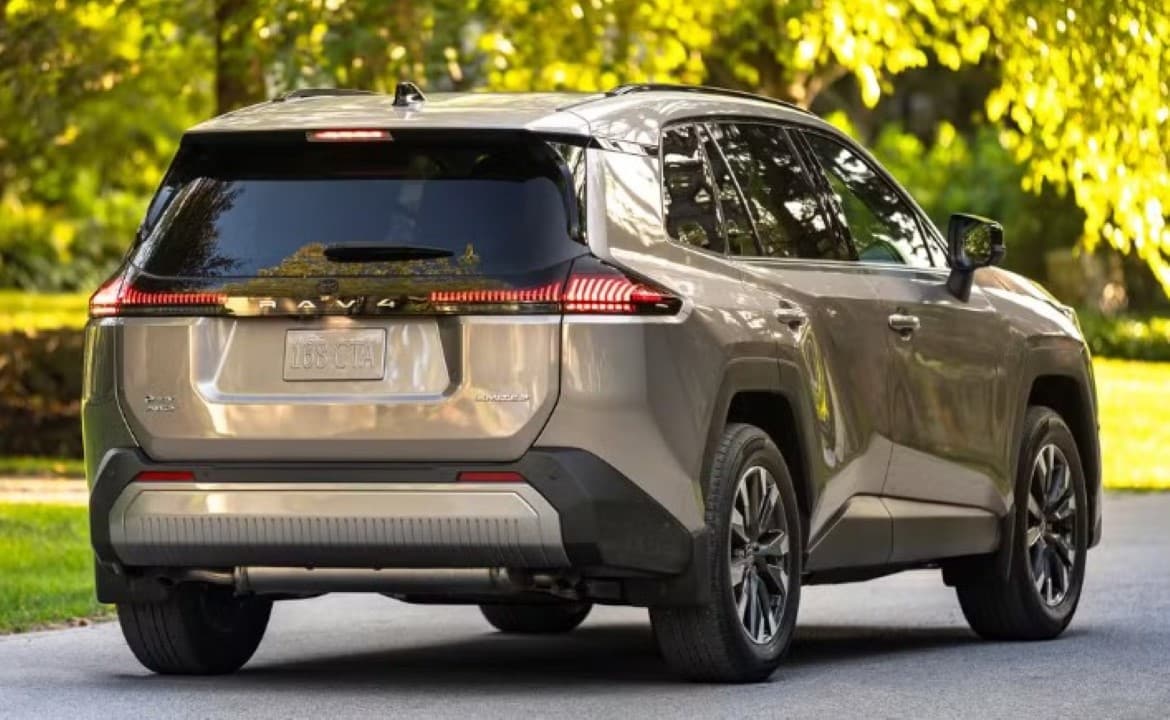
At the rear, the lights have been redesigned and visually interconnected, while the model name is highlighted on the trunk lid. The rear bumper incorporates details that improve air flow, helping to reduce fuel consumption and noise at high speeds. The aesthetics are complemented by new alloy wheel options, which can reach 20 inches in the most equipped versions, giving a more sporty and sophisticated look.
Technological and more spacious interior
The cabin of the new RAV4 has undergone a complete renovation, with a focus on technology and comfort. The instrument panel is now fully digital, with a customizable 12.3-inch screen, while the multimedia center has been enlarged to 12.9 inches. The system, called ARENE, offers a more intuitive interface, advanced connectivity with smartphones and remote updates (over-the-air).
The Toyota has improved ergonomics and the quality of materials, with soft-touch surfaces predominating on the dashboard and doors. Passenger comfort has been enhanced with features such as heated and ventilated front seats, an induction cell phone charger and a head-up display that projects essential information onto the windshield, allowing the driver to stay focused on the road.
Available convenience features include a high-fidelity sound system, panoramic sunroof and hands-free trunk access. The center console has been redesigned to offer more storage space, increasing everyday practicality. Ambient LED lighting with customizable colors helps create a more welcoming and modern atmosphere.
Powerful and efficient hybrid powertrain
The new RAV4’s engine range focuses on hybrid technology. The entry-level version combines a 2.5-liter gasoline engine with an electric motor, delivering 183 hp of combined power and front-wheel drive. Esta configuration allows acceleration from 0 to 100 km/h in 8 seconds and an average fuel consumption of approximately 20.4 km/l.
However, the big highlight is the plug-in hybrid versions. The first offers 268 hp with front-wheel drive, but the top version, equipped with the AWD-i intelligent all-wheel drive system, reaches an impressive 308 hp of combined power, positioning itself as one of the most powerful SUVs in its category.
This advanced mechanical package allows the SUV to accelerate from 0 to 100 km/h in just 5.8 seconds, a performance comparable to that of sports models. The electronic management of the AWD-i system intelligently distributes torque between the axles, ensuring maximum grip and stability on different road conditions, from wet asphalt to dirt roads.
The transmission used is the e-CVT type, which has been recalibrated to offer a more direct response and a more natural driving sensation, minimizing the “skating” effect common in boxes of this type. The system prioritizes efficiency at low speeds and immediate torque delivery when the driver demands more performance.
Autonomy and recharging of the plug-in version
Equipped with a 22.68 kWh lithium-ion battery, the RAV4 PHEV stands out for its autonomy in 100% electric mode, which exceeds 100 kilometers in the mixed cycle. Essa autonomy allows most daily journeys to be completed without using a single drop of fuel, making the model an extremely economical and sustainable option for urban use. The battery capacity is one of the largest in the segment, which justifies the electrical range that is greater than the average of competitors.
The charging system has also been improved to offer more convenience. An 11 kW alternating current (AC) onboard charger allows a complete battery recharge in approximately two and a half hours, using a residential wallbox or a public charging station. Para longer trips, the SUV is compatible with direct current (DC) fast chargers of up to 50 kW, capable of restoring 80% of the charge in around 30 minutes, ensuring quick and efficient stops.
Improved security with Toyota Safety Sense
The Toyota Safety Sense active safety package arrives in its latest generation, encompassing up to 15 driving assistants to protect occupants and pedestrians. Entre new features include the autonomous emergency braking system with improved detection of pedestrians and cyclists, even in low light conditions, and the lane keeping assistant with active centering, which makes driving on highways safer and more relaxing. The system also includes adaptive cruise control, which adjusts the speed according to the vehicle in front, and rear cross traffic alert, which assists with reversing maneuvers, preventing collisions in parking lots. Traffic sign recognition technology and automatic high beam system complete the package, offering a level 2 semi-autonomous driving experience.
Versatility and trunk capacity
Practicality, one of the RAV4’s strengths, was maintained and improved in the new generation. The trunk of the conventional hybrid version offers a generous volume of 514 liters. In the plug-in variant, due to the space occupied by the larger battery, the capacity is slightly reduced to 446 liters, a number that still remains competitive in the segment. With the rear seats folded down, the total cargo space expands considerably, and the flat floor makes it easier to transport long and bulky objects.
Market positioning and arrival at Brasil
The new Toyota RAV4 will face stiff competition from models like the Honda CR-V and Hyundai Tucson, which also offer hybrid versions. Sua main competitive advantage lies in the brand’s proven reliability and low maintenance costs, in addition to the excellent performance and superior electric range of the PHEV version.
For the Brazilian market, the expectation is that the new RAV4 will arrive in the second half of the year, imported from Japão. The Toyota of the Brasil has not yet officially confirmed dates, versions or prices, but the tendency is for the model to continue to be positioned as a premium option within the medium SUV segment, with a focus on more complete hybrid configurations.



