
Serious lithium battery failure forces BYD to recall almost 90,000 Qin Plus DM-i models


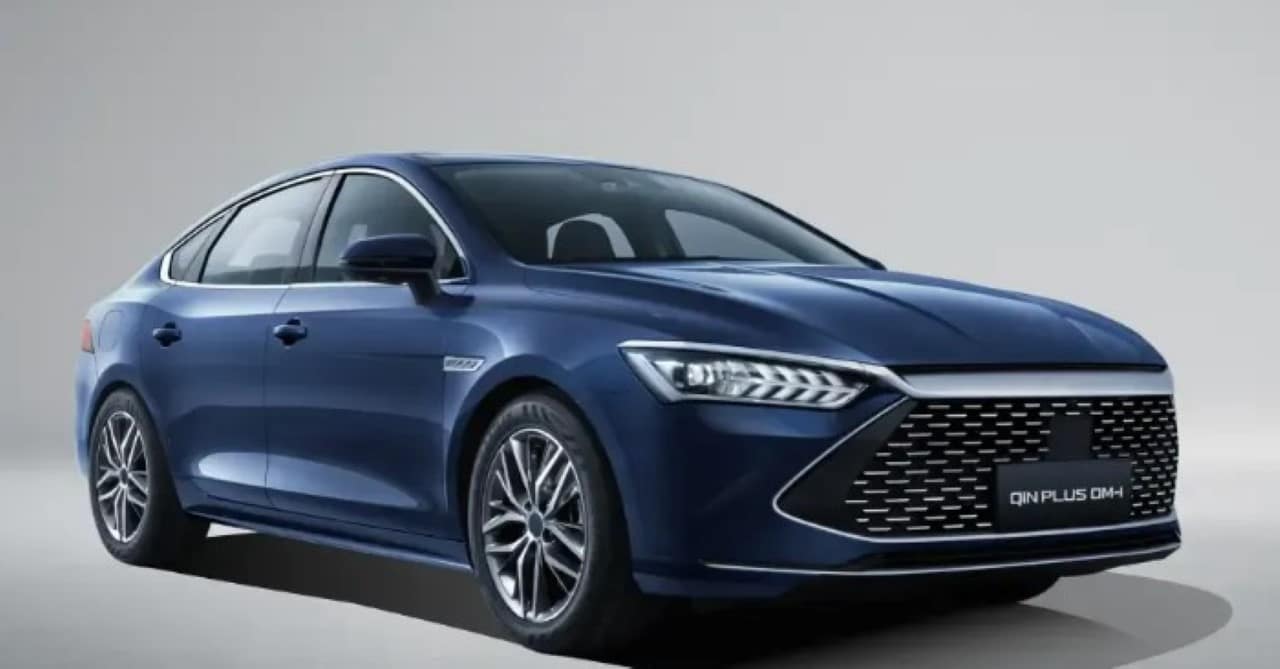
BYD, one of the world’s largest electric vehicle manufacturers, announced a large-scale recall on China involving 88,981 units of its popular plug-in hybrid sedan, the Qin Plus DM-i. The preventive measure was motivated by the detection of a serious fault in the lithium battery pack, which presents potential risks to the safety of the vehicle’s occupants.
The recall covers vehicles produced between January 2021 and September 2023. The problem was formally communicated to Administração Estatal of Regulação of Mercado of
According to the automaker’s official statement, the failure could compromise the vehicle’s proper functioning and, in extreme situations, lead to the battery overheating. The company has already started contacting the owners of the affected models to schedule the necessary procedures.
The origin of the battery problem
The technical investigation conducted by BYD identified that the root cause of the defect is an inconsistency in the manufacturing process of the high voltage battery pack vapor separator. Este component is crucial to ensure the sealing and isolation of the system against the entry of external moisture. Separator failure may allow moisture to enter the battery compartment, directly affecting the Sistema of Gerenciamento of the Bateria (BMS).
When moisture comes into contact with the electronic components of the BMS, a short circuit may occur. Esta abnormal condition represents a significant risk as a short circuit in the management system can lead to a cascading failure, culminating in a thermal runaway event. Thermal runaway is a process of uncontrolled battery overheating which, in more serious cases, can result in fire, putting the safety of the vehicle and its occupants at risk, especially during high-speed driving or during the recharging process.
Solutions presented by BYD
To correct the flaw and ensure the safety of its customers, BYD developed a two-step repair strategy. The first action consists of a remote software update, carried out via Over-the-Air (OTA) technology. Este new software improves the algorithms of Sistema of Gerenciamento of Bateria (BMS), making it more sensitive to early detect any abnormalities caused by possible moisture infiltration.
The OTA update aims to alert the driver through notifications on the vehicle’s dashboard before the problem worsens. The implementation will be done automatically as soon as the vehicle is connected to a 4G or 5G network, without the need for the owner to visit a dealership.
Component inspection and replacement
The second stage of the action plan is aimed at vehicles that, even after the software update, present faults or for those in which physical inspection reveals a greater compromise. In Nestes cases, owners will be instructed to take their cars to an authorized dealer of the brand.
At the workshop, specialized technicians will carry out a detailed inspection of the battery pack. Caso If any damage or imminent risk is found, BYD will completely replace the battery pack at no cost to the consumer. The company guaranteed that it will pay all expenses related to diagnosis and replacement of parts.
Other recent recalls from the automaker
This recall of the Qin Plus DM-i adds to other recent recalls carried out by BYD, indicating a period of intense supervision over production quality amid its rapid expansion. Nos last few months, the company had already recalled other models due to different problems.
In October, more than 115,000 units of the Tang DM-i and Yuan Pro models were recalled to correct a potential fire hazard related to the battery management system. The failure, although different from the current one, was also linked to the safety of the main component of electrified vehicles.
Previously, in September, a recall of more than 96,000 units of the Dolphin and Yuan Plus models was issued due to an issue related to a power converter component, which could lead to a loss of power while driving.
Adding together the three safety campaigns implemented in a short period, the number of BYD vehicles recalled for repair exceeds the mark of 300 thousand units. Este scenario reflects the growing attention of Chinese regulatory agencies on the safety of new energy vehicles.
Strict regulation in the Chinese market
The China electric vehicle market, the largest in the world, is also one of the most regulated. Órgãos like SAMR impose increasingly stringent security standards for manufacturers, ranging from the structural integrity of components to the security of management software.
Inspection covers the entire life cycle of the product, from the manufacturing process to long-term performance. The rules aim to ensure that rapid technological innovation does not compromise consumer safety. Empresas such as BYD, CATL and CALB, giants in battery production, are under constant scrutiny to ensure their products meet the highest quality and safety standards, mitigating risks associated with lithium-ion technology.
Procedures for affected owners
BYD began communicating with the owners of the nearly 89,000 Qin Plus DM-i vehicles involved in the recall through its official channels, including apps and direct notifications. The company advises owners to pay attention to any warning on the vehicle’s dashboard and to contact a dealer immediately if they notice any abnormalities.
To check whether a specific vehicle is included in the campaign, owners can visit the official BYD website or contact the customer service center, providing the Número of Identificação of Veículo (VIN). The consultation allows you to confirm the need for repair and schedule the service.
BYD sales continue to grow
Despite news about the recall, BYD’s sales performance remains robust. The most recent figures show that the company continues to record significant growth, consolidating its leadership position in the global electrified vehicle market.
The popularity of its plug-in hybrid (PHEV) and fully electric (BEV) models is driven by the combination of autonomy, onboard technology and competitive prices. The strong demand, both in the Chinese domestic market and in its international expansion, reflects consumer confidence in the brand, which now faces the challenge of balancing accelerated growth with increasingly rigorous quality control.



