
Almost 90 thousand BYD Qin Plus DM-i units are recalled in China due to battery risk


Critical battery failure leads to massive recall
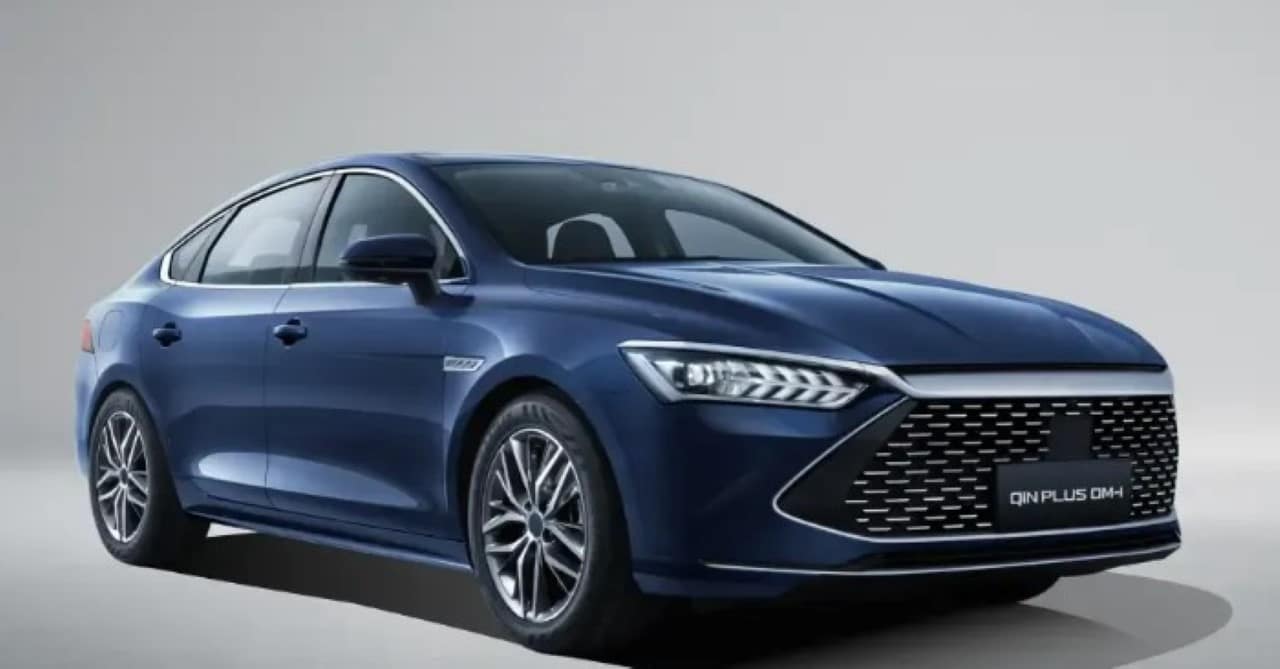
BYD, one of the world’s largest electric vehicle manufacturers, announced a large-scale recall on China involving 88,981 units of its popular plug-in hybrid sedan, the Qin Plus DM-i. The measure was prompted by the identification of a potential failure in the lithium-ion battery pack, which poses a significant risk to the safety and operation of affected vehicles.
The call covers cars produced between January 2021 and September 2023, a period of almost three years of manufacturing. According to the company’s official statement, the defect can cause a loss of energy while driving and, in extreme scenarios, lead to spontaneous combustion of the battery, an event known as thermal runaway.
The recall was formally registered with Administração Estatal of Regulação of Mercado of China (SAMR), the body responsible for monitoring products and consumer safety in the country. The manufacturer committed to contacting all owners of the vehicles involved and carrying out the necessary repairs at no cost.
Technical analysis of the identified problem
The investigation conducted by the BYD engineering team revealed that the source of the problem is an inconsistency in the manufacturing process of the battery pack’s high-voltage wiring harness. Essa failure can result in poor contact in the Sistema of Gerenciamento of the Quando the BMS does not receive data correctly, its ability to detect anomalies is compromised, which considerably increases the risk of overheating and thermal runaway. Além In addition, a misinterpretation of the signals by the system can lead to an unexpected shutdown of the electric motor, resulting in a sudden loss of power while the vehicle is in motion, an extremely dangerous condition for road safety.
Solutions presented by BYD
To correct the flaw and ensure the safety of its customers, BYD developed a two-step solution. The first consists of a remote software update, known as “over-the-air” (OTA), which will be sent directly to affected vehicles.
This new software improves the algorithms of the Sistema of Gerenciamento of the Bateria (BMS), making it more sensitive in detecting possible irregularities. With the update, the system now identifies the condition of the wiring harness with greater precision and issues preventive alerts on the vehicle’s dashboard, instructing the driver to look for an authorized dealer.
The second phase of the action plan is triggered if the software update is not sufficient or if the system has already detected an imminent failure. In Nesses cases, owners will be advised to take their cars for a complete physical inspection at the brand’s authorized service centers.
During this check, technicians will carry out detailed tests on the battery pack and, if necessary, will replace defective components at no cost to the customer.
The automaker’s call history
This recall of the Qin Plus DM-i is not an isolated event in the recent history of BYD, which has faced increasing scrutiny from Chinese regulators regarding the quality control and safety of its vehicles.
In October of the previous year, the automaker had already recalled more than 115 thousand units of the Tang DM-i and Yuan Pro models due to a fire risk also associated with the battery management system, in what was one of the largest recalls in the company’s history.
Previously, in September, a recall for almost 96,000 units of the Dolphin and Yuan Plus models was issued because of a problem with the power converter, a component that could cause a short circuit in the vehicle’s electrical system while driving.
Adding together these three major safety campaigns, the total number of BYD vehicles recalled for repair exceeds the 300,000 mark, highlighting the challenges inherent in the mass production of new energy vehicles and the growing attention of Chinese authorities to safety in the sector.
Regulation and tram market in China
The China electric vehicle market is the largest and most competitive in the world, with dozens of local and international brands competing for consumer preference. In a rapidly expanding scenario, the safety of lithium-ion batteries has become a top priority for both manufacturers and regulatory bodies such as SAMR.
Inspections and quality standards have become more rigorous, forcing companies to invest heavily in control processes ranging from the manufacturing of individual components to the final assembly of the vehicle. Grandes Battery suppliers, including BYD itself (which also manufactures its components), CATL and CALB, are in a technological race to develop increasingly safe and efficient management systems that meet the highest global safety standards.
Procedures for owners
BYD has already started the communication process with the owners of the almost 89 thousand units of the Qin Plus DM-i included in the recall. The company recommends that owners use official service channels, such as the brand’s website or mobile application, to check whether their vehicle is among those affected, entering the Número of Identificação of Veículo (VIN) in the query tool. It is advisable to schedule service at the nearest authorized dealer as soon as inclusion in the recall is confirmed.
Brand sales continue to grow
Despite news of the recall, BYD’s business performance remains robust. The company’s global sales figures registered significant growth in the last quarter, surpassing the mark of 441 thousand units sold.
The growth was mainly driven by plug-in hybrid models (PHEV), which totaled more than 214 thousand units sold, an increase of 31% compared to the same period of the previous year. 100% electric vehicles (BEV) also showed strong expansion, with more than 223 thousand units delivered to customers.



