Flamengo fan dies after police confrontation in Rio de Janeiro, prompting multiple investigations Por Luís Pereira
7 min de leitura
 |
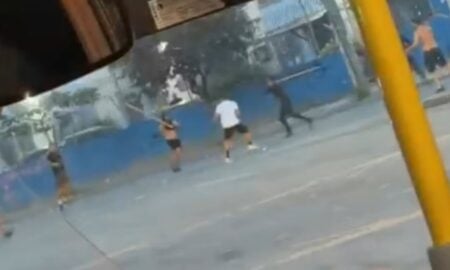
A young man died on a recent Sunday evening, the first day of the month, in Rio de Janeiro, following a police intervention, an incident now under rigorous investigation in 2025. Léo Ribeiro, 19, a recognized member of the Torcida Jovem Fla, an organized supporters’ group for Flamengo, passed away in Vila Isabel after a confrontation with military police officers. The incident unfolded on Rua Barão de São Francisco, a residential street in the city’s North Zone.
Authorities stated that police were initially dispatched to the area responding to a report of bodily injury. During the subsequent approach, Ribeiro allegedly resisted arrest, engaging in a physical struggle with one of the officers. This confrontation, according to initial police accounts, involved an attempt by Ribeiro to disarm the officer and remove the ballistic vest.
The intervention escalated rapidly, leading to the use of force by law enforcement. Two shots were reportedly fired at Ribeiro during the scuffle. Emergency services, specifically the Fire Department, were called to the scene promptly but could only confirm his death upon arrival.
The immediate aftermath saw the area secured by police for forensic analysis, a standard procedure in such critical incidents. The case has since been forwarded to the Delegacia de Homicídios da Capital (DHC), the Homicide Division of the Capital, which is now leading the criminal investigation to ascertain all factual elements.
Police intervention sparks official inquiries
The Military Police’s internal affairs division, the Corregedoria Geral, has officially initiated an Inquérito Policial Militar (IPM), a Military Police Inquiry. This internal investigation runs concurrently with the civil police’s efforts, aiming to examine the conduct of the involved officers and ensure adherence to operational protocols and use-of-force guidelines. Such dual inquiries are common in Brazil for incidents involving police fatalities.
Furthermore, the Civil Police, through the DHC, confirmed that comprehensive investigations are actively underway in 2025. Investigators are reportedly collecting witness statements, reviewing any available surveillance footage, and analyzing forensic evidence from the scene to construct a precise timeline of events and clarify the circumstances that led to Ribeiro’s death.
Details of the confrontation emerge
Initial reports from the Military Police indicate that agents from the Unidade de Polícia Pacificadora (UPP) Morro dos Macacos were the first responders to the bodily injury call. The location of the incident, Rua Barão de São Francisco, is known for its residential character, yet it can be adjacent to areas with varying levels of security concerns. The presence of UPP units in the area is aimed at maintaining public order and addressing crime, reflecting a broader strategy for urban security.
The police narrative emphasizes Ribeiro’s alleged resistance as a critical factor in the escalation. Reports detail him attempting to seize an officer’s service pistol and succeeding in removing the officer’s ballistic vest during the struggle. These actions, if confirmed by ongoing investigations, would constitute grave threats to officer safety and could inform the legal assessment of the police response.
The specific sequence of events leading up to the fatal shots remains a central point of the ongoing investigations. Authorities are committed to thoroughness, given the serious nature of the outcome. Understanding the dynamics of the physical altercation, including the precise moment and context of the shots fired, is paramount for both the DHC and the IPM.
Community reactions and organized supporters’ tribute
The death of Léo Ribeiro quickly resonated within the organized football fan community, particularly among supporters of Flamengo. The Torcida Jovem do Flamengo, the group Ribeiro was a member of, released an official statement expressing profound sorrow over his passing. Their message highlighted Ribeiro’s deep connection and dedication to the organized fan group and his passion for the Flamengo football club.
The statement underscored that Ribeiro’s memory would endure among those who shared his ideals and love for the team. This sentiment reflects the strong bonds often formed within such supporter communities, where camaraderie and shared passion for football create a unique sense of belonging and collective identity. Organized fan groups frequently serve as significant social networks for their members, providing a platform for shared experiences and mutual support.
The incident has also sparked discussions among local residents and wider public about police conduct and the challenges of law enforcement in urban environments. Such events often bring renewed scrutiny to police-community relations and the protocols governing police interventions. Concerns regarding transparency and accountability in cases involving fatalities are frequently raised.
For many, Ribeiro’s death represents a tragic loss, emphasizing the fragility of young lives and the serious consequences that can arise from encounters with law enforcement. The community awaits further details from the ongoing investigations, hoping for clarity and justice regarding the circumstances of his passing. The impact of such events extends beyond the immediate families, affecting the broader social fabric.
Ongoing investigations into the incident
In 2025, both the Civil Police’s Homicide Division and the Military Police’s internal affairs continue their separate yet coordinated investigations into the fatal incident. Investigators from the DHC are focused on gathering all objective evidence, including ballistic reports, autopsy results, and forensic analyses from the crime scene. Their role is to determine whether any criminal acts occurred, independent of police operational procedures.
The parallel IPM is specifically tasked with evaluating the operational aspects of the police intervention. This includes reviewing whether the officers followed established protocols for engagement, resistance, and the use of force. The findings from both investigations will be crucial in determining accountability and could lead to various outcomes, ranging from criminal charges to internal disciplinary actions or clearance of the officers involved.
Legal framework for police use of force
The legal framework governing police use of force in Brazil, particularly in Rio de Janeiro, emphasizes proportionality, necessity, and legality. Officers are authorized to use force only when strictly necessary and to the extent required to achieve a legitimate law enforcement objective, such as self-defense or the protection of others. Training protocols typically cover a spectrum of force, from verbal commands to the use of firearms, with escalation expected only when lower levels of force prove ineffective or the threat level dictates a more severe response.
Brazilian law, including the Military Penal Code and resolutions from the Secretary of Public Security, provides guidelines for when an officer can use their weapon. These guidelines stress that firearms should be a last resort, employed only when there is an imminent threat to life or serious injury. Investigations into police-involved shootings meticulously examine whether these legal and procedural standards were met, considering factors like the perceived threat, the actions of the individual, and the overall context of the confrontation.
Broader implications for police operations in Rio
This incident, like others involving police fatalities, contributes to an ongoing public debate about police training, community engagement, and the effectiveness of security strategies in Rio de Janeiro. It highlights the complex challenges faced by law enforcement in managing high-stress situations and the critical need for constant review and improvement of operational tactics. The outcome of these investigations may influence future policy decisions regarding police interaction with the public, particularly in densely populated urban areas.