
Honda Civic Si 2006 outperforms Volkswagen GTI in historical performance comparison By Beatriz
5 min read
 |
A comparison carried out in 2006 between the Honda Civic Si and the Volkswagen GTI highlighted the victory of the Japanese model in street and track tests. The Civic Si demonstrated greater agility and connection with the driver thanks to its refined chassis and limited-slip differential. Ambos the cars represented the new generation of affordable hot hatches with 2.0-liter engines and around 200 hp.
The tests involved acceleration, braking and timed laps on closed circuits. The Honda stood out for its ability to maintain traction in curves and precise steering response. The Volkswagen offered abundant torque at low revs, but lost in pure dynamism.
This assessment marked an era of renewal for both models after less inspiring periods. The results influenced perceptions about the balance between European refinement and Japanese precision in the segment.
External design and visual presence
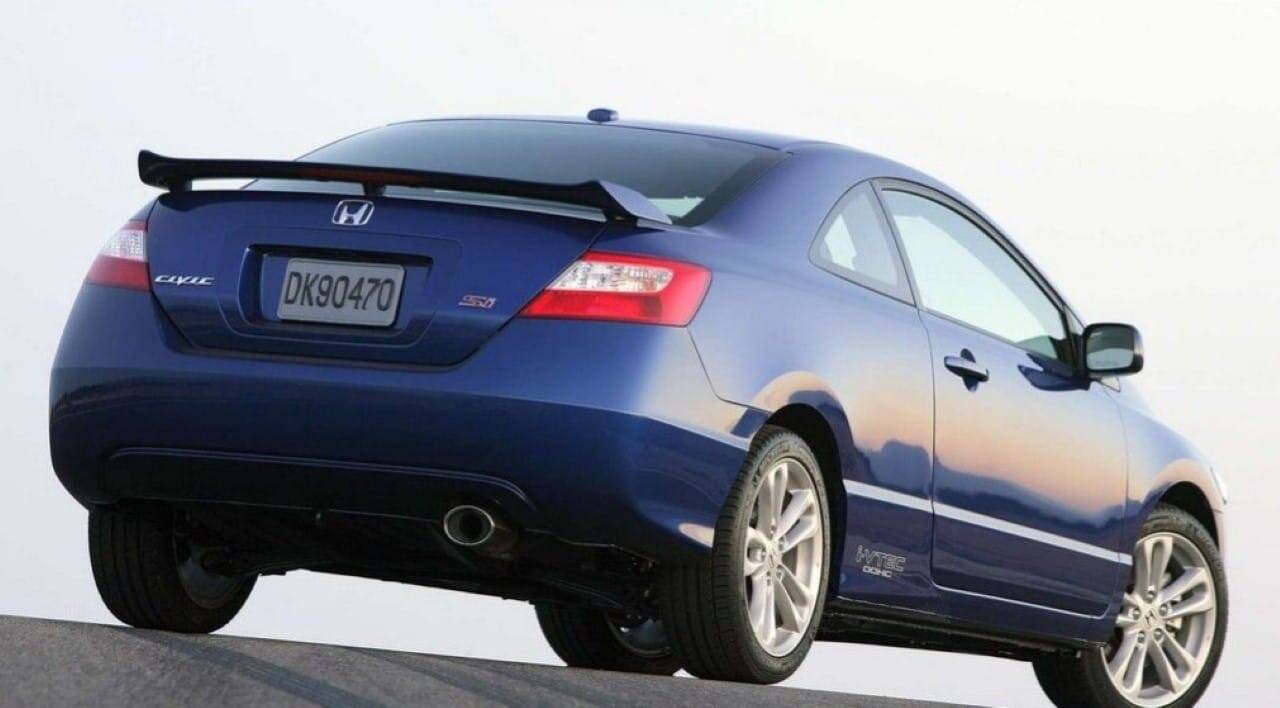
The 2006 Honda Civic Si adopted aggressive lines with a steeply raked windshield and pronounced spoiler. The narrow headlights and low body reinforced the sporty appearance aimed at a younger audience. Essa configuration created a dynamic silhouette that conveyed speed even at rest.
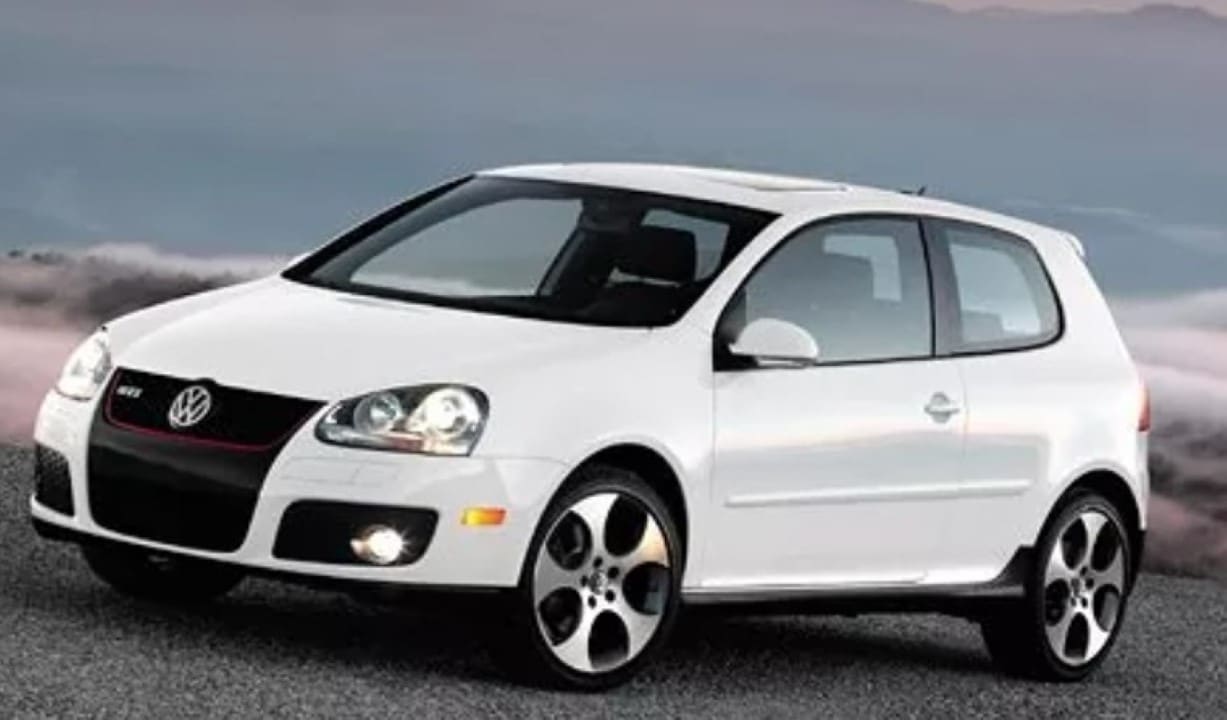
The Volkswagen GTI maintained retro features such as a honeycomb grille with a red stripe and painted brake calipers. Xenon headlights and heated mirrors added modern touches to the classic ensemble. The more vertical hatchback bodywork facilitated practical everyday use.
Both models balanced style and functionality in compact dimensions. The Civic was 4.45 meters long while the GTI was 4.22 meters long. Essas measures contributed to urban maneuverability without sacrificing stability at high speeds.
Interior and finishing of models
The Civic Si cockpit incorporated a two-level panel with digital and analog instruments. The sports seats with side bolsters held the body well in sharp curves. The Honda’s robotics-inspired steering wheel provided a firm, ergonomic grip.
The GTI featured classic checkered fabric seats and a straight-bottom multifunction steering wheel. The larger interior space accommodated rear passengers more comfortably. Materiais soft-touch and superior acoustic insulation raised the level of refinement.
Both cars offered options such as a sunroof and navigation system. The Civic cost around $22,790 equipped while the GTI came in at $24,175. Essa difference reflected different approaches between pure performance and premium versatility.
Engines and transmission options
The Civic Si used a 2.0-liter atmospheric engine with i-VTEC technology that delivered 197 hp at 7800 rpm. The maximum torque of 188 Nm appeared at 6200 rpm, requiring high revs for full performance. The high compression of 11:1 contributed to lively responses in the upper range.
The GTI had a 2.0-liter direct injection turbo generating 200 hp at 5100 rpm and 280 Nm between 1800 and 5000 rpm. Essa configuration allowed strong acceleration without constant gear changes. Controles of traction and stability were standard on the German model.
Both transmissions were six-speed manuals. The Civic’s gearbox featured precise and short engagements while the GTI’s had a longer, softer stroke. Essas characteristics defined distinct personalities in daily use.
- Maximum power: 197 hp (Civic Si) versus 200 hp (GTI)
- Maximum torque: 188 Nm at high speed (Civic Si) versus 280 Nm at low speed (GTI)
- Redline: 8000 rpm (Civic Si) versus 6500 rpm (GTI)
Acceleration and restart performance
The two models recorded identical times from 0 to 100 km/h in 6.3 seconds. In the quarter mile, the GTI completed it in 14.7 seconds at 152 km/h while the Civic clocked 14.9 seconds at 151 km/h. Essas brands demonstrated impressive balance despite opposing technical approaches.
At speeds of 70 to 120 km/h, the GTI’s torque provided a slight advantage. The Civic required downshifts to explore the engine’s useful range. The Essa difference made the Volkswagen more flexible in urban traffic.
Independent tests confirmed average consumption of 10.6 km/l in the Civic and 9.4 km/l in the GTI. Ambos required premium gasoline for optimal operation. Tank capacity varied between 50 liters in the Civic and 55 liters in the GTI.
Behavior in curves and track
The Civic Si achieved 0.89 g of lateral acceleration on the skidpad versus 0.83 g for the GTI. The standard helical differential helped put power to the ground without loss. The rear multilink suspension maintained composure through fast cornering sequences.
The GTI evolved with torsional rigidity 35% greater than the previous generation. The electromechanical steering lost feedback at intense track speeds. Four-wheel disc brakes stopped from 100 to 0 km/h in 36 meters on the Civic and 36.3 meters on the GTI.
In timed laps, the Civic completed the figure-eight circuit in 26.8 seconds compared to 27.2 seconds for the GTI. Essa superiority came from calibration focused on agility and immediate response.
Braking and safety systems
The 300mm front ventilated discs on the Civic provided a progressive, fade-resistant pedal stroke. The calibrated ABS system allowed precise modulations in emergencies. The stopping distance from 100 km/h was under 37 meters in ideal conditions.
The GTI had larger discs measuring 312 mm at the front and 286 mm at the rear. The softer pedal required initial adaptation from drivers. Controles electronics intervened early to maintain stability.
Both offered front side and curtain airbags. The GTI added traction and stability controls missing from the Civic. Essas absences in Honda reinforced the proposal of pure and analogue conduction.
- Distance 100-0 km/h: 36 meters (Civic Si) versus 36.3 meters (GTI)
- Lateral acceleration: 0.89 g (Civic Si) versus 0.83 g (GTI)
- Figure-eight: 26.8 s (Civic Si) versus 27.2 s (GTI)
Daily comfort and practicality
The GTI accommodated five passengers with greater rear legroom of 89 cm versus 77 cm in the Civic. The 428-liter trunk expanded to more than 1,300 liters with the seats folded down. Essa configuration favored family use without losing sportiness.
The Civic prioritized a low and engaging driving position. The lower acoustic insulation made the exhaust sound more present. The firm suspension conveyed irregularities but maintained control on winding roads.
Both models used 17-inch wheels with optional summer tires on the Civic. The tested GTI came with all-season tires that reduced maximum grip. Essa choice influenced results on the track.
Legacy of models today
These 2006 hot hatches set standards for subsequent generations in the segment. The Civic Si influenced developments focusing on high-revving naturally aspirated engines. The GTI cemented the popularity of turbochargers in affordable compacts.
Current resale values range between R$80,000 and R$120,000 for well-preserved examples in Brasil. Preventive Manutenção avoids common problems such as carbonization in the GTI or synchronizer wear in the Civic.
Enthusiasts still debate which approach remains more fun two decades later. Both cars represent affordable benchmarks of compact performance that have shaped modern expectations.











