

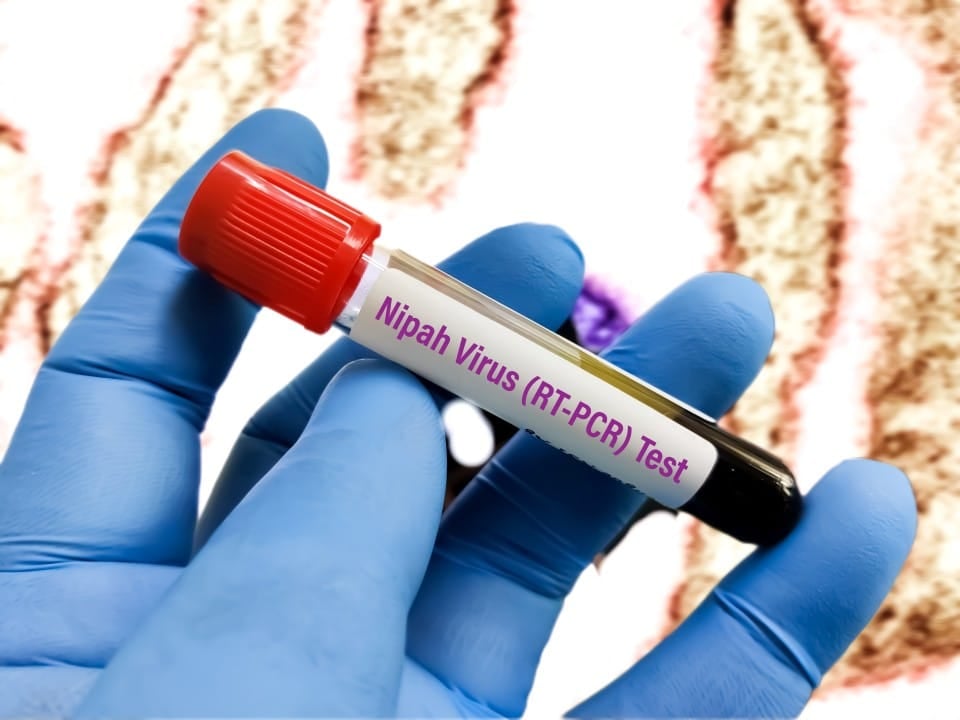
Índia health authorities confirmed two fatal cases of Nipah virus infection in the state of Bengala Ocidental in January 2026. The victims were 25-year-old working nurses. The victims were 25-year-old nurses who worked at the same hospital, indicating possible nosocomial transmission. The Organização Mundial of the Saúde (WHO) was officially notified on January 26th.
Several Asian countries have adopted immediate screening measures at airports and borders. Tailândia, Malásia, Cingapura, Hong Kong and Paquistão intensified monitoring of travelers coming from
- Reinforcement of health questionnaires on international flights.
- Rapid tests for respiratory or neurological symptoms.
- Preventive isolation of suspected cases.
The Nipah virus has a fatality rate between 40% and 75%, depending on local care conditions.
Origin and characteristics of the virus
The Nipah virus belongs to the henipavirus family, as does Hendra. Ele is classified as zoonotic, that is, it is transmitted from animals to humans. Morcegos frugivores from the Pteropodidae family act as natural reservoirs.
The first identification occurred in 1998 at Malásia, during an outbreak that affected pig farmers. Desde then, periodic records appear in South and Southeast Asia. Na Índia, previous episodes focused mainly on Kerala.
Transmission occurs via three main routes. Direct contact with secretions from infected bats represents the primary source. Produtos Contaminated palm derivatives also facilitate dissemination.
Known forms of transmission
Food contamination occurs especially with the consumption of fresh palm sap. Morcegos deposit saliva or urine in the collection container. Essa pathway predominated in outbreaks in Bangladesh.
Transmission between humans occurs through close contact with bodily secretions. Casos nosocomial cases, like the current one in Bengala Ocidental, involve healthcare professionals. The risk increases in hospital environments without adequate equipment.
- Contact with fluids from infected patients.
- Exposure to respiratory droplets in enclosed spaces.
- Direct care without adequate protection.
Human-to-human transmission remains less frequent than animal-to-human routes.
Another path involves intermediate animals such as pigs. Na Malásia in 1998, the virus passed from bats to pigs and then to humans. Abate mass of animals contained that epidemic.
Symptoms and clinical progression
Initial symptoms appear between 5 and 14 days after exposure. Febre discharge, headache and muscle pain mark the beginning. Muitos patients develop acute respiratory problems.
Encephalitis represents the most serious complication. Ela causes mental confusion, convulsions and reduced level of consciousness. In severe cases, it progresses to coma within 48 hours.
Some infected people remain asymptomatic. Sobreviventes may present permanent neurological sequelae. Alterações cognitive and motor skills affect part of those recovered.
The absence of specific treatment worsens the condition. Cuidados support in intensive care units increases the chances of survival. Isolamento strict prevents hospital spread.
Measures adopted at Índia
Authorities in Bengala Ocidental have isolated close contacts of confirmed cases. Mais of 100 people underwent active monitoring. Testes RT-PCR quickly identified infections.
The local government reinforced surveillance in hospitals. Treinamento of medical teams included individual protection protocols. Estoques of equipment was expanded.
- Distribution of N95 masks and waterproof aprons.
- Creation of exclusive wards for suspected cases.
- Contact chain tracking in communities.
Experience from previous outbreaks in Kerala has guided current actions.
International responses at Ásia
Neighboring countries have activated screening protocols at international airports. Tailândia implemented mandatory questionnaires for Índia passengers. Cingapura expanded thermal and laboratory tests.
Malaysia, with a history of outbreaks in 1998, has raised its level of preparedness. Hong Kong included Nipah in the list of immediately notifiable diseases. Paquistão adopted similar measures at ports of entry.
These actions aim to detect imported cases early. The WHO assesses the global risk as low outside the affected region. Não recommends restrictions on travel or trade.
History of outbreaks in the region
Ásia has been recording episodes of Nipah since the late 1990s. Malásia faced the largest initial outbreak, with hundreds of cases. Bangladesh presents annual occurrences linked to palm sap.
In Índia, Kerala concentrated most of the previous records. Episódios in 2018, 2021 and 2023 resulted in dozens of deaths. The current one in Bengala Ocidental marks geographic expansion.
Environmental factors favor the emergence of the virus. Desmatamento brings bats closer to human areas. Mudanças climate changes reservoir migration patterns.
Prevention strategies
Primary prevention focuses on reducing contact with reservoirs. Comunidades avoid consuming fresh, unprocessed sap. Proteção of plantations prevents contamination by bats.
In pig farming, biosafe measures minimize risks. Vacinação animal is not yet available. Vigilância in bats helps with monitoring.
- Thorough washing of fruits before consumption.
- Use of protective nets in sap collectors.
- Avoid direct contact with sick animals.
Healthcare professionals follow strict protocols in endemic areas.
Current control perspectives
The outbreak in Bengala Ocidental remains limited to two confirmed cases. Autoridades Indian companies maintain active tracking. Países Asians continue to undergo enhanced screening.
Research is advancing in the development of vaccines and antivirals. Anticorpos monoclonals show promising results in tests. Cooperação international strengthens response capacity.



