

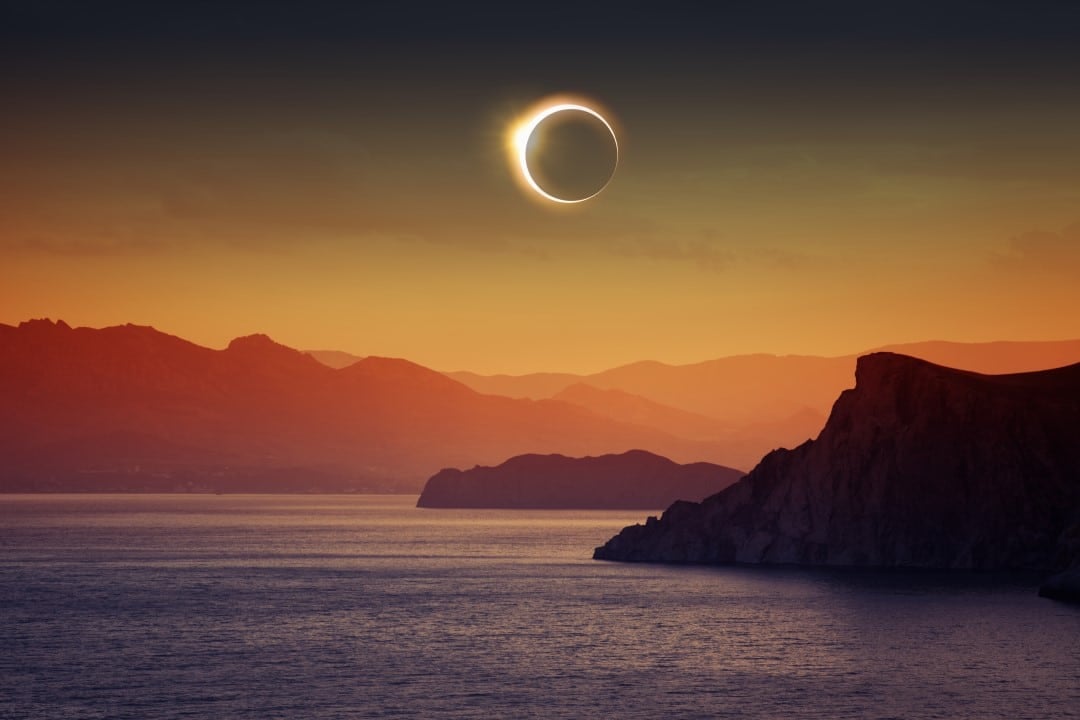
A total solar eclipse will occur on August 2, 2027, with maximum duration of totality reaching six minutes and 23 seconds in specific locations. Esse astronomical phenomenon stands out for the rarity of the coincidence of factors that prolong the period of complete darkness. The shadow of Lua will cross regions of the Eastern Hemisphere, affecting countries in Europa, África and Oriente Médio.
The event mobilizes astronomers and enthusiasts around the world, with advance planning of observations and trips. Agências spacecraft confirm the precise trajectory, which favors ideal conditions in areas close to the equator. Transmissões live will allow global monitoring of the show.
- Maximum duration exceeding six minutes at points such as Luxor
- Coincidence of terrestrial aphelion and lunar proximity
- Trajectory that maximizes the time of observable totality
- Visibility restricted to the eastern hemisphere of the planet
Astronomical factors that explain the prolonged duration
The position of Terra at aphelion makes the solar disk slightly smaller in the sky. At the same time, Lua will be close to perigee, increasing its apparent size. Essa rare combination allows Lua to completely cover Sol for an extended period.
The trajectory of the lunar shadow close to the equatorial line contributes to maximizing the time of total darkness. Cálculos from NASA indicate that these conditions will not repeat with equal intensity for decades. The phenomenon results from precise alignment between Sol, Lua and Terra.
Detailed trajectory of the lunar shadow
The shadow of Lua will begin its path over Oceano Atlântico. It will then touch south of Espanha, including areas close to Gibraltar. The advance will continue through Marrocos, Argélia and Tunísia.
Totality will reach Líbia and Egito, with emphasis on Luxor. The trajectory will continue through Arábia Saudita and end in regions of Iêmen. The total route will exceed 15 thousand kilometers on the Earth’s surface.

Luxor as an ideal observation point
Luxor concentrates the maximum duration of six minutes and 23 seconds in nearby points. Local weather conditions favor clear skies during summer. Sítios archaeological sites such as ancient temples will serve as the setting for the event.
Observers report growing interest in package tours for the region. Hotéis and operators prepare specific infrastructure to receive visitors. The combination of astronomical phenomenon and historical heritage attracts diverse audiences.
Tourism preparations in affected countries
Countries in the totality band develop plans to welcome astronomical tourists. No Egito, Nilo cruises include eclipse-aligned dates. Operadoras specialized companies offer itineraries that combine safe observation with cultural visits.
At Espanha and Marrocos, local authorities organize public observation points. Agências international markets sell packages more than a year in advance. The demand reflects the rarity of the event in accessible regions.
Safe observation of the phenomenon
Direct observation of Sol requires certified protection during partial phases. Filtros that meet ISO 12312-2 block harmful radiation. Telescópios and binoculars require adequate solar filters throughout the process.
During totality, protection is removed only when Lua completely covers the solar disk. Óculos Common or improvised methods do not prevent permanent damage to vision. Organizações scientific research reinforces these guidelines in educational campaigns.
Alternatives for those not on the path
Brazilians will not have direct visibility of the total eclipse in 2027. The phenomenon will occur at night in the national territory due to the difference in time zones. The geographical position places the country outside the range of totality and partiality.
Agencies like NASA plan live broadcasts in high definition. Observatórios international channels will offer multiple angles with expert narration. Plataformas digital devices will allow real-time monitoring of any location.
- Live broadcasts by space agencies
- Virtual events organized by astronomy associations
- Later recordings with detailed analysis
- Participation in online communities during the event
Historical context of prolonged eclipses
Eclipses lasting more than six minutes have occurred in the past, such as in 1991. The 2027 event stands out as one of the most extensive in the 21st century. Comparações show that similar phenomena require rare alignments.
Historical records indicate human interest in eclipses since ancient civilizations. No Egito Pharaonic, celestial phenomena influenced calendars and rituals. Modern observation combines advanced science with cultural tradition at places like Luxor.
Scientific expectations for the event
Researchers plan studies of the solar corona during totality. Instrumentos positioned on the trajectory will collect data on the solar atmosphere. The extended period facilitates detailed observations of bulges and coronal mass ejections.
International collaborations involve teams in multiple countries. Resultados will contribute to the understanding of solar activity and its effects on Terra. The eclipse represents a unique opportunity for advances in the heliosphere.
The total solar eclipse of August 2, 2027 is consolidated as an astronomical event of global prominence. Sua combination of exceptional duration and accessible trajectory generates advance planning on an international scale.



