Venezuela releases over 30 political prisoners including key activists in October 2025, sparking urgent calls for broader amnesty measures Por Luís Pereira
6 min de leitura
 |
Caracas, Venezuela – More than 30 individuals, widely recognized as political prisoners, were released across Venezuela on October 1st, 2025, as confirmed by the human rights group Foro Penal. These liberations are part of an ongoing process that advocates and family members describe as frustratingly slow, yet critical for the nation’s political landscape.
The releases follow a significant announcement made by Venezuela’s interim leader, Delcy Rodríguez, on September 30th, 2025. She unveiled a proposed “amnesty law” aimed at hundreds of detainees and declared that the infamous Helicoide detention center in Caracas would be repurposed into a sports and social services hub.
This development brings renewed focus on Venezuela’s human rights record, with international observers closely monitoring the government’s commitment to these pledges amidst persistent calls for greater transparency and accountability regarding detention conditions.
Ongoing releases and advocacy
Since early January 2025, when a new series of prisoner releases was initiated by the Venezuelan government, the Foro Penal human rights group has verified the liberation of 344 political prisoners, with 33 of these releases occurring on October 1st alone. This gradual process has been a central point of contention between human rights organizations and state authorities.
Government officials, while consistently denying the existence of political prisoners and asserting that all incarcerated individuals have committed verifiable crimes, estimate the total number of liberations at over 600. This figure, however, appears to encompass releases from prior years, leading to discrepancies in reporting and raising questions about the true scale of recent pardons.
Prominent activist regains freedom
Among those granted freedom on October 1st, 2025, was Javier Tarazona, a leading human rights activist who had been held since 2024 at the notorious Helicoide detention center. His release marks a significant moment for advocates, who have long campaigned for his freedom and that of many others.
His brother, José Rafael Tarazona, expressed immense relief on social media, stating, “After 1,675 days, four years and seven months, the day we so longed for has arrived: my brother Javier Tarazona is free.” He further added, echoing the sentiments of many, “The freedom of one is the hope of all.” Tarazona, director of FundaRedes, an organization monitoring alleged abuses by armed Colombian groups and Venezuelan Armed Forces along the border, had been arrested and subsequently accused of terrorism and conspiracy.
Helicoide detention center’s future
The announcement by Delcy Rodríguez regarding the transformation of the Helicoide detention center into a community resource facility on September 30th, 2025, has garnered mixed reactions. The proposed repurposing aims to shift the center’s image from one associated with repression to a place of public service.
This pledge comes in the wake of a recent United Nations report published in 2024, which detailed allegations of torture and inhumane treatment within Helicoide. The Venezuelan government has consistently rejected these accusations, maintaining that all detention practices adhere to national and international legal standards.
Slow pace and persistent demands
Families of the detained prisoners have voiced considerable frustration regarding the sluggish pace of the releases, asserting that the process is not moving quickly enough to address the urgent humanitarian concerns. Their collective voice continues to highlight the emotional and physical toll prolonged incarceration exacts on individuals and their loved ones.
These families, alongside various human rights defenders, are vehemently demanding the complete annulment of all charges and convictions against those considered political prisoners. They argue that these legal actions are often politically motivated and lack substantive evidence, calling for a comprehensive review of each case.
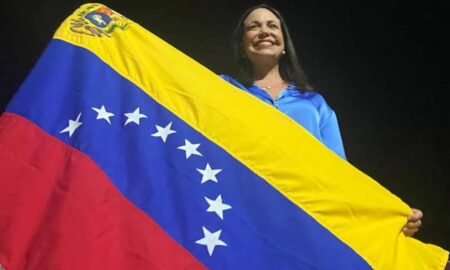
Nobel Peace Prize laureate and prominent opposition leader María Corina Machado, who has several close allies still imprisoned, has consistently advocated for their unconditional liberation. Her efforts underscore the high-profile nature of these cases and the international attention they command.
Key opposition figures remain incarcerated
Despite the recent wave of releases, several prominent opposition figures and their associates continue to be held in Venezuelan detention centers. Their ongoing incarceration remains a critical point of contention for both domestic and international human rights organizations, highlighting the selective nature of the current amnesty initiatives.
Among the notable individuals still detained are:
– Juan Pablo Guanipa, a leading opposition politician.
– Perkins Rocha, a respected lawyer and close ally of María Corina Machado.
– Freddy Superlano, a key leader of the opposition party Voluntad Popular.
Ramón Guanipa, son of Juan Pablo Guanipa, confirmed on social media that he and his younger siblings were able to see their father for the first time in months on October 1st, 2025, reporting that he was in good health despite his continued detention. Rafael Tudares, son-in-law of former opposition presidential candidate Edmundo Gonzalez, was among those released since January 8th, 2025.
Broader context of diplomatic engagement
The intensification of prisoner releases since Venezuela announced its new policy on January 8th, 2025, is seen against a backdrop of ongoing international scrutiny and diplomatic efforts aimed at promoting human rights and democratic stability in the region. Global bodies and individual nations continue to press for comprehensive reforms.
Gonzalo Himiob, vice president of Foro Penal, reiterated the significance of each step towards freedom, stating on social media, “Every step towards freedom and the definitive end of repression is important.” This sentiment underscores the ongoing struggle for civil liberties and political rights in the country.
International organizations have repeatedly called for a complete and unconditional release of all political prisoners, along with guarantees for due process and the protection of fundamental freedoms. The Ministry of Communication of Venezuela, responsible for media inquiries, did not immediately respond to requests for comment regarding the latest releases.