
FIFA president Gianni Infantino sparks debate over ending Russia’s four-year international football ban, citing lack of impact

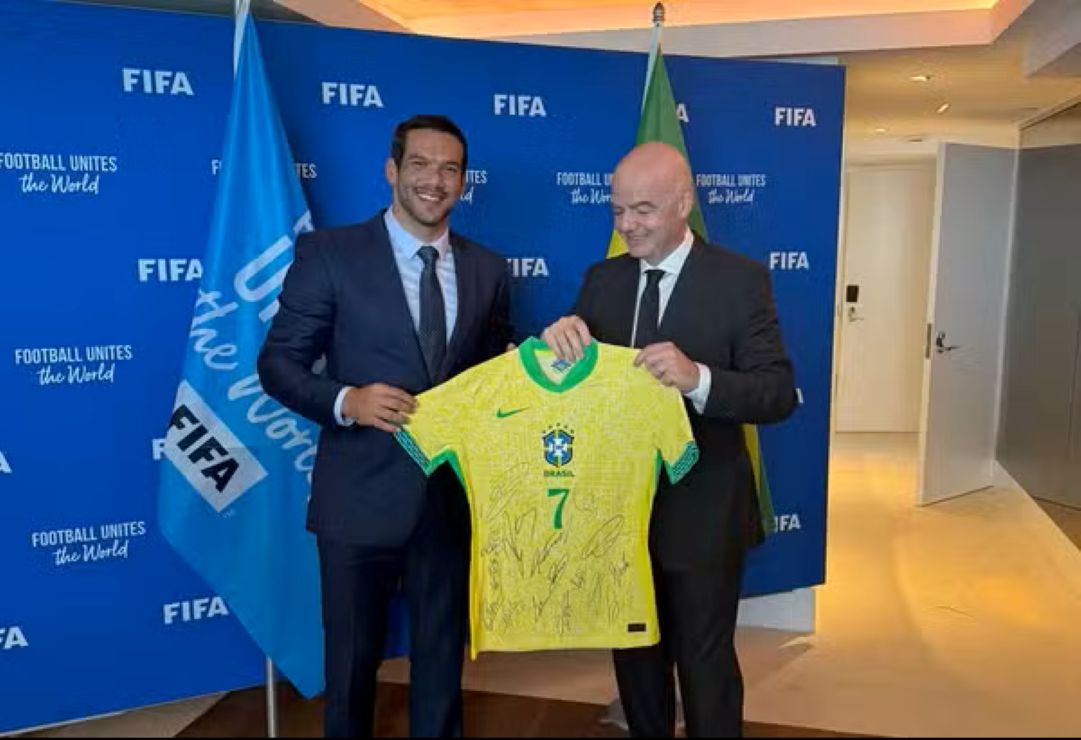
Global football governing body FIFA is currently re-evaluating the four-year suspension imposed on Russia, with President Gianni Infantino advocating for its immediate lifting, a ban initiated in February 2022 following the full-scale invasion of Ukraine that has barred Russian clubs and the national team from all international competitions under FIFA and UEFA, creating a significant point of contention within the global sports community about the role of sanctions in political conflicts.
Infantino stated that the prohibition has yielded no positive outcomes, instead fostering “frustration and hatred” within the football community and suggesting a shift in FIFA’s stance. He believes allowing young Russian players to participate in European football could foster understanding and connection.
This push for reintegration has, however, drawn swift and strong condemnation from Ukrainian officials, who label Infantino’s comments as “irresponsible” and detached from the ongoing realities of the conflict.
Infantino’s call for reintegration and rationale
Gianni Infantino has articulated a strong desire to see Russia’s ban revoked, expressing a belief that the measure has proven ineffective since its implementation in February 2022. He stated emphatically that the exclusion of Russian athletes and teams has not contributed positively to peace or resolution efforts, only fueling “frustration and hatred” among those impacted. The FIFA president underscored the potential benefits of allowing young Russian players to participate in European football, suggesting it could serve as a valuable avenue for fostering understanding and connection across borders, thereby maintaining crucial international sporting ties.
His rationale centers on the principle that international sporting bodies should not conflate political conflicts with the universal spirit of football, firmly stating that FIFA should never prohibit any country from playing due to the acts of its political leaders. Infantino emphasizes the importance of maintaining open channels of communication even amidst global tensions, arguing that keeping these ties alive is crucial for future reconciliation and dialogue, positioning football as a potential bridge rather than a barrier. This philosophical stance separates sports from direct political retribution, aiming for a broader, long-term impact on global relations through athletic engagement.
The ongoing suspension, which has kept Russian teams out of major tournaments for nearly three years as of early 2025, has caused considerable discontent within Russia. Infantino’s comments appear to acknowledge this sentiment, suggesting the ban’s continuation only intensifies negative emotions without achieving its intended political outcome.
Ukraine and UEFA’s steadfast opposition
Matvii Bidnyi, Ukraine’s Minister of Sports, has vehemently criticized Infantino’s recent statements, describing them as “irresponsible” and “childish” given the ongoing conflict. Bidnyi argued that such remarks directly detach the sport from the harsh realities faced by Ukrainian citizens, where children are tragically losing their lives daily due to military actions. He stressed that ignoring the direct consequences of the invasion, particularly the immense human cost, undermines the very values football purports to uphold, reinforcing the need for unwavering global solidarity with Ukraine against aggression.
Furthermore, Aleksander Ceferin, the President of UEFA, has consistently reiterated that the cessation of the war in Ukraine remains an absolute prerequisite for Russia’s reintegration into international football. These clear statements, which were also firmly articulated in April 2024, reflect a resolute position from Europe’s governing body. Ceferin’s consistent message emphasizes that a return to normalcy in football, particularly concerning Russian participation, can only occur once the broader geopolitical conflict has been definitively resolved, thereby linking athletic participation directly to achieving lasting peace and stability in the region.
The Ukrainian minister also emphasized that FIFA’s purported role in promoting peace should not come at the expense of acknowledging the victims of aggression. He implied that a premature lifting of sanctions would legitimize the actions of political leaders responsible for the conflict, thereby compromising the moral authority of international sports organizations. This firm stance from both Ukrainian authorities and UEFA highlights a significant ideological divide within global football leadership regarding the appropriate response to geopolitical crises.
Historical background of the widespread suspension
The decision to suspend Russian clubs and national teams was made with unprecedented speed and unity in February 2022, shortly after the full-scale invasion of Ukraine. This decisive move by FIFA and UEFA was not an isolated incident but part of a broader, concerted international response designed to isolate Russia across various economic, cultural, and sporting sectors, aiming to exert significant pressure on the Kremlin to de-escalate the conflict. The ban effectively removed Russia from qualification processes for major international events, including the prestigious FIFA World Cup and the UEFA European Championship, thereby profoundly impacting the country’s national football development and the careers of numerous athletes.
The initial four-year term of the suspension, which would see it naturally conclude in February 2026, has been a significant point of contention and ethical debate since its inception. While proponents of lifting the ban argue that collective punishment of athletes is inherently unjust and disproportionate, others firmly maintain that the severity and ongoing nature of the conflict necessitate such stringent measures. They argue that these sanctions are crucial for upholding international norms and expressing unequivocal global condemnation of aggressive acts, highlighting the complex ethical and political dimensions of sanctioning nations in the realm of international sports.
Controversy surrounding the FIFA peace prize to Trump
Further adding to the recent discourse around FIFA’s political engagements and leadership decisions, Infantino also found himself defending the organization’s controversial move to award a “peace prize” to former United States President Donald Trump during the 2026 World Cup draw event. Infantino robustly justified the accolade by reiterating FIFA’s overarching commitment to actively promoting global peace, asserting that any and all actions contributing positively to this paramount goal should be actively pursued by the organization. He specifically mentioned that, from an objective standpoint, Trump “deserves” the recognition, carefully linking the award to broader efforts that FIFA believes foster international harmony and stability, despite the award drawing significant criticism from various commentators who questioned both the criteria and the timing of such a high-profile recognition, particularly given Trump’s frequently contentious political history and the potential for blurring lines between genuine sports diplomacy and political endorsement.
FIFA’s evolving role in global geopolitics
Infantino’s recent public statements, combined with FIFA’s actions such as the controversial peace prize, collectively underscore the organization’s increasingly proactive willingness to engage directly in complex geopolitical discussions. This approach leverages FIFA’s immense global platform beyond purely sporting matters, aiming to position the body as a significant and influential actor in international relations, capable of shaping dialogue and actively promoting its specific vision for global unity through football.



