

The US space agency Nasa is preparing to open the first launch window for the long-awaited Artemis 2 mission, a significant milestone in the return program to The Este event marks the first manned flight towards the Terra natural satellite since the historic Apollo 17, which took place in 1972. Expectations are high to accompany the sending of the powerful Space Launch System (SLS) rocket into space.
The live broadcast of the launch will be made widely available on the internet, allowing enthusiasts and curious people from all over the world to follow each stage of this important space endeavor. The North American agency reinforces its commitment to transparency and accessibility of its projects.
The initial takeoff attempt is scheduled for Sunday (8), with the launch window opening at 11:41 pm, at Brasília time. Estes opportunity intervals for takeoff, crucial to the success of the mission, will last two hours each, as informed by Nasa.
Preparations for the historic launch
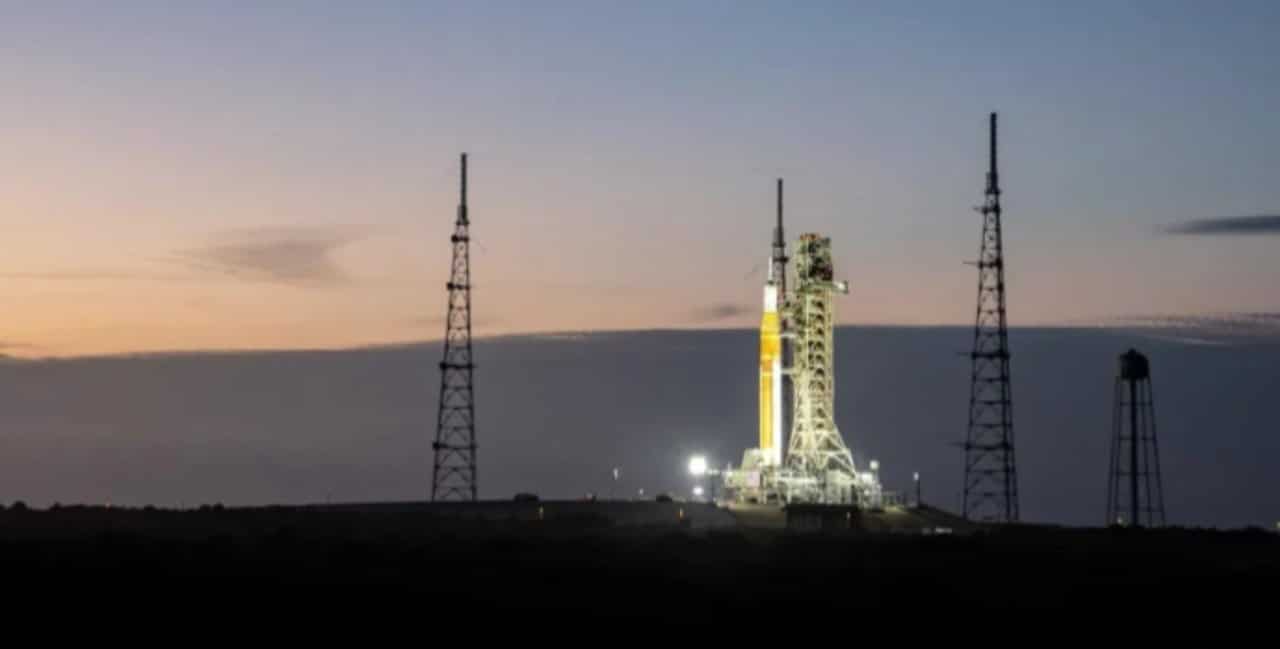
At Centro Espacial Kennedy, at Flórida (USA), preparations for the launch of Artemis 2 are at an advanced stage. The SLS rocket booster is now in place, marking the culmination of years of development and rigorous testing by engineers and scientists at Nasa.
The Space Launch System (SLS) is the most powerful rocket ever developed by Nasa, specifically designed to carry heavy payloads and crew on deep space exploration missions. Sua capability is fundamental to the Artemis program, which aims to establish a sustainable human presence in Lua.
The Complexity of a Space Launch Window
A launch window is a rigorously calculated period of time in which a rocket can be safely launched to reach its destination and meet mission objectives. Esses intervals are determined by a series of complex and interdependent factors, crucial to the success of any space journey.
Among the factors considered are the relative position of the Terra and the space destination, which directly influence the trajectory and fuel consumption. The meteorological conditions at the launch site, the technical limits imposed by the space vehicle itself and the availability of tracking and security systems are equally essential to define the opening and closing of these windows.
New crew and their challenges
The Artemis 2 mission will make history by taking four astronauts to orbit Lua, without landing. The team is made up of Americans Reid Wiseman (commander), Victor Glover (pilot), Christina Koch (mission specialist 1) and Canadian Jeremy Hansen (mission specialist 2). Eles will board the Orion capsule for a flight that will test crucial deep space survival and safety systems. The selection of these individuals represents an important step in the diversification of space exploration, including the first woman and the first non-American astronaut to participate in a lunar mission. Durante the journey, the crew will perform numerous systems checks, orbital maneuvers and communications to validate the spacecraft’s performance in real lunar flight conditions, setting the stage for future landing missions.
The meaning of the absence of a lunar landing
The decision not to include a lunar landing in the Artemis 2 mission is strategic and reflects a cautious and methodical approach to Nasa. Embora the Orion capsule is designed to take crew members into deep space, it does not have the lunar landing module necessary for a safe descent to the surface.
The main objective of this phase of the mission is to exhaustively test all of the spacecraft’s systems in a manned lunar environment. Isso includes the validation of Terra’s life support, communication systems and maneuverability in distant orbit, elements crucial to the safety of astronauts.
This step allows the ground team and crew to gain invaluable experience in deep space operations. Learning from Artemis 2 will be essential to mitigate risks in the next phases of the program, especially in the mission that will seek to return humans to the lunar surface.
The space agency prioritizes technology validation and team training before attempting a landing. The gradual approach aims to ensure maximum safety and significantly increase the chances of success of future missions, culminating with Artemis 3 and subsequent landings.
Towards the future: Artemis 3 and the lunar base
The Artemis program is not limited to mission Artemis 2; it represents an ambitious long-term vision for space exploration. Artemis 3, scheduled for the next few years, will be the mission that finally returns humans to the lunar surface, including the first woman and first person of color to set foot on Lua.
In addition to the landings, Nasa plans to establish a sustainable human presence on Lua, with the development of the Gateway space station in lunar orbit and the construction of a surface base. Essas infrastructures will serve as outposts for scientific research and technology testing.
The experience gained in the Artemis program will be vital for the next great frontier of space exploration: sending manned missions to Marte. The Lua will act as a “proving ground” for systems and procedures that will be applied on even more distant and challenging journeys.
Follow the broadcast and live coverage
Nasa maintains a 24-hour broadcast of the SLS rocket, which is already active and will cover all possible launch windows, ensuring that the public does not miss any crucial moments. The agency is committed to offering broad and continuous access to project information and images.



