
NASA shifts Artemis II lunar mission launch to March 2025 after critical hydrogen leak during fueling test

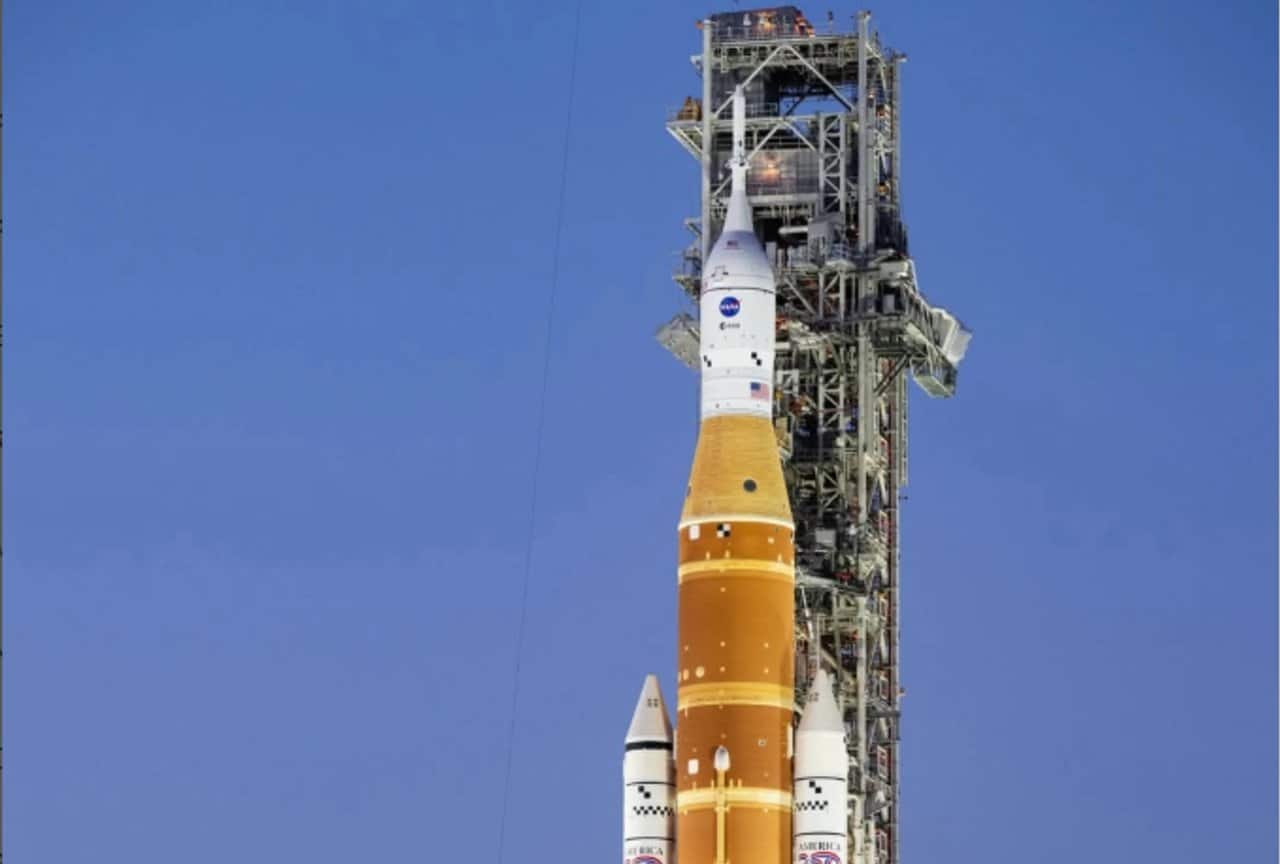
The Artemis II mission, which aims to orbit the Moon, has seen its launch window shifted to March 2025 by NASA, following a critical hydrogen leak detected during a recent cryogenic fueling test. Originally slated for February 8, 2025, the postponement allows engineers to thoroughly address technical issues and ensure the absolute safety of the crew and spacecraft before attempting the ambitious journey. This latest delay underscores the complex challenges inherent in human spaceflight and the meticulous preparation required for deep-space exploration.
The decision came after an exhaustive two-day general rehearsal, concluded early on Tuesday, February 3rd, where a liquid hydrogen leak was identified at an interface crucial for directing fuel to the rocket’s core stage. This unforeseen setback, coupled with other system checks and cold weather impacts, prompted the agency to re-evaluate the launch timeline.
Engineers successfully loaded cryogenic propellant into the Space Launch System (SLS) tanks during the test, a significant achievement despite the identified issues. However, the integrity of the fuel system connections remains a primary concern requiring immediate resolution.
Unexpected challenges during cryogenic fueling
The recent general fueling rehearsal for the Artemis II mission encountered several unforeseen obstacles, primarily a liquid hydrogen leak at a critical interface. This component is designed to channel cryogenic fuel into the rocket’s core stage, and its compromised integrity necessitated the immediate halt of operations and a comprehensive investigation.
Engineers spent hours on Monday, February 2nd, attempting to resolve the leakage, which significantly impacted the countdown sequence. The incident highlighted the delicate nature of handling super-cold propellants and the rigorous testing required for such complex systems.
Overcoming technical hurdles and cold weather impact
Before and during the fueling operations, NASA engineers meticulously monitored the impacts of unusually cold temperatures at the Kennedy Space Center on critical systems, implementing measures to guarantee equipment safety. These low temperatures initially delayed the start of fueling, as certain interfaces needed to reach appropriate thermal conditions before propellant loading could commence, adding another layer of complexity to an already intricate procedure. Despite these challenges and the hydrogen leak, teams successfully loaded all propellants into both the core stage and interim cryogenic propulsion stage tanks, eventually sending a five-person team to the launch pad to finalize Orion capsule closure operations. This demonstrated resilience in adverse conditions, even as it revealed areas needing further refinement.
Astronaut crew status and pre-launch quarantine
The four astronauts designated for the Artemis II mission, who had entered quarantine on January 21st, 2025, in anticipation of the February 8th launch, have been released due to the postponement. They will no longer travel to NASA’s Kennedy Space Center in Florida as originally planned for Tuesday, February 3rd.
This adjustment allows the crew — NASA astronauts Reid Wiseman, Victor Glover, Christina Koch, and CSA astronaut Jeremy Hansen — to return to their normal routines temporarily. They will re-enter the mandatory quarantine approximately two weeks prior to the newly scheduled launch date in March 2025, a standard procedure designed to protect them from illness before spaceflight.
Detailed review and second wet dress rehearsal planned
Following the two days of rigorous testing, NASA stated that engineers successfully met planned objectives and navigated various challenges. Despite these achievements, comprehensive data review is now underway to fully understand all incidents.
The agency also confirmed that teams would conduct a second wet dress rehearsal in an aquatic environment. This additional test aims to provide further assurance regarding the system’s readiness and address any lingering concerns from the initial trial.
This meticulous approach underscores NASA’s commitment to crew safety and mission success, ensuring all components function perfectly before the next launch attempt.
Persistent communication issues and updated safety protocols
Engineers are also actively working to rectify persistent audio communication channel failures between ground teams, issues that resurfaced during the recent general rehearsal. Reliable communication is paramount for coordinating complex pre-launch activities.
These disruptions, observed in the weeks leading up to the test, pose a significant operational challenge that requires a robust and permanent solution to ensure seamless coordination.
Furthermore, updated procedures for purging the Orion service module cavities with breathable air, instead of nitrogen gas, during crew closure operations have been adopted. This change directly enhances the safety of the ground crew assisting astronauts in the White Room.
A valve associated with the pressurization of the Orion crew module hatch, recently replaced, also required re-tightening during the test, adding to the list of minor but critical adjustments needed.
Path forward to a March 2025 launch window
With a potential March 2025 launch window now established, NASA will undertake a detailed analysis of all test data, implement necessary corrections, and restart simulations before finalizing an official new launch date. The agency reiterates that crew safety remains the paramount priority, ensuring the secure return of all four astronauts upon mission completion.



