
Risk of battery short circuit leads BYD to recall 89,000 Qin Plus DM-i units


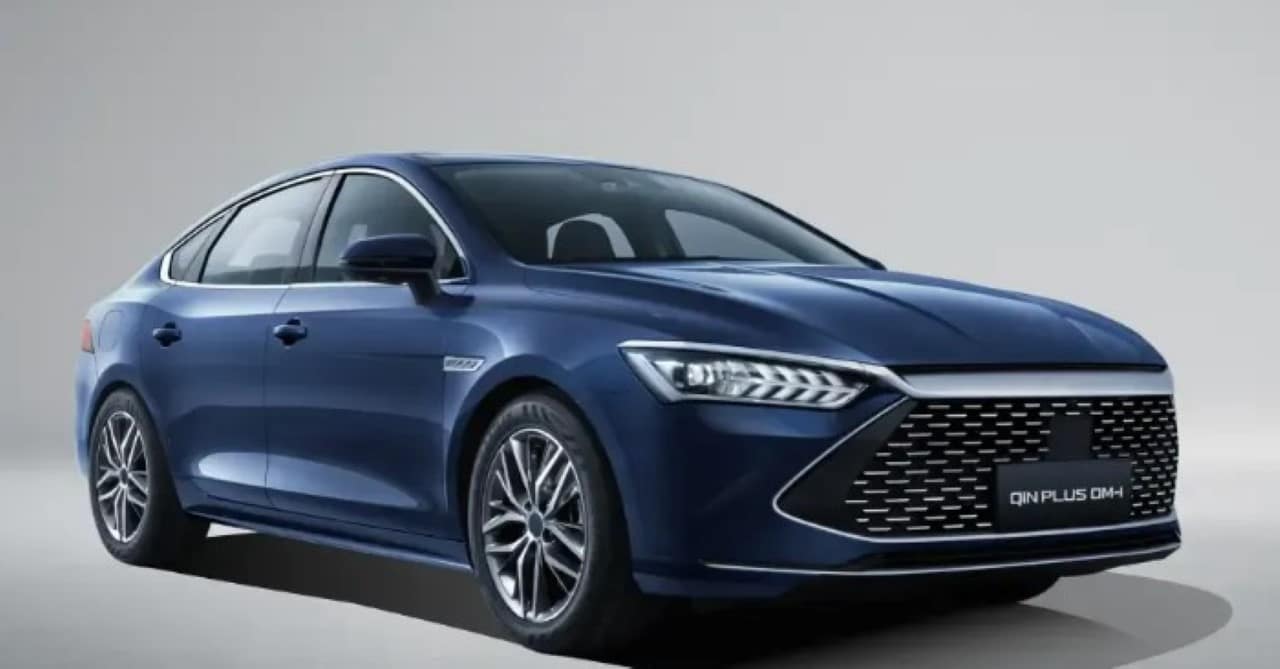
BYD, one of the world’s largest electric vehicle manufacturers, announced a large-scale recall on China involving 88,981 units of its popular plug-in hybrid sedan, the Qin Plus DM-i. The measure was taken due to a potential defect in the lithium battery pack, which presents a safety risk to the vehicle’s occupants.
The failure, according to the official statement submitted to Administração Estatal of Regulação of Mercado of China (SAMR), is related to a specific component of the battery pack that can lead to a short circuit. Esta condition, in extreme cases, increases the risk of an overheating event, known as thermal runaway, which can result in fire.
The safety call covers model Qin Plus DM-i vehicles that were manufactured between January 1, 2021 and September 30, 2023. The company has already started the communication process with the owners of the affected cars so that the necessary corrections can be carried out at no cost.
Technical details of the identified fault
The investigation conducted by BYD, in conjunction with Chinese regulatory bodies, indicated that the source of the problem lies in the power distribution unit (PDU) of the battery pack. Durante the manufacturing process of this component, the injection of insulating resin may not have been applied uniformly, leaving vulnerable points in the electrical insulation. With continued use of the vehicle, especially in conditions involving high voltages and currents, this inconsistency may allow an internal short circuit to occur between the high voltage buses. The battery management system (BMS), although sophisticated, may not be able to detect this specific fault in time to prevent a drastic increase in temperature, significantly increasing the risk of thermal runaway and, consequently, a fire in the battery compartment, which poses a serious danger to the safety of passengers and the vehicle.
The solution proposed by the manufacturer
To solve the problem and ensure the safety of its customers, BYD developed an action plan divided into two main steps, combining remote technology and physical intervention. The first phase consists of releasing an over-the-air (OTA) software update for the battery management system (BMS) of the vehicles involved. Este new software improves monitoring algorithms, making the system more sensitive to abnormal variations in voltage and temperature that could indicate an imminent defect in the power distribution unit. The update will also enable the system to issue preventive alerts on the vehicle’s dashboard, instructing the driver to contact a dealership immediately if any anomaly is detected.
The second step of the recall plan requires owners to take their vehicles to an authorized BYD dealer for a detailed physical inspection of the battery pack. Technicians will check the integrity of the power distribution unit and other critical components. Caso any irregularity or sign of defect is found during the inspection, the part will be replaced with a new one, manufactured under more rigorous quality control processes. Todo the procedure, including inspection and possible replacement of components, will be carried out completely free of charge for consumers, as part of the brand’s commitment to safety and customer satisfaction.
Recent BYD recall history
This recall of the Qin Plus DM-i is not an isolated event in BYD’s recent history, reflecting the challenges associated with exponential production growth.
At the end of the previous year, the company had already recalled more than 115 thousand units of the Tang DM-i and Yuan Pro models due to a similar fire risk related to the battery management system.
Months earlier, another call involved almost 100,000 units of the Dolphin and Yuan Plus models, this time due to a failure in a power converter component that could lead to a loss of power while driving.
These successive incidents highlight the growing pressure on the manufacturer’s quality control processes and the increasingly rigorous surveillance by Chinese regulatory agencies as they seek to ensure safety in the world’s largest electric vehicle market.
BYD’s position in the global market
Despite challenges related to safety and recalls, BYD has consolidated its position as a global leader in the sale of new energy vehicles, surpassing major competitors.
The company is widely recognized for its Bateria Blade technology, which is praised for its safety and energy density, although the current fault is in an auxiliary component rather than the battery cells themselves.
The way BYD manages this recall will be crucial to maintaining consumer trust, demonstrating transparency and agility in resolving issues to protect its brand image.
The electric vehicle market in China
The automotive scenario in China is characterized by intense competition, with dozens of local and international brands vying for consumer preference with constant innovations and aggressive pricing strategies.
In this environment, vehicle safety has become one of the main focuses for both consumers and the government, which, through agencies such as SAMR, has intensified inspection and the application of strict quality and safety standards.
Guidance for owners
BYD is actively notifying owners of the 88,981 affected Qin Plus DM-i vehicles in China through multiple communication channels, including mail, mobile apps and direct dealer contact. The recommendation is that, upon receiving the communication, drivers schedule the service as soon as possible to carry out the software update and physical inspection of the component.
Repercussion and company communication
The official recall communication was formalized through registration with Administração Estatal of Regulação of Mercado, following the country’s regulatory protocols. The company has used its official channels to inform the public about the nature of the problem and corrective measures.
BYD’s dealership network throughout China was mobilized and prepared to receive the large volume of vehicles, with the aim of carrying out procedures efficiently and minimizing inconvenience for customers, reinforcing the seriousness with which the brand is treating the issue of safety.



