

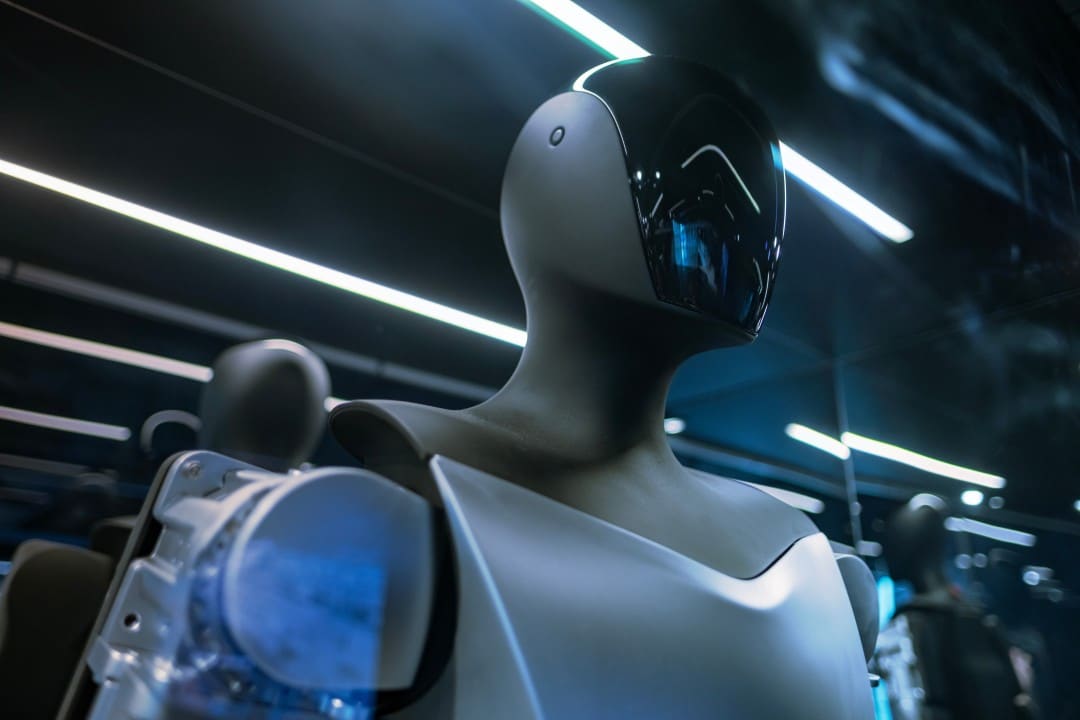
Tesla plans to carry out final assembly of its Optimus humanoid robot on the Estados Unidos, but continues to rely significantly on a network of Chinese suppliers for essential components. Essa relationship involves actuators, motors, sensors and batteries, developed over the last few years. Analistas point out that this dependence is likely to persist in the short and medium term due to China’s competitive advantages in costs and technical expertise.
The Optimus project represents a strategic bet by the company to diversify its operations beyond electric vehicles. The third generation of the robot, scheduled to be unveiled in the first quarter of 2026, marks the beginning of preparations for scale production. The company already uses robot units in its internal facilities for operational tasks.
Consolidated supply chain
Chinese suppliers have collaborated with Tesla since 2023 to develop specific parts for the Optimus. Essas companies actively participate in the design and improvement of components, including recent prototypes with structural innovations. Deep integration reflects a strategy similar to that adopted by other technology giants in global chains.
This network includes companies specializing in thermal controls, actuators and sensors. Elas offer fast deliveries and competitive costs, factors that are difficult to replicate in other regions at the current time. The formation of a chain dedicated to Optimus is gaining prominence among suppliers, who see participation as an opportunity for growth.
Chinese leadership in humanoid robotics
China consolidated its prominent position in the global humanoid robot market in 2025. Empresas locations dominated the top shipping lists, with five of them in the top ten according to market data. Essa leadership reflects continued investments in research and scaled production.
Xangai-based startup AgiBot led shipments with more than 5,000 units last year. Essa brand accounted for about 40% of the total global market. Já to Unitree Robotics occupied second place, with around 4,200 robots distributed, known for models with advanced movement capabilities.
Other Chinese companies have contributed to their collective dominance in the sector. Total global shipping volume has grown significantly compared to previous years. Essa expansion demonstrates the growing maturity of the industry in the Asian country.

Third generation production plans
Tesla announced that the third-generation version of the Optimus will be the first model designed for mass manufacturing. Melhorias include advances in robot hands and overall design optimization. Preparations for the production line are progressing, with a focus on operational efficiency.
Production is expected to start before the end of 2026 at the Fremont and Austin factories. The planned capacity reaches 1 million units per year in the long term. Inicialmente, the robots will meet the company’s internal demands before commercial expansion.
- Precise actuators for complex movements.
- Efficient motors for continuous operation.
- Advanced sensors for environmental interaction.
- High-density batteries for extended autonomy.
These components form the technical basis of the project. Their integration guarantees expected performance in real applications.
Competitive advantages of the Chinese network
Chinese expertise in robotics components offers advantages in scale and speed of development. Fornecedores locations maintain rapid innovation capability, essential for frequent iterations in Optimus. Essa dynamics accelerates the Tesla schedule compared to alternatives.
Reduced costs represent another decisive factor when choosing the Asian chain. Empresas Chinese companies dominate the production of high-precision items at affordable prices globally. Essa reality influences strategic decisions of automakers and technology companies in similar projects.
The collaboration includes joint testing of prototypes. Chinese Equipes contribute directly to refinements, such as curved structures in specific parts of the robot. Essa technical partnership strengthens project viability within tight deadlines.
Expected commercial expansion
Each unit of Optimus should cost between 20 thousand and 30 thousand dollars on the market. Initial sales will prioritize companies before reaching individual consumers. Tesla already employs robots in offices for administrative tasks and demonstrations.
The integration of Optimus into the company’s ecosystem covers multiple operational areas. Current Unidades perform practical functions in controlled environments. Essa internal testing phase validates capabilities before broad commercialization.
The humanoid robot is positioned as a solution to growing automation demands. Aplicações include assembly lines and general services. Scalability directly depends on the stability of the established supply chain.
Global competition in the sector
The humanoid robots market attracts investments from several countries. China moves quickly with multiple startups in the spotlight. Empresas as AgiBot and Unitree demonstrate athletic and functional capabilities in commercial models.
Tesla competes directly in this scenario by prioritizing mass production. Outras global companies develop parallel projects, but face similar supply challenges. Dependence on Asian chains is becoming common among leaders in the segment.
Innovations in sensors and actuators drive overall advancements. Fornecedores specialists accelerate adoption in varied industries. The growth projected for the coming years reflects the transformative potential of technology.
Technical details of the components
Chinese actuators guarantee precision in the movements of the Optimus. Esses items allow replication of human gestures with high fidelity. Co-development optimizes performance on repetitive tasks.
Compact motors contribute to the robot’s energy efficiency. Eles support prolonged operation without frequent recharging. Integrated Sensores detect environments with high accuracy.
State-of-the-art batteries extend operational autonomy. Componentes thermos regulate temperature during intense use. Essa technical combination supports practical applications in factories and offices.
The supply network is constantly evolving to meet growing demands. Fornecedores expand capabilities in response to Tesla’s plans. Essa adaptation reinforces the long-term partnership in the Optimus project.



