


The month of February 2026 promises to be a period of great interest for astronomers and night sky enthusiasts, marked by a full lunar cycle and a rare annular solar eclipse. The celestial events will begin with an imposing Lua Cheia and will culminate with the phenomenon that will create a “ring of fire” in the sky, although its visibility will be restricted to a few parts of the globe.
The four main phases of Lua — Cheia, Minguante, Essa dynamics not only alter the appearance of the natural satellite in the sky, but also carry symbolic meanings for astrology, which interprets these movements as influences on collective and individual energy.
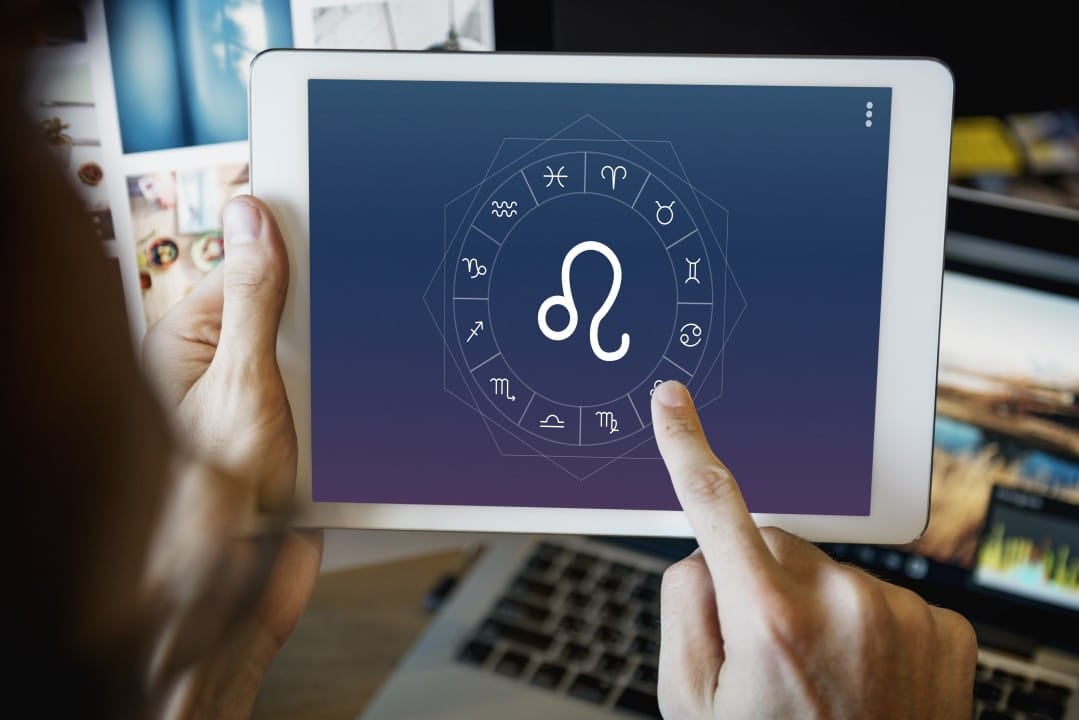
For observers on Brasil, the lunar phases will be perfectly visible, weather conditions permitting. However, monitoring the solar eclipse will depend on online broadcasts, as the country is not on the main route of the phenomenon. The astronomical calendar offers a unique opportunity to connect with the rhythms of the cosmos.
The complete schedule of lunar phases
The February lunar cycle unfolds with mathematical precision, offering a continuous spectacle in the night sky. The journey begins on February 1st, at 7:09 pm (Brasília time), with Lua Cheia in the sign of Leão, at which time the lunar disk will be completely illuminated by sunlight, reaching its maximum brightness. Then, the satellite begins its decline phase, reaching phase Minguante at Escorpião on February 9, at 9:43 am, when half of its face will be visible and the other will be plunged into darkness. The central point of the month occurs on February 17, at 9:01 am, with Lua Nova at The renewal cycle is completed with Lua Crescente in Gêmeos, on February 24, at 9:27 am, when light gradually returns to dominate the lunar surface, setting the stage for the next Lua Cheia.
Annular solar eclipse: the ring of fire in the sky
The most anticipated event of the month will be the annular solar eclipse, which will occur simultaneously with Lua Nova on February 17th. Este phenomenon happens when Lua is at its apogee, the furthest point of its orbit in relation to Terra.
Due to this greater distance, the lunar disk cannot completely cover Sol, leaving the solar edges visible. The result is the formation of a dazzling “ring of fire” around the silhouette of Lua, a spectacle of rare beauty.
Visibility of the eclipse in its entirety will be extremely limited geographically. The main viewing swath of the Ring of Fire will pass through Antártida and southern parts of África, leaving most of the world, including Brasil, out of the way.
For Brazilians and other spectators in regions where the phenomenon will not be visible, the best alternative will be to follow the event through live broadcasts, which will be made available by observatories and international space agencies.
The Lua Cheia in Leão opens the cycle
The first major phase of the month, Lua Cheia on February 1st, takes place under the sign of Leão. Este is the moment of maximum lunar illumination, when the satellite directly opposes Sol, reflecting all its light towards Terra and providing clearer nights.
In astrology, the Lua Cheia in Leão is associated with themes such as self-expression, creativity, generosity and leadership. It is considered a culmination phase, ideal for celebrating achievements and expressing talents in an authentic and confident way.
Transitions and the Lua Minguante in Escorpião
After reaching its peak brightness, Lua begins its decreasing phase, culminating in Lua Minguante on February 9th. At Nesse stage, the satellite appears in the sky with half of its disk illuminated, a clear sign that a cycle is approaching its end.
This phase will occur in the sign of Escorpião, which in astrology is deeply linked to processes of transformation, detachment and introspection. It is a period seen as conducive to reflection, finalizing pending issues and releasing standards that no longer serve.
The energy of Lua Minguante in Escorpião invites an inner dive, encouraging the analysis of deep emotions and preparation for the new cycle that will begin with Lua Nova.
The astrological meaning of lunar transits
Throughout February, Lua is not just limited to its four main phases; it also transits through all twelve signs of the zodiac, remaining in each for approximately two and a half days. Para astrology, these rapid transits modulate collective energy and mood, influencing day-to-day activities and reactions. Cada sign that Lua passes through activates different themes, from the organization and practical focus of Virgem to the search for harmony and diplomacy of Libra.
The main transits of the month, in addition to those that mark the main phases, include the passage of Lua through Virgem, Libra, Sagitário and Capricórnio. Quando to Lua is in Sagitário, for example, the tendency is towards optimism, search for adventure and expansion of horizons. Já passing through Capricórnio favors responsibility, planning and discipline. Acompanhar these movements can offer a tool of self-knowledge and planning for those who follow astrological traditions.
The Lua Crescente in Gêmeos and the renewal
The February lunar cycle ends with Lua Crescente on February 24, in the sign of Gêmeos. Esta phase symbolizes a new beginning, a time to plant seeds and start projects. Astrologicamente, Gêmeos is a sign associated with communication, curiosity, learning and versatility, making this a favorable period for expanding contact networks, studying new subjects and seeking creative solutions to challenges.
Recommendations for observing the stars
To enjoy February’s astronomical events, no sophisticated equipment is needed. The phases of Lua can be observed with the naked eye from anywhere on Brasil, with a clear, cloudless sky required to appreciate the changes in the satellite’s illumination.
However, for a richer experience, it is recommended to stay away from large urban centers. Light pollution from cities obscures the brightness of the stars and the details of the lunar surface. Binóculos or amateur telescopes can reveal craters and other geological formations on Lua, making observation even more fascinating.



