
Battery failure leads BYD to recall almost 90,000 Qin Plus DM-i model vehicles in the Chinese market


BYD, one of the world’s largest electric vehicle manufacturers, initiated a large-scale recall in China involving 88,981 units of its popular plug-in hybrid sedan, the Qin Plus DM-i. The measure was motivated by the identification of a potential risk of failure in the battery management system (BMS), which, in extreme cases, could lead to overheating and increase the risk of fire. The call covers vehicles manufactured between January 2021 and September 2023.
The decision was officially communicated to Administração Estatal of Regulação of Mercado of China (SAMR), the body responsible for monitoring the quality and safety of products in the country. The government agency will oversee the process to ensure that all owners of affected vehicles are notified and that necessary fixes are implemented effectively and safely.
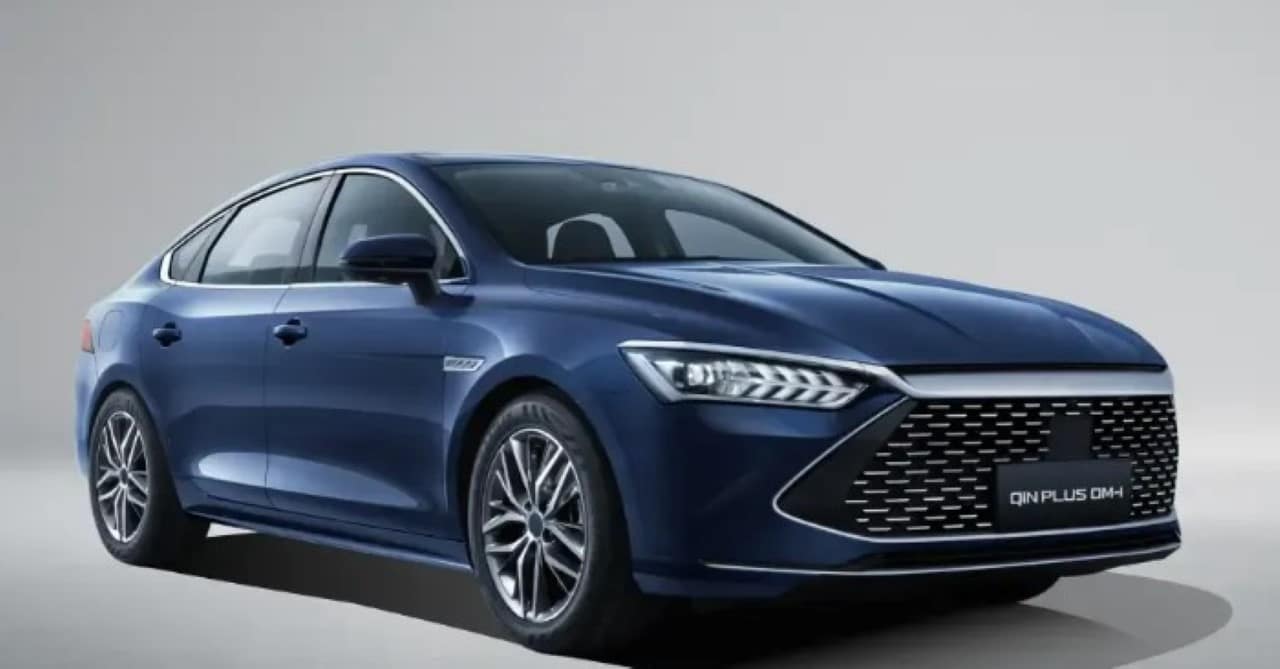
This recall adds to other recent preventive actions by the automaker, reflecting an increase in the rigor of safety standards in the growing new energy vehicle market. The company has stood out for its rapid growth and innovation, but it also faces the challenge of maintaining strict quality control amid the accelerated expansion of its production.
The specific failure is related to an inconsistency in the manufacturing process of the high voltage battery pack’s internal wiring harness. Essa variation can lead the battery management system to perform inaccurate calculations about the state of the power cells, compromising its ability to issue preventive alerts in the event of anomalies.
The technical problem in the battery system
The investigation conducted by BYD engineering indicated that the root of the problem lies in a possible communication failure between the battery sensors and the BMS central control unit. Sem correct data, the system may not identify a temperature or voltage deviation in a specific cell, conditions that are precursors to a thermal runaway event.
In a hybrid or electric vehicle, the BMS is a critical safety component. Sua function is to constantly monitor the health of the battery pack, balance the charge between cells and protect against overcharging, over-discharging and overheating. A failure in its diagnostic capacity significantly increases the vehicle’s operational risks.
Corrective action on two fronts
To resolve the issue, BYD announced an action plan that combines remote technology and physical intervention at dealerships. The first step is to release an over-the-air (OTA) software update. Este new firmware improves the BMS algorithms, making it more sensitive to variations and capable of detecting anomalies earlier, even with inconsistencies in the wiring harness.
The main objective of the remote update is to reinforce safety protocols and issue visual and audible alerts to the driver at the slightest sign of irregularity, instructing them to stop the vehicle in a safe location. The measure aims to mitigate the immediate risk to the majority of affected vehicles.
For cases where the software update is not sufficient or for vehicles that present a greater risk after diagnosis, the second stage will be triggered. Owners will be instructed to take their cars to an authorized dealer for a detailed battery pack inspection. If necessary, defective components or the entire battery pack will be replaced at no cost to the customer.
Popularity of the Qin Plus DM-i
The Qin Plus DM-i is one of the pillars of BYD’s commercial success in the Chinese market. The model stands out for its DM-i (Dual Mode-intelligent) hybrid technology, which combines a high-efficiency combustion engine with an electric motor, offering excellent fuel consumption and considerable range in purely electric mode.
Its popularity is driven by a competitive price, modern design and an attractive technology package. The model attracts consumers who are looking to transition to electrification, but still want the safety of a gasoline engine for long distances, representing a gateway for many into the world of new energy vehicles.
The sales success of the Qin line, which includes hybrid and fully electric versions, was essential for BYD to consolidate itself as the sales leader in the China, surpassing traditional brands and other giants in the electric sector. For this reason, managing this recall is crucial for the brand’s image.
The large base of vehicles in circulation makes recall logistics a complex challenge, requiring clear and efficient communication with customers to ensure that trust in the brand and model is not permanently undermined. The company’s response will be closely watched by consumers and investors.
Context of recalls and vehicle safety
This is not an isolated event for BYD. Nos In recent years, the company has carried out other significant recalls, including one involving more than 115 thousand units of the Tang DM-i and Yuan Pro models, also due to issues related to battery safety. Outra recall covered almost 100 thousand units of models Dolphin and Yuan Plus due to problems with the power converter.
These episodes are a reflection of the challenges faced by the entire automotive industry in the transition to electrification. The complexity of high-voltage battery systems and management software requires extremely rigorous quality control and robust validation processes, which are constantly tested by the rapid pace of innovation and mass production. Regulatory pressure on China has forced manufacturers to act more proactively in identifying and correcting security flaws.
Regulatory impact and market vision
Administração Estatal of Regulação of Mercado of China (SAMR) has intensified its supervision over the new energy vehicle sector, one of the most strategic markets for the Chinese government. The agency has adopted a zero tolerance stance towards security breaches that could compromise the integrity of consumers or the reputation of the national industry. The requirement for quick and transparent recalls is part of a broader policy to build a safe and reliable electric vehicle market, both for local consumers and for export. Para With BYD, which has ambitious global expansion plans, including operations in Europa and América Latina, maintaining an impeccable safety record is vital. The way the company deals with these internal challenges at China serves as a barometer for its ability to compete in international markets with equally or more stringent regulations. Transparency in communication and efficiency in executing corrections are fundamental to preserving consumer trust and brand strength in an increasingly competitive global scenario.
Guidance for owners
BYD has begun the process of notifying owners of vehicles included in the recall through correspondence, apps and direct contact with dealers. Customers can check whether their vehicle is among those affected by entering the Número of Identificação of The recommendation is that, upon receiving the notification, owners schedule the service as soon as possible and pay attention to any alerts issued by the vehicle’s dashboard.



