
BYD announces massive recall of 89,000 Qin Plus DM-i cars in China due to serious battery failure


BYD, one of the world’s largest electric vehicle manufacturers, initiated a large-scale recall in China involving 88,981 units of its popular plug-in hybrid sedan, the Qin Plus DM-i. The measure was motivated by the detection of a serious fault in the lithium battery pack wiring harness, which presents a potential fire risk. The call covers vehicles produced between January 2021 and September 2023.
The failure, according to an official statement, could lead the battery management system (BMS) to collect inaccurate information about the component’s status. In extreme situations, this incorrect reading can result in a thermal runaway event, an uncontrolled overheating process that can cause the battery to burn, compromising the safety of the occupants and the vehicle.
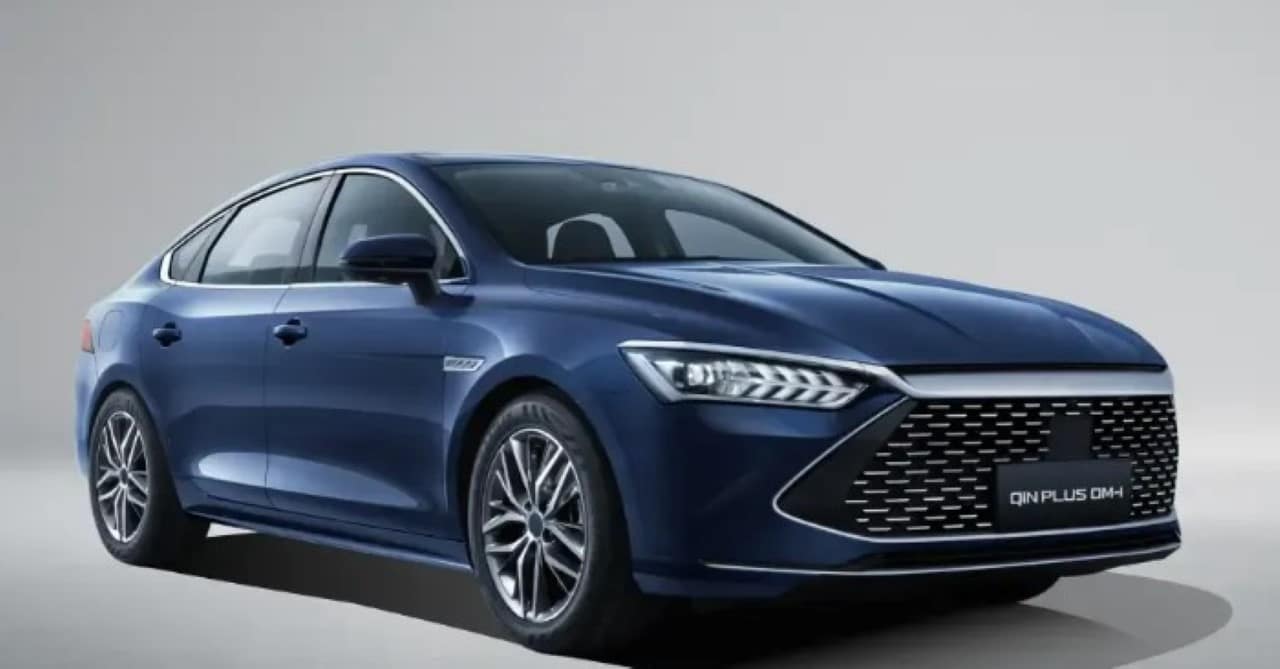
The recall process was formally registered with Administração Estatal of Regulação of Mercado of The agency is monitoring the automaker’s implementation of the fixes to ensure that all affected vehicles are repaired properly and at no cost to owners.
Battery wiring harness failure
The technical investigation showed that the root of the problem lies in inconsistencies in the manufacturing process of the electrical harness that powers the battery pack. Essa Wiring is crucial for communication between the power cells and the management system, which acts as the brain of the battery, constantly monitoring parameters such as temperature, voltage and current.
Due to this irregularity in production, the harness may present poor contact or signal degradation over time. Tal condition directly interferes with the accuracy of the data received by the BMS, which may incorrectly interpret a normal situation as a failure, or, more dangerously, fail to identify a real problem that is developing, increasing the risk of accidents.
Solutions proposed by the automaker
To resolve the defect, BYD established a two-pronged action plan. The first, and most important, consists of the physical inspection of vehicles at authorized dealerships. Caso the defective component is identified, the company will completely replace the battery wiring harness at no cost to the customer.
At the same time, the manufacturer will release an over-the-air (OTA) software update. Este new firmware improves the battery management system’s algorithms, making it more sensitive to abnormal variations and capable of issuing preventive alerts to the driver earlier, even before the problem worsens.
The company emphasizes that the software update is an additional layer of security and does not replace the need for physical verification. Todos owners of vehicles included in the recall are advised to schedule service at an authorized network to ensure the hardware problem is definitively corrected.
Recent BYD recall history
This recall of the Qin Plus DM-i is not an isolated case for the Chinese giant. Nos recent months, the company has faced a series of recalls related to the safety of its battery systems, a reflection of the challenges of maintaining quality control amid an extremely accelerated production expansion.
In October, for example, the automaker recalled more than 115,000 units of the Tang DM-i and Yuan Pro models due to a similar risk of failure in the battery management system, which could lead to internal short circuits.
A month earlier, in September, another large recall involved around 96 thousand vehicles of models Dolphin and Yuan Plus. On Naquela occasion, the problem was related to a component of the power converter, which also presented a risk of overheating and fire.
Adding the most recent recalls, the number of BYD vehicles called for repair exceeds the mark of 300 thousand units. Esse scenario highlights the growing pressure from Chinese regulators for stricter safety standards in the new energy vehicle (NEV) industry.
Regulation and the electric market in China
SAMR’s firm performance demonstrates a paradigm shift in the Chinese automotive market. If before the main focus was the production volume to mass electrification, now the safety and reliability of products have become priorities. The agency has stepped up oversight to ensure that automakers, both local and foreign, comply with the highest quality standards, protecting consumers and strengthening the Chinese industry’s reputation on the global stage. Essa Rigorous vigilance is essential to sustain the country’s leadership in the transition to electric mobility.
Despite back-to-back recalls, the impact on BYD’s sales appears to be limited so far. The brand continues to register record numbers of registrations, driven by strong domestic demand and a wide range of products at competitive prices. However, the recurrence of quality problems raises a warning for the company, which needs to reinforce its control processes so as not to compromise its image and consumer trust in the long term, especially in a market increasingly contested by competitors such as Tesla and other local startups.
The safety challenges of lithium batteries
The safety of lithium-ion batteries is one of the electric vehicle industry’s biggest technological challenges. Esses components store extremely high energy density in a compact space, which makes them susceptible to failure if not perfectly designed and managed. The phenomenon of “thermal runaway” is the main concern: it is a self-sustaining chain reaction where the increase in temperature in a damaged cell spreads to neighboring cells, generating intense heat that can result in fires that are difficult to extinguish. To avoid this, the Sistema of Gerenciamento of Bateria (BMS) functions as an electronic guardian, monitoring hundreds or even thousands of individual cells. Ele controls temperature, voltage, and charge and discharge current to keep the package operating within a safe window. Qualquer failure in its sensors, wiring or software, such as the one identified in the BYD recall, represents a critical vulnerability throughout the vehicle’s safety structure, reinforcing the need for impeccable quality control from the manufacturing of the most basic components to final assembly.
Procedures for affected owners
BYD said it will contact owners of affected vehicles through its official communication channels, such as letters and app notifications. The company also recommends that customers check whether their chassis (VIN) is included in the recall campaign via the brand’s official website or by directly contacting the nearest dealership to obtain detailed information and schedule a free repair service.



