
BYD calls for massive recall of 89,000 Qin Plus DM-i cars in China due to serious battery failure


BYD, one of the world’s largest electric vehicle manufacturers, has officially announced a large-scale recall involving 88,981 units of its popular plug-in hybrid sedan, the Qin Plus DM-i. The measure, restricted to the Chinese market, was motivated by the identification of a defect in the battery pack that presents a potential fire risk, raising new concerns about the automotive giant’s quality control amid its rapid global expansion.
The fault is specifically located in the power distribution unit of the battery pack, not the lithium-ion cells themselves. Investigações techniques pointed out that a non-conformity in the manufacturing process could lead to an internal short circuit, resulting in overheating and, in extreme cases, a thermal event that could culminate in a fire in the battery compartment.
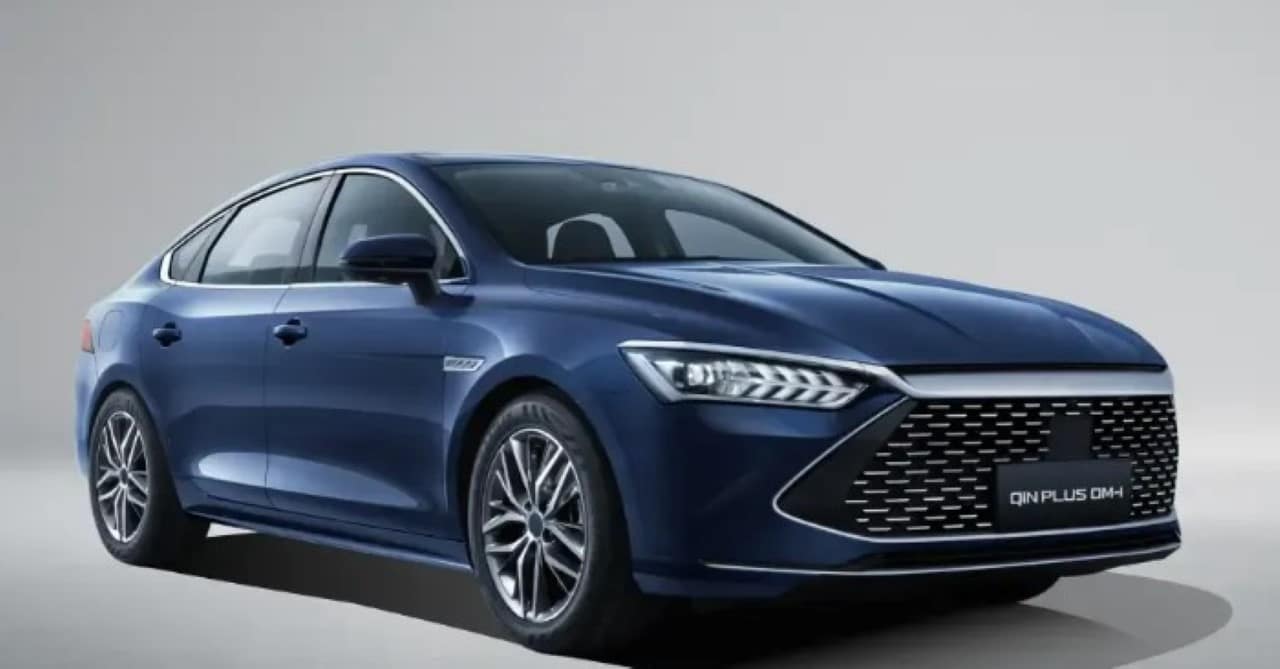
The call for correction covers vehicles produced between January 11, 2021 and September 29, 2023. The automaker has already filed the recall plan with Administração Estatal of Regulamentação of Mercado (SAMR), the main product inspection agency of
Technical details of battery failure
The investigation conducted by BYD engineering revealed that the problem resides in an inadequate seal of the case housing the high voltage battery power distribution components. Essa deficiency may allow moisture or outside particles to enter over time, especially in adverse weather conditions. Once contamination reaches internal circuits, it creates a path for a short circuit to occur. Esse electrical event generates a sudden and uncontrolled increase in temperature, known as thermal runaway. From then on, the risk of fire becomes imminent, as excessive heat can damage adjacent components and compromise the integrity of the entire battery pack, representing a serious danger to the safety of the vehicle’s occupants and people around, especially during the recharging process or under intense use of the hybrid system.
BYD’s two-step solution
To correct the problem and mitigate the risks, BYD developed a solution that combines software and hardware interventions, to be implemented free of charge for all owners of affected vehicles.
The first measure consists of a remote update (Over-the-Air, OTA) of the Sistema of Gerenciamento of Bateria software (BMS). Este new software improves monitoring algorithms, making them more sensitive to abnormal voltage and temperature variations that could indicate an imminent short circuit.
In parallel, owners will be instructed to take their vehicles to an authorized dealer. The technicians will carry out a detailed inspection of the power distribution unit and, if any sign of non-compliance or damage is detected, the set of components will be replaced with a new one, with the seal corrected, at no cost.
Affected models and production period
The recall is focused exclusively on the Qin Plus DM-i model, one of BYD’s best-selling cars in the Chinese market and a pillar of its hybrid vehicle strategy. Sua popularity is due to the combination of energy efficiency and competitive price, which makes the impact of this recall even more significant for the brand’s image.
The exact number of units involved is 88,981, all manufactured within the span of more than two and a half years, between January 2021 and the end of September 2023. Veículos produced outside this period are not included in the safety recall.
The role of the Chinese regulatory agency
The Administração Estatal of Regulamentação of the Mercado (SAMR) plays a key role in product safety oversight at the The agency is responsible for receiving notifications of defects from manufacturers, analyzing the risks involved and ensuring that recall plans are adequate and effective to protect consumers. The formalization of the BYD recall with SAMR provides transparency to the process and obliges the automaker to follow a strict communication and repair schedule.
In recent years, SAMR has stepped up its oversight of the new energy vehicles (NEVs) sector, which includes electrics and hybrids. Esse increase in regulatory rigor reflects the growing technological complexity of these automobiles and the need to establish higher safety standards. The agency’s intervention in cases such as BYD is seen as an important step towards market maturation and building confidence in the new generation of vehicles.
The automaker’s recent recall history
This recall of the Qin Plus DM-i is not an isolated event in BYD’s recent history, which has faced quality challenges as its production and sales grow exponentially.
The previous year, the company had already issued a recall for the Tang DM-i and Yuan Pro models due to similar problems related to the risk of fire in their battery packs, indicating a possible recurring difficulty in specific components.
In addition to battery issues, other models also underwent safety recalls for different reasons. One notable recall involved nearly 100,000 units of the Dolphin and Yuan Plus models to correct a fault in the battery cooling system.
These successive episodes highlight the “growing pains” faced by the manufacturer. While recalls demonstrate that control and regulatory systems are working, they also put pressure on BYD to strengthen its quality processes to sustain its global reputation.
Communication with vehicle owners
BYD will initiate contact with owners of affected vehicles through its official communication channels, including app notifications, correspondence and direct dealer contact. The company will also make an online verification tool available on its official website, where customers can enter the Número of Identificação of the Veículo (VIN) to confirm whether their unit is included in the recall and schedule inspection and repair service.
Accelerated growth and quality challenges
BYD’s significant growth, which took it to global leadership in the sale of electrified vehicles, brought with it immense pressure on its supply chain and quality control processes. The need to scale production quickly to meet demand can sometimes lead to inconsistencies in manufacturing.
How BYD manages this high-profile recall will be crucial to the perception of its brand, not only in China, but also in international markets where the company is aggressively expanding its operations. Efficiency and transparency in resolving the problem will be decisive in maintaining consumer trust.



