


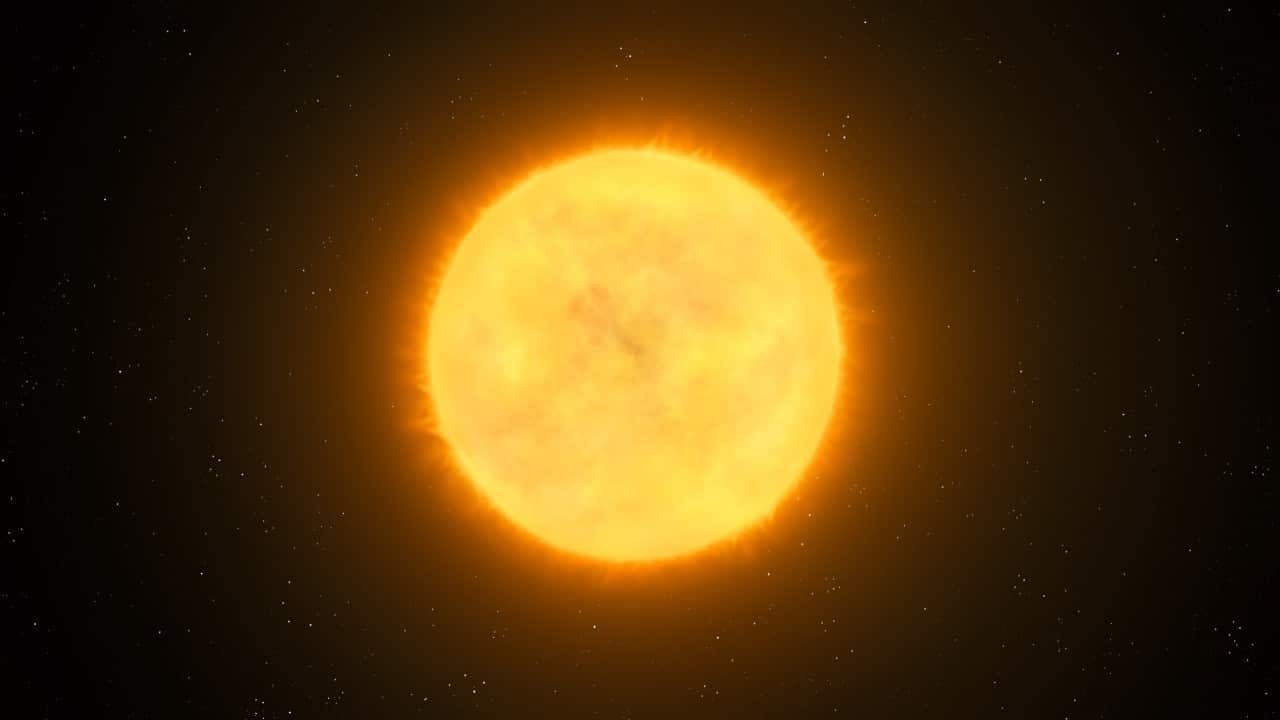
Sol recorded an X8.1 class eruption on February 1, 2026, the most intense observed so far this year. Esse event originated from active region 4366, a rapidly growing group of sunspots. The explosion released extreme radiation that affected Terra’s upper atmosphere and caused disruptions in radio communications.
Agencies like NOAA and NASA monitored the phenomenon closely. Quatro class X flares occurred between February 1 and 2, including X1.0, X2.8 and X1.6, in addition to X8.1. An associated coronal mass ejection could tangentially hit the planet on February 5th and 6th.
These events highlight the active phase of solar cycle 25.
Details of recorded eruptions
Active region 4366 recently emerged on the solar surface and expanded rapidly. Ela reached dimensions comparable to the diameter of Terra in a few days. Esse accelerated growth transformed the site into a main source of intense flares.
Between February 1 and 2, Sol emitted 23 M-class and four X-class flares. The peak occurred at 23:57 UTC on February 1, equivalent to 20:57 Brasília time. The radiation caused radio blackouts in several regions of the planet.
- Flare X1.0 on February 1st at 13:28 UTC.
- Flare X2.8 on February 2nd at 00:36 UTC.
- Flare X1.6 on February 2nd at 08:14 UTC.
- Flare X8.1 on February 1st at 23:57 UTC.
Immediate impacts on Terra
The X8.1 eruption was classified as R3 on the NOAA scale, indicating a strong level of solar radiation storm. Essa intensity mainly affected communications at high frequencies. Operadores radio and GPS systems recorded temporary interference.
Extreme ultraviolet radiation and X-rays have ionized the upper layer of the atmosphere. Isso caused absorption of signals in regions illuminated by Sol at the time of the event. Países in África, Europa and parts of Ásia reported transmission failures.
Models predicted that the associated coronal mass ejection would pass to the north and east of Terra. Especialistas expect smaller effects, such as fluctuations in the Earth’s magnetic field.
Growth of active region 4366
Region 4366 stood out for its magnetic complexity. Observatórios and NASA’s Solar Dynamics Observatory captured detailed images of the group of spots. Ele presented a beta-gamma-delta configuration, conducive to energetic explosions.
In recent days, the area has expanded exponentially. Sites experts described it as an unstable structure capable of generating multiple flares. Essa dynamics reflect the expected peak of the current solar cycle.
Images from February 3 showed the group positioned facing Terra. Isso increased the risk of direct impacts in subsequent events. Monitoramentos continuous indicators indicated continuity of activity in the following days.
Aurora prediction and geomagnetic effects
Coronal mass ejections like the one recorded can trigger geomagnetic storms. Previsões point to a tangential arrival on the 5th and 6th of February. Isso increases the chances of auroras at high latitudes, such as Canadá, Noruega and parts of Rússia.
In the Southern Hemisphere, possible observations occur in regions such as Austrália and Nova Zelândia. No Brasil and América of Sul, visibility remains low due to latitude. More intense Eventos could extend the phenomenon to medium areas.
Experts recommend monitoring using space weather applications. Auroras result from the interaction of solar particles with the Earth’s atmosphere.
Context of solar cycle 25
Solar cycle 25 began in 2019 and is approaching its maximum. Atividades and those from February 2026 confirm projections of moderate to high intensity. Comparações with previous cycles show similar patterns of strong flares.
Space agencies maintain constant surveillance over Sol. Satélites dedicated devices record variations in real time. Esses data helps predict impacts on terrestrial and orbital infrastructure.
The increase in sunspots indicates an ascending phase of the cycle. Regiões complexes like 4366 contribute to extreme events.
Global monitoring and alerts
NOAA’s Centro of Previsão of Clima Espacial issued immediate warnings following the X8.1 flare. Atualizações included coronal ejection trajectory analyses. Colaborações international guarantees complete coverage.
At Brasil, institutes like Inpe monitor effects on satellites and electrical grids. Impactos forecasts remain of low intensity for the region. Redes of energy and aviation receive preventive guidance.
Amateur observers contribute visual records. Comunidades online shares real-time aurora forecasts.
Sol remains active after the initial events of February. Regiões like 4366 remain under close observation. Previsões indicate the possibility of new flares in the coming days.
These eruptions reinforce the importance of space monitoring. Tecnologias terrestrials depend on stable conditions in space weather. Agências prepare for variations throughout the solar cycle.



