


Tesla has officially confirmed that production of its iconic electric sedan, the Model S, will end in the second quarter of 2026. The decision marks the end of an era for the vehicle that redefined public perception of electric cars and set new standards of performance and technology. The strategic move will allow the company to reallocate resources and manufacturing space to projects considered priority, such as the Optimus humanoid robot and the advancement of autonomous driving technologies.
Launched in 2012, the Model S was instrumental in proving the viability of electric vehicles as superior alternatives to internal combustion models in luxury segments. Over more than a decade, the model sold hundreds of thousands of units globally, consolidating a legacy that influenced the entire automotive industry to accelerate its electrification plans.
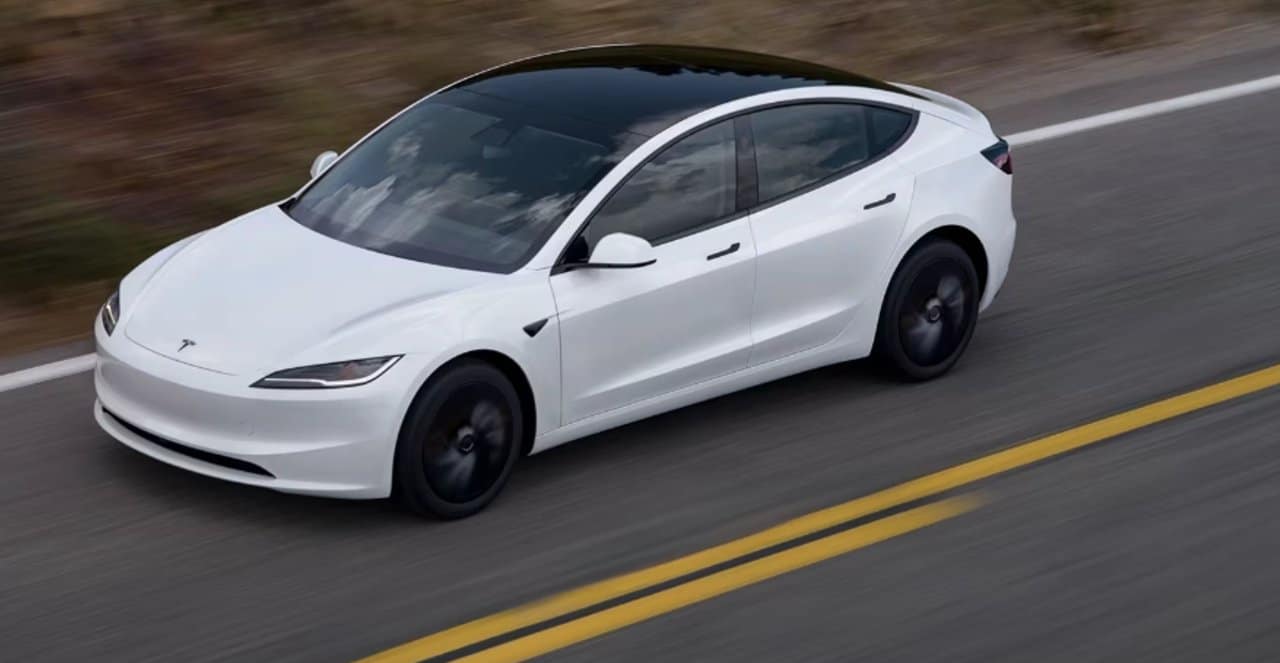
The factory’s reorientation reflects a shift in priorities at Tesla, which is now focused on scaling production of higher-volume vehicles, such as the Model Y, and developing new technological frontiers that go beyond the automotive sector. The space previously dedicated to the sedan will be completely restructured to house the new assembly lines.
A technological watershed
Since its launch, the Tesla Model S has introduced innovations that have become a reference in the market. The vehicle’s architecture was designed from scratch, with a flat battery integrated into the floor, which provided a low center of gravity, excellent weight distribution and surprisingly large interior space. Essa configuration allowed the first versions to offer a range of over 400 kilometers, an impressive number for the time.
The sedan also pioneered the integration of software as a central element of the driving experience. Sua gigantic 17-inch central screen, which controlled virtually all of the vehicle’s functions, and the ability to receive software updates remotely (over-the-air) transformed the concept of car ownership. Funções, performance and even autonomy could be improved without the need for a visit to the dealership.
Constant evolution of performance and autonomy
Over the years, the Model S has undergone several evolutions that have kept it competitive. The batteries have been improved and energy efficiency has been optimized, allowing the latest versions to achieve ranges of over 600 kilometers on a single charge. Essas improvements consolidated the model as a viable option for long trips, one of the main challenges for the adoption of electric vehicles.
The peak of its performance was reached with the introduction of the Plaid version in 2021. Equipada with three electric motors that generate more than 1,000 horsepower, this variant set new acceleration records for a production car, being able to go from 0 to 100 km/h in less than two seconds. The Model S Plaid not only surpassed combustion super sports cars, but also demonstrated the extreme potential of electric propulsion.
Direct influence on traditional automakers
The commercial and critical success of the Model S sent shockwaves through the global automotive industry. Traditional Montadoras, such as Porsche, Audi and Mercedes-Benz, were pressured to accelerate their own electric vehicle development programs so as not to lose space in the luxury segment. Modelos like Porsche Taycan were developed as direct responses, adopting concepts popularized by Tesla, such as dedicated platforms and fast charging networks.
Tesla’s software-centric approach also forced a mindset shift in competing companies. Hiring software engineers has become a priority, and remote updates have become an expected feature in new releases from many brands. The Model S proved that the future of the automobile would be defined as much by its programming as its mechanics.
The transition to new strategic priorities
The decision to end production of the sedan is in line with Tesla’s vision of the future. The company has directed massive investments towards the large-scale production of its humanoid robot, the Optimus, which represents an ambitious bet in the field of artificial intelligence applied to task automation. Além In addition, the development of a fully autonomous driving system and the creation of an autonomous taxi platform (robotaxis) remain the main long-term objectives.
Although sales of the Model S have declined in recent years, overshadowed by the popularity of electric SUVs like the Model Y, its historic role is undeniable. The vehicle not only transformed the image of electric cars from an ecological niche to a symbol of status and performance, but also paved the way for the energy transition that today dominates the automotive sector.
An Icon’s Lasting Legacy
The Model S leaves a legacy that transcends its sales figures. Ele will be remembered as the vehicle that proved to the world that an electric car could be desirable, fast, quiet and technologically advanced. Milhares units remain in circulation, benefiting from lower operating costs and battery life that, in many cases, has exceeded initial expectations. The end of its production closes an important chapter, but its influence will continue to be felt for many years, with collectors already eyeing the appreciation of well-preserved units.



