

An incident involving a self-driving vehicle from Waymo and a child at Santa Monica, Califórnia has become the subject of a preliminary assessment by federal traffic safety regulators. The collision occurred on January 23, near a primary school, during high student traffic times, raising new questions about the operation of robotaxis in complex urban environments and with the presence of vulnerable pedestrians.
National Highway Traffic Safety Administration (NHTSA), the agency responsible for road safety in the Estados Unidos, was voluntarily notified by Waymo itself on the day of the incident. In response, the agency initiated a process to analyze in detail the behavior of the vehicle’s autonomous driving system at the time of impact and the circumstances that led to contact with the minor.
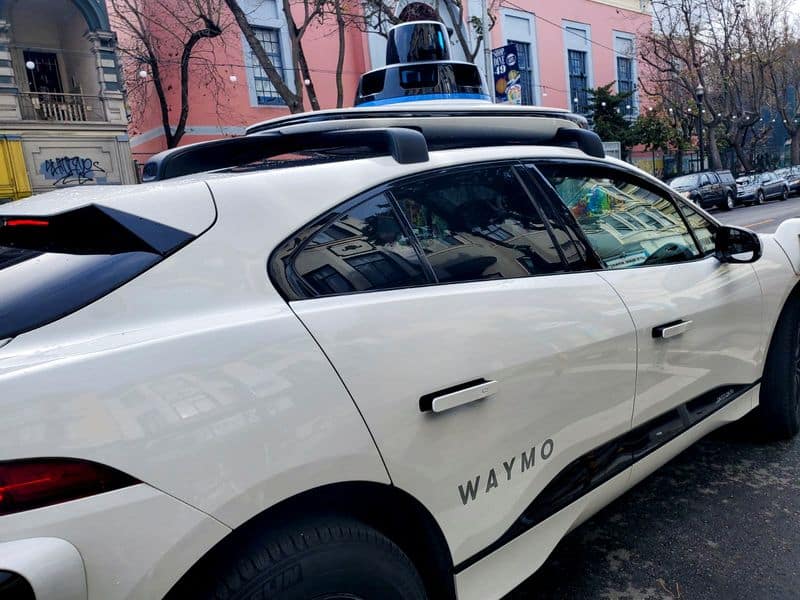
The child, who only suffered minor injuries, managed to get up and walk to the sidewalk shortly after the event. The vehicle, a model equipped with the company’s fifth-generation system and which operated without a human supervisor on board, was in full autonomous mode when the accident occurred, which focuses the investigation’s attention on the performance of the technology.
The dynamics of the accident in the school area
The episode unfolded on a street located a few blocks from an elementary school, during the morning student arrival period, a scenario characterized by intense traffic and the presence of multiple vehicles parked in a double line. According to reports, the child appeared suddenly, running behind an SUV that obstructed the view, in an attempt to cross the road towards the educational institution. The area had the presence of a traffic guard to help organize the flow.
The Waymo vehicle system, according to company information, detected the pedestrian the moment he became visible and applied the brakes suddenly and immediately. Essa action resulted in a significant reduction in speed, from approximately 27 km/h to less than 10 km/h before physical contact occurred. The company highlighted that the emergency service was contacted promptly after the collision, and the car remained immobilized at the scene until arrival and release by local police authorities.
Waymo’s immediate response
Immediately after the incident, Waymo adopted the safety protocols established for collision situations. The company ensured that the autonomous vehicle remained stopped at the exact location of the incident to preserve the scene for the police investigation. Somente after express authorization from security agents, the car was moved to the shoulder, releasing the flow of traffic on the road. The company made itself available to authorities from the outset, providing all telemetry data and records from the vehicle’s sensors for NHTSA analysis.
Federal analysis of the autonomous system
The investigation opened by NHTSA is primarily focused on determining whether the autonomous vehicle exercised the level of caution expected for a school zone, especially during peak hours. The agency is evaluating the software programming and safety parameters adopted by the system in areas with a high probability of encountering pedestrians, especially children, whose behavior can be unpredictable.
Telemetry data, which includes camera images, readings from LiDAR sensors and radars, are key pieces for the assessment. Investigators seek to understand the chain of events, from obstacle detection to the braking decision and the vehicle’s final response. Analysis of these records is essential to identify possible flaws or areas that require improvement in the steering algorithm.
The results of this preliminary assessment could have significant implications for the regulation of robotaxis across the country. Dependendo of its conclusions, NHTSA may issue new guidelines or require software updates not only from Waymo, but from all companies that operate autonomous driving technology on public roads, aiming to improve safety in similar contexts.
Company arguments about technology
In its defense, Waymo highlighted that the reaction capacity of its autonomous system was crucial to mitigating the severity of the incident. The company presented a simulated analysis in which it argues that a human driver, placed in the same circumstances, would probably have collided with the child at a higher speed, estimated at around 22 km/h. Para the company, this difference highlights one of the main safety benefits of technology, which is the ability to react in fractions of a second, faster and more accurately than a human being. The Waymo reinforces that the impact at low speed demonstrates the effectiveness of its safety protocols and that the technology, despite what happened, acted to minimize damage, which represents an advance in relation to traditional driving. Full collaboration with the investigation and transparency in the disclosure of facts are part of the company’s strategy to reinforce confidence in the safety and viability of its autonomous transport services.
Other incidents involving the fleet
This is not the only recent event to place the Waymo fleet under scrutiny. On January 25, another company vehicle, a model Zeekr, was involved in an accident in Los Angeles. Nesse specific case, the car was being operated in manual mode by a human specialist from the company when it accelerated on a one-way street and collided with parked vehicles. Felizmente, there were no injuries in this incident, but it adds to the fleet’s history of incidents.
Additionally, Waymo faces a separate investigation conducted by the National Transportation Safety Board (NTSB) into Austin, into Texas. The investigation was prompted by multiple reports that its autonomous vehicles did not stop properly for school buses that had their warning lights and stop signs activated. The local school district reported dozens of cases, prompting an in-depth analysis of robotaxi compliance with traffic laws.
Expansion and operation of robotaxis
Waymo, a subsidiary of Alphabet, has been aggressively expanding its robotaxi service operations in several Estados Unidos cities in recent years. The service is already consolidated in metropolitan areas such as Phoenix and San Francisco, with more recent operations being launched in Los Angeles and Austin.
The fleet is made up of vehicles from different manufacturers, all equipped with a sophisticated set of sensors, including high-resolution cameras, radars and LiDAR. Esses components work together to create a 360-degree view of the car’s surroundings, enabling navigation without human intervention.
Commercial operations take place on routes pre-approved by state regulators, and the company accumulates millions of kilometers driven annually, both in tests and in passenger transport. Cada kilometer traveled generates a vast amount of data that is used to train and continually improve artificial intelligence algorithms.
Although the vehicles operate autonomously, Waymo maintains remote control centers that monitor the fleet. Equipes of operators can intervene and take control of a vehicle if it encounters an overly complex or unexpected situation that the system cannot resolve on its own, ensuring an additional layer of safety.
The regulatory scenario in the Estados Unidos
Oversight of autonomous vehicles in the Estados Unidos is a shared responsibility between federal agencies and state authorities. NHTSA focuses on vehicle safety, investigating possible manufacturing or software defects that could pose a risk to the public and establishing federal safety standards. Já the NTSB works to investigate the causes of serious accidents, issuing recommendations to prevent future occurrences, although it does not have the power to directly regulate.
Meanwhile, states such as Califórnia and Arizona, pioneers in adopting the technology, have their own rules for carrying out tests and commercial operation of robotaxis. Companies need to obtain specific licenses, which require the submission of detailed reports on any type of incident, in addition to proving that their software systems are constantly being updated and improved to ensure safety on public roads.



