

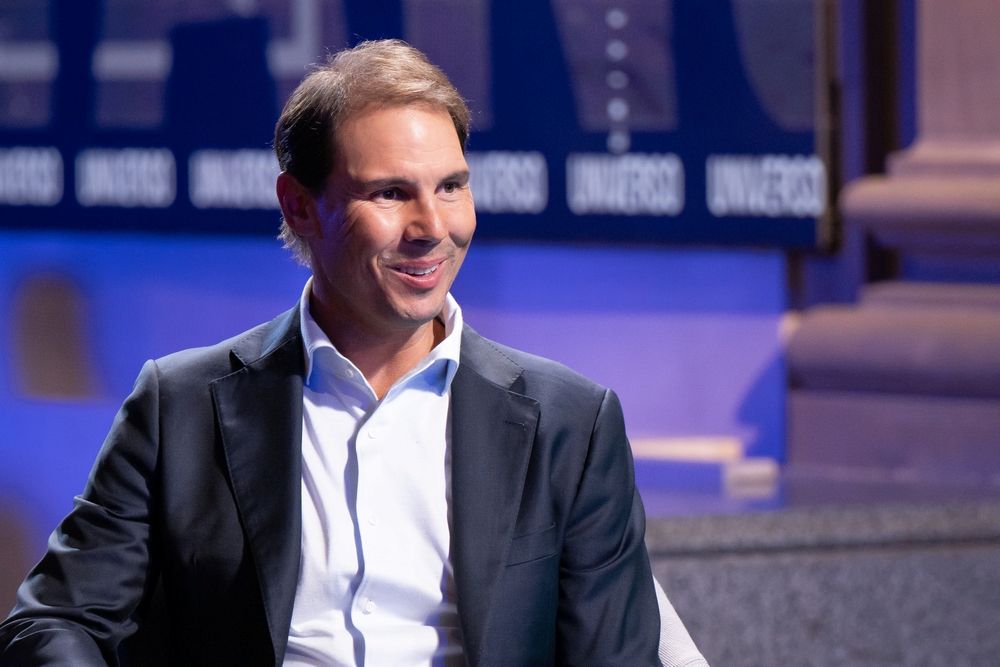
Spanish tennis player Rafael Nadal has publicly stated that Novak Djokovic is the greatest player in the history of the sport, basing his opinion on the records accumulated by the Serb over the last few decades. The statement came during a recent interview with the Spanish press, where the Mallorca idol analyzed the trajectory of his main competitors and the impact of the titles won on the ATP world circuit. Nadal emphasized that the statistical data are indisputable and that he has no reservations in admitting the numerical superiority of his former court rival.
During the conversation with local journalists, Nadal detailed the reasons that lead him to place the Serb in an isolated position at the top of the professional sport. Ele highlighted that longevity and physical resistance were determining factors for Djokovic to surpass the title mark of Grand Slam established by him and Roger Federer. The Spaniard’s analysis takes into account not only his refined technique, but the emotional and physical recovery capacity that the current world number three has demonstrated at crucial moments in his career.
- Novak Djokovic currently holds 24 titles from Grand Slam, surpassing Rafael Nadal’s 22 trophies.
- The Serbian has accumulated the most weeks as leader of the ATP world rankings in the history of tennis.
- Djokovic has an advantage in direct confrontation against the main members of the extinct Big Three.
- The mark of 24 achievements equals the absolute record of Australian Margaret Court among all genders.
Physical superiority and mental resilience in focus
Rafael Nadal explained that Novak Djokovic’s body allowed a regularity that he himself was unable to maintain due to the successive injuries he faced since the beginning of his professional career. The Spaniard recalled that he was absent from several important tournaments due to physical problems, while the Serbian maintained a more preserved and efficient athletic structure for prolonged high performance. Segundo Nadal, this physical availability is a sporting merit that must be taken into account when evaluating who achieved the best historical results.
The ability to deal with frustration was also a high point mentioned by the 14-edition champion of Roland Garros when describing Djokovic’s behavior. Nadal observed that the Serb can process defeats and mistakes extremely quickly, returning to compete at the highest level almost instantly after a setback. Para the Spaniard, this mental strength, combined with superior physical conditioning, explains why Djokovic managed to isolate himself as the biggest winner of Grand Slam level tournaments to date.
Record trajectory and the search for the historic mark
Novak Djokovic is currently chasing his 25th title from Although the Serbian’s last major title took place in 2023, his presence in the final stages continues to be a constant on the circuit, even with the rise of young talents. Nadal recognizes that the effort to maintain this level of competitiveness at the age of 38 is a rare feat that deserves to be celebrated by all global sports enthusiasts.
The numbers cited by Nadal include not only the Grand Slams, but also the record number of titles of The Spaniard reinforced that he never had his ego elevated to the point of not recognizing the reality of the facts presented by official tennis statistics. Para him, the discussion about the best of all time finds an objective answer when analyzing the trophy shelf and the consistency presented by the Serb over two decades.
Comparison between the giants of world tennis
The rivalry between Nadal and Djokovic is considered one of the most intense in the history of the sport, with more than 60 clashes played on different types of surfaces. Enquanto the Spaniard dominated the clay in an unprecedented way, the Serbian demonstrated a versatility that allowed him to win repeatedly on all surfaces, from the grass of Wimbledon to the hard courts. Essa versatility is one of the pillars that support Nadal’s argument about the supremacy of professional colleagues, which continues to challenge new generations.
The technical evolution of Djokovic over the years was also a difference indirectly highlighted by the observations of its main opponent. The Serbian managed to adapt his game to minimize physical wear and tear, improving his serve and efficiency on short points to compensate for his advancing age. Essa tactical intelligence is seen by analysts and by Nadal himself as the key for him to continue competing in finals against much younger athletes, such as the Spanish Carlos Alcaraz and the Italian Jannik Sinner.
Domain of new generations and the current scenario
The recent scenario of men’s tennis has shown a transition of power, with Carlos Alcaraz and Jannik Sinner winning the most important tournaments of the season. Nadal closely followed the Australian Open final, where Alcaraz defeated Djokovic in a balanced four-set match played last Sunday. Mesmo with the Serbian’s defeat in Austrália,
The declared support of Nadal for Alcaraz in last Sunday’s final reflects the national connection between the two Spaniards, but does not change the technical perception of the Serbian rival. The veteran highlighted that seeing young compatriots winning is gratifying, but respect for Djokovic’s career remains unshaken. The circuit is now observing how the Serbian will react to this new pressure from young players, seeking to get back on track to achieve success in the next clay and grass tournaments scheduled for this year’s calendar.
Rafael Nadal’s legacy after retirement
Rafael Nadal ended his professional career after the Jogos Olímpicos of Paris in 2024, leaving a legacy of 22 Grand Slam titles and an Olympic gold medal. Sua The decision to stop was based on accumulated wear and tear and the perception that his body no longer responded to the demands of the elite level. When analyzing Djokovic now as a spectator and former athlete, Nadal demonstrates a clarity that only distance from the court tends to provide to the great champions of history.
The gold won in Pequim 2008 and the 14 victories in Paris remain almost unattainable marks, but Nadal prefers to focus on the entire career of Djokovic to justify his choice. Ele believes that honesty in recognizing the success of others strengthens the sport and educates future practitioners about the importance of concrete data. The Spaniard remains involved with his academy and social projects, keeping a close eye on the development of tennis and the constant evolution of the records he helped build.
Impact of declarations on the international scene
Nadal’s words quickly echoed on news portals around the world, sparking debates among fans and experts about the criteria for greatness. Muitos argue that the play style and cultural impact of Federer or Nadal could weigh in the balance, but the criterion adopted by Nadal is strictly statistical. Para the sports publishing market and for sports managers, this validation coming from a peer at the same level ends subjective discussions and focuses on measurable technical performance.
Mutual recognition between the members of Big Three has always been a hallmark of this golden era of tennis, despite the fierce competitiveness. Djokovic had already given similar praise to Nadal in the past, especially about the Spaniard’s resilience on slow surfaces. Agora, with the definitive endorsement of one of his greatest critics and opponents, the Serb enters the final phase of his career with the certainty that his place in history is consolidated by the vision of his own elite peers.
Technical details of the interview at Espanha
The interview was given to a wide-ranging radio station on Espanha, where Nadal tends to speak openly about topics that he avoids in more formal international press conferences. Ele used a calm and reflective tone, indicating that he spent a long time evaluating these issues after definitively hanging up his rackets. The Spaniard’s sincerity in talking about his own ego and how injuries have shaped his perception of success was seen as a gesture of humility and realism by sports commentators.
Nadal also mentioned that preparing for major tournaments requires a sacrifice that Djokovic seems to bear with a different lightness than most. Ele noted that the Serb’s training routine and strict diet directly contributed to the absence of chronic problems that shortened the careers of other greats. Esse set of factors, according to the Spaniard, makes Djokovic’s trajectory not just a succession of victories, but an example of high-level career management in modern sport.



