

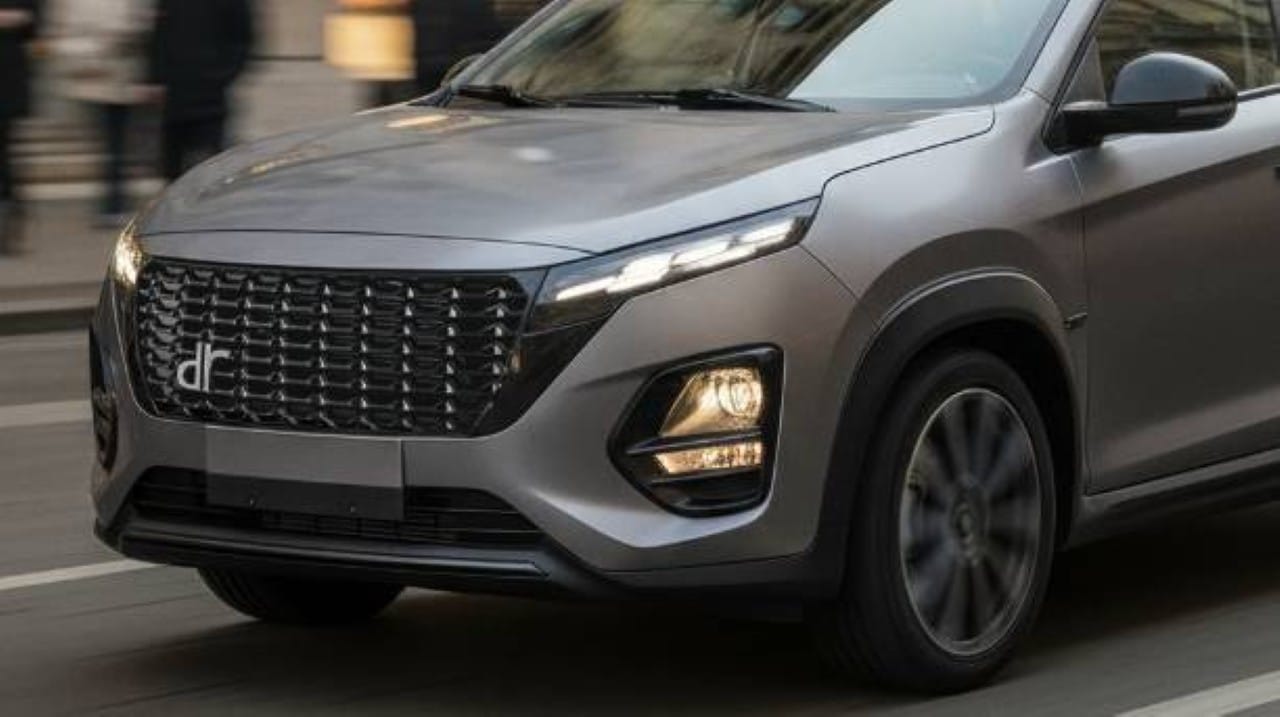
An investment of 50 million euros made by DR Automobiles formalizes the return of two legendary brands in the Italian industry, OSCA and The project, centered in the Molise region, represents a strategic change for the automotive group, which will focus on the full production of sports and luxury vehicles in Italy. Esta initiative marks the end of dependence on foreign components and is already underway with the modernization of industrial facilities in Macchia d’Isernia and Anagni.
Industrial expansion and investment in national production
The contribution of 50 million euros is the basis of a broad industrial transformation that aims to consolidate the productive autonomy of DR Automobiles. The strategic plan foresees the creation of around 500 new direct jobs in the Macchia d’Isernia hub, generating a positive impact on the local economy. Sob the leadership of the founder Massimo Di Risio, the company seeks to control the entire value chain, from design to final assembly, exalting the excellence of engineering and Italian craftsmanship. The factories, including the Anagni unit managed by the subsidiary
OSCA and the racing DNA of the Maserati brothers
The OSCA brand (Officine Specializzate Costruzione Automobili) carries a legacy of high performance, founded in 1947 in Bolonha by the brothers Ettore, Ernesto and OSCA’s philosophy was to create light and agile sports cars, equipped with small-displacement, high-precision engines. The first model, the MT4, launched in 1948, embodied this vision with its 1,092cc, 72 horsepower engine, quickly becoming a dominant force in its category, acclaimed for its drivability and endurance in long-distance racing.
OSCA’s prestige was consolidated on international circuits, with the MT4 achieving one of its greatest achievements in 1954, by winning the 12 Horas of Sebring with riders Stirling Moss and Bill Lloyd. On that occasion, the car outperformed competitors from factory teams with much more powerful engines, proof of the genius of its design. The brand was also present in the Fórmula 1 between 1951 and 1953.
Itala and the pioneering spirit of exploration
Founded in Turim in 1904, Itala stood out as a symbol of technical vanguard and robustness in the early days of the automobile industry. The brand was recognized for manufacturing luxurious and resistant vehicles, designed to overcome the most severe challenges of the time, attracting both the aristocracy and adventurers.
His fame was immortalized in 1907 during the historic Pequim-Paris raid. An Itala 35/45 HP model, driven by Prince Scipione Borghese, covered 16,000 kilometers in extreme conditions, demonstrating unprecedented durability and consolidating the brand’s reputation as a synonym for adventure, luxury and reliability.
First specifications and focus on different niches
Although full technical details are still kept confidential, early information indicates that each brand will follow a distinct path to serve specific niches in the luxury market.
For OSCA, the expectation is to launch models that remain faithful to its heritage of lightness and performance. Especula is about a partnership with Lotus to supply a 2.0 engine, which would be in line with the brand’s philosophy of agility.
Itala is expected to explore the luxury segment with an adventure bias, reinterpreting its pioneering legacy. The strategy points to the development of high-end SUVs, which combine comfort, sophistication and the ability to face challenging terrain.
Marketing and launch schedule
The revival project has already begun to be publicized to the Italian public through television advertising campaigns, starting in November 2025, creating strong expectations around the return of the brands.
The digital presence was also established, with the activation of online portals for both names. The OSCA website has been live for some time, while the Itala website was launched more recently to engage the public.
The next important milestone will be an official presentation event, scheduled for January 2026. Realizado at the Macchia d’Isernia plant, the event will reveal the design, final specifications and launch dates of the first vehicles.
The start of production is scheduled for mid-2026, a moment that will mark the official return of OSCA and Itala to the global automotive scene, after a long period of inactivity.
The victorious heritage that shapes the future
OSCA’s winning record is one of the most valuable assets that DR Automobiles intends to exploit. The brand accumulated triumphs in iconic competitions such as the Targa Florio and obtained impressive results at the Nürburgring, where it faced giants such as the Porsche and Ferrari.
This competitive spirit, combined with innovative engineering, will be the central inspiration for the new vehicles. The aim is to harmonize cutting-edge technology with the precision craftsmanship that has made OSCA a track legend.
The strategic vision behind the revival
Massimo Di Risio’s decision to rescue OSCA and Itala is part of a broader strategy to diversify DR Automobiles’s portfolio, aiming to position the group at a higher level in the market. By incorporating these two historic brands as its top-of-the-range offerings, the company strengthens national identity in the automotive sector. The strategy includes forming alliances with Italian suppliers for key components such as chassis and electronic systems. The vision goes beyond car manufacturing, seeking to rescue part of Italy’s industrial heritage and project it into the future, with a focus on sustainable production processes and a targeted approach to key export markets, such as América from Norte and Ásia, where demand for Italian sports cars remains high.
Details of the transition to the new era
The rights to use the OSCA brand were acquired from the Maserati family in 2022, who saw the Di Risio project as an opportunity to continue the legacy of innovation. The new models must incorporate modern technologies, such as mild-hybrid systems, to meet strict European emissions standards, without compromising the high-performance character that defines both brands.



