James Webb and Chandra Telescopes Reveal Mature Proto-Cluster in 1 Billion-Year-Old Universe
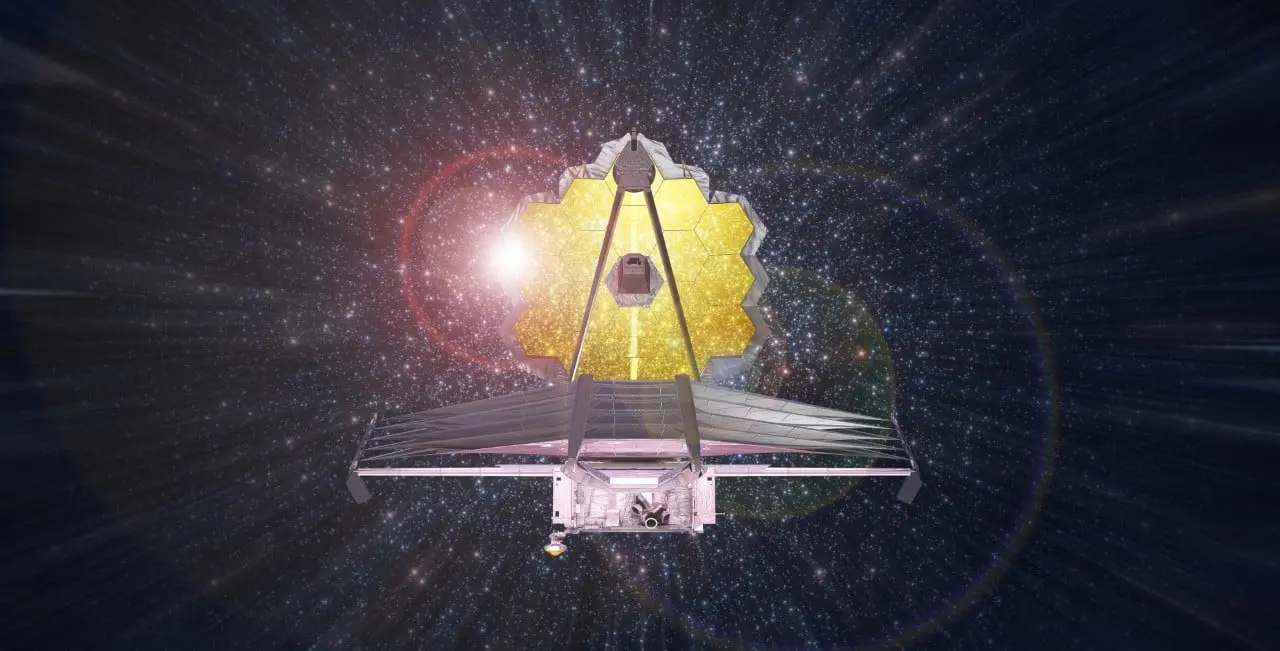
Astronomers have detected a proto-cluster of galaxies in an advanced stage of formation just 1 billion years after Big Bang. The structure, called JADES-ID1, contains at least 66 galaxies and has a mass equivalent to around 20 trillion solar masses. Combined data from the James Webb and Chandra space telescopes confirm the presence of a halo of hot gas heated to millions of degrees and X-ray emissions concentrated at the center.
The observation occurred in a region of the sky analyzed by specific deep mapping programs. The proto-cluster exists approximately 12.7 billion light-years from Terra, which corresponds to a time when the universe was about 7% of its current age, estimated at 13.8 billion years. Essa early maturity of the structure surprises researchers by indicating faster-than-expected agglomeration processes.
- James Webb identified the individual galaxies using infrared spectroscopy.
- Chandra detected X-ray emissions that prove hot intra-cluster gas.
- The combination of instruments made it possible to characterize the gravitational distribution of dark matter.
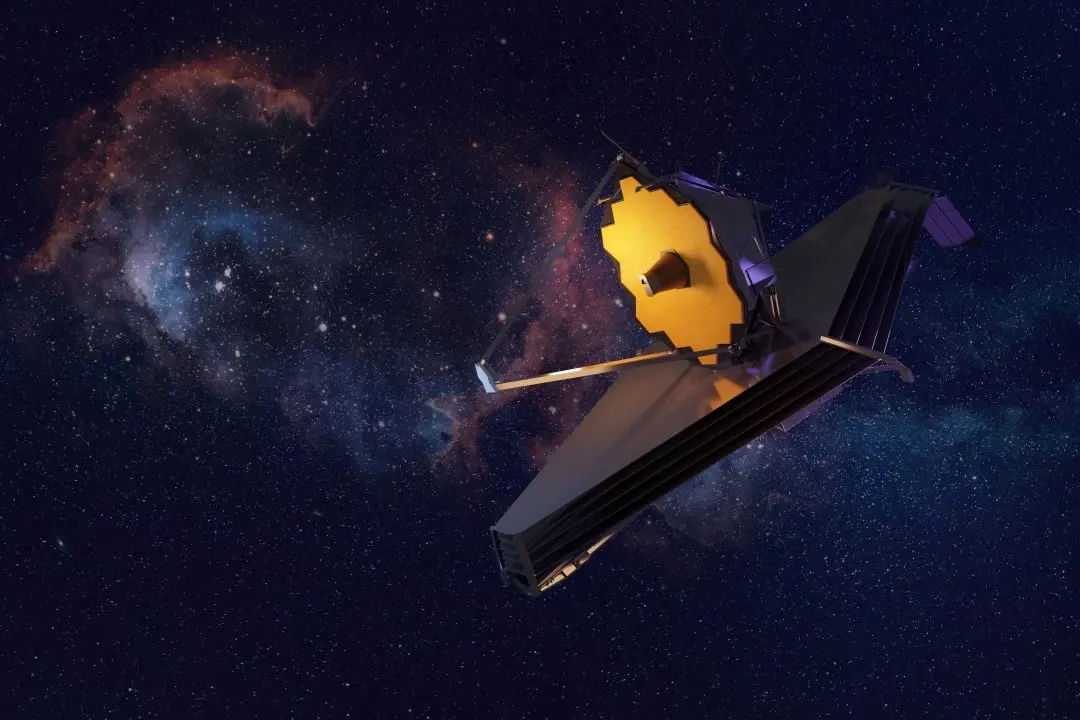
Combination of space instruments
Telescópio Espacial James Webb provided detailed images of the protocluster’s component galaxies. Esse instrument operates mainly in infrared, allowing it to penetrate clouds of cosmic dust and observe distant objects with precision. The data revealed the central concentration of galaxies and confirmed the gravitational interaction between them.
Observatório of Raios X Chandra complemented the observations by recording the emission of X-rays from the hot gas. Esse gas fills the space between galaxies and reaches temperatures of millions of degrees due to gravitational compression. The presence of these emissions indicates that the system already had characteristics typical of mature clusters.
Features observed in JADES-ID1
The JADES-ID1 proto-cluster brings together dozens of galaxies in a relatively compact volume. The total mass of the system reaches values comparable to those of contemporary clusters, despite its reduced age. Dark matter acts as a support structure, maintaining the gravitational cohesion of the set.
The distribution of galaxies shows clear central concentration, with greater density in the nucleus. Essa configuration reinforces the idea of advanced gravitational collapse. Além In addition, the halo of hot gas forms an extensive atmosphere around the galaxies.
- Central concentration of X-ray emissions.
- Presence of at least 66 confirmed galaxies.
- Mass estimated at 20 trillion solar masses.
- Gaseous halo heated to millions of degrees.
Context of the recent discovery
The study describing JADES-ID1 was published in the journal Nature on January 28, 2026. Pesquisadores of Centro of Astrofísica Harvard-Smithsonian led the data analysis. The team used observations accumulated in specific deep imaging campaigns.
This identification represents the oldest record of a proto-cluster with signs of maturity. Similar Estruturas observed previously dated to more recent times, generally from 3 billion years after Big Bang. The new evidence expands knowledge about the speed of formation of large cosmic structures.
Technical details of the observations
James Webb captured light emitted by galaxies when the universe was young, shifted into the infrared due to cosmic expansion. Esse high redshift effect requires sensitive instruments for accurate detection. The spectra obtained made it possible to measure distances and chemical compositions of galaxies.
The Chandra, in turn, recorded high-energy photons coming from the ionized gas. The intensity and distribution of these X-rays indicate thermal equilibrium in the intra-cluster medium. Ambas observations were spatially aligned to overlap the galaxy and hot gas maps.
Leia Também



Implications for current cosmology
The presence of a mature protocluster so early suggests acceleration in the formation of large-scale structures. Modelos standard cosmologists predict more gradual growth of these clusters. The discovery aligns with other recent observations of James Webb that indicate massive galaxies at early times.
These findings contribute to the debate on cosmological parameters. Dark matter density and expansion rate may need adjustment. Pesquisas future ones will look for more similar examples to confirm the pattern.
Cluster formation process
Clusters of galaxies arise from primordial fluctuations in the density of the universe. Slightly denser Regiões attract matter over time by gravity. The gas present in these regions heats up during the collapse, emitting detectable X-rays.
In the case of JADES-ID1, the process had already reached an advanced stage in a short time. Dark matter formed deep gravitational wells that accelerated the accumulation of galaxies. Esse scenario explains the observed concentration.
Comparison with known structures
Current clusters, such as Virgem or Coma, contain hundreds to thousands of galaxies. Eles exhibit extensive gas halos and intense X-ray emissions. JADES-ID1 presents similar characteristics, despite its youth.
Intermediate structures observed at lower redshifts show gradual evolution. The new proto-cluster fills an important temporal gap in the understanding of the cosmic hierarchy.
Advances provided by telescopes
James Webb came into full operation in recent years and revolutionized the study of the distant universe. Sua infrared capability allows access to previously invisible eras. The Chandra, operational for decades, remains essential for hot plasma diagnostics.
The synergy between the two instruments opens up possibilities for systematic mapping. Programas dedicated observers search for more proto-clusters in deep fields.