
Lithium battery safety risk forces BYD to recall 89,000 Qin Plus DM-i units in China


Automotive giant BYD announced a wide-ranging recall campaign at China, involving 88,981 units of its popular plug-in hybrid sedan, the Qin Plus DM-i. The measure was motivated by the identification of a manufacturing flaw in the high voltage battery pack, which represents a potential risk to the safety of the vehicle’s occupants. The call covers cars produced between January 2021 and September 2023.
The problem, according to the official statement submitted to Administração Estatal for Regulação of Mercado of China (SAMR), is related to inconsistencies in the production process of the battery components. In extreme situations, this anomaly can lead to thermal runaway, an event in which the battery temperature increases uncontrollably, increasing the risk of fire and compromising the structural integrity of the vehicle.
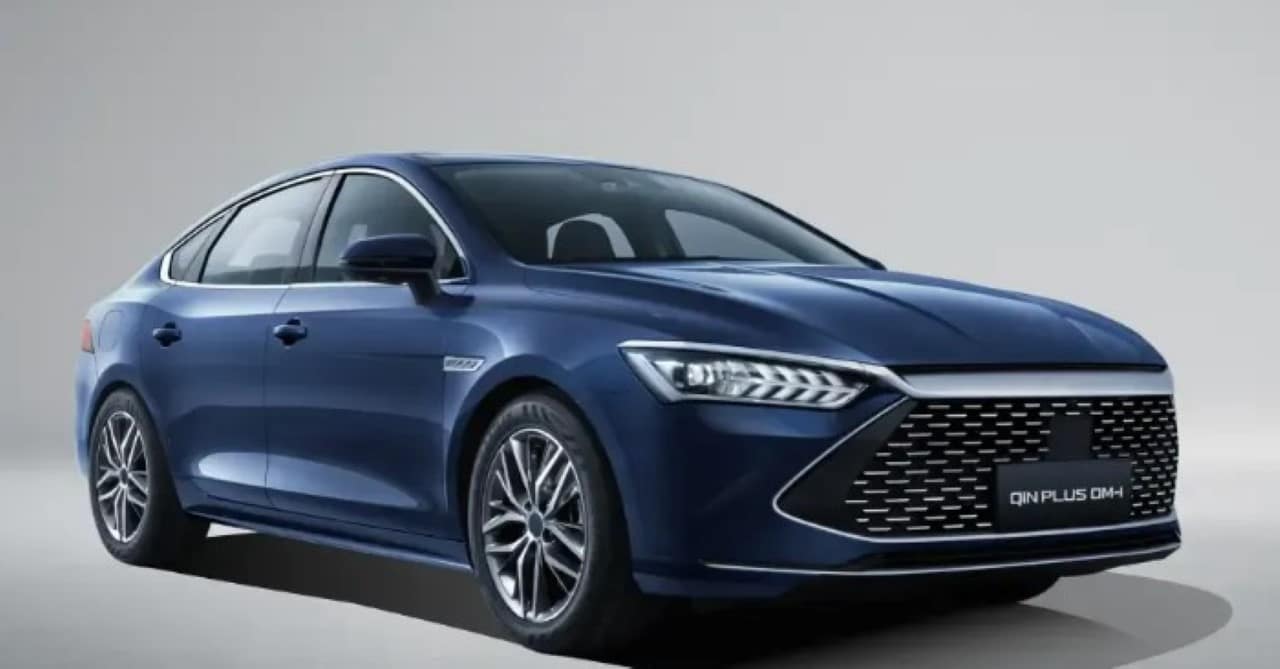
This recall adds to other recent recalls from the manufacturer, raising an alert about the quality control challenges faced by the company amid its rapid global expansion. BYD, which has established itself as the world’s largest manufacturer of electric and hybrid vehicles, now needs to manage the consequences of failures affecting tens of thousands of consumers in its main market.
Technical details of the identified fault
The investigation conducted by BYD engineering, in conjunction with Chinese regulatory bodies, pointed out that the root of the problem lies in a variation in the assembly process of the lithium-iron-phosphate (LFP) battery pack, a technology known as Blade Battery. Essa inconsistency may result in poor insulation between cells, creating conditions for an internal short circuit under certain usage conditions, such as prolonged rapid charging or severe mechanical stress. The main risk associated with this condition is thermal runaway, a chain reaction that, once started, is extremely difficult to contain and can result in vehicle combustion. The fault does not affect the car’s performance under normal operating conditions, but it represents a latent danger that needs to be corrected preventively to ensure the safety of users. The formal notification to SAMR demonstrates the seriousness with which the issue is being treated, following the strict automotive safety protocols in force in the country.
The solution proposed by the automaker
To resolve the issue, BYD developed a two-step approach, combining remote technology and physical intervention at dealerships. The first action is to release an “Over-The-Air” (OTA) software update. Este new firmware enhances the battery management system (BMS), making it more sensitive to abnormal temperature and voltage variations, allowing for more accurate monitoring and early detection of any anomaly that could indicate the onset of a failure.
The second stage of the correction plan will be applied to vehicles that, even after the software update, present risk parameters or in which physical inspection confirms the presence of a manufacturing defect. In Nesses cases, BYD will perform a free, complete replacement of the high voltage battery pack. Owners of affected vehicles will be contacted directly by the company and advised to schedule a visit to an authorized dealer for inspection and, if necessary, replacement of the component.
What should owners do
BYD will initiate contact with owners of vehicles included in the recall through its official communication channels, including apps, emails and correspondence. The main recommendation is that drivers pay attention to these notifications to follow the manufacturer’s guidelines.
It is also possible to proactively check whether a vehicle is involved in the campaign. Owners can check the official website of BYD or regulatory agency SAMR by entering Número of Identificação of Veículo (VIN) to confirm the need for repair. The company reinforces the importance of carrying out procedures as quickly as possible to mitigate any risks.
Recent BYD recall history
This recall of the Qin Plus DM-i is not an isolated event for BYD in recent months. The automaker has faced a series of challenges related to quality control, resulting in multiple recalls that, together, exceed the 300,000 vehicle mark.
In October, the company had already announced the recall of more than 115 thousand units of the Tang DM-i and Yuan Pro models, also due to issues linked to possible electrical faults that could cause fires.
A month earlier, in September, another 96 thousand vehicles of the Dolphin and Yuan Plus models were recalled to dealerships due to different problems, but which also involved the safety of the electrical and energy management systems.
This sequence of recalls highlights the pressure that large-scale production puts on the supply chain and manufacturing processes, a growing challenge for a brand in full global expansion.
Impact on the market and brand reputation
Despite the negative publicity generated by a recall of this magnitude, BYD continues to post robust sales performance. The company’s quick and transparent response is seen by analysts as a crucial factor in maintaining consumer trust. The way the correction campaign is executed will be decisive for the brand’s image in the long term.
The Chinese electric vehicle market is extremely competitive, and safety is one of the main factors in the purchasing decision. Falhas in critical components such as batteries can drive away potential customers, benefiting direct competitors who invest heavily in reputation and reliability.
The rigorous action of agencies like SAMR also plays a fundamental role. Intense inspection forces automakers to raise their quality standards and act quickly in the face of any problem, which, in the end, contributes to a safer and more mature market for everyone involved.
For BYD, the challenge is twofold: correct existing problems in its circulating fleet and, at the same time, reinforce quality controls in its production lines to prevent similar failures from occurring in future launches, especially in international markets where the brand seeks to consolidate itself.
The complexity of electric vehicle batteries
The Qin Plus DM-i incident highlights the enormous complexity involved in manufacturing batteries for electric vehicles on a mass scale. Esses components are the heart of the electric and hybrid car, but their production requires absolute precision to guarantee not only performance and autonomy, but, above all, safety. Manter uniformity across millions of units is one of the biggest challenges in the modern automotive industry.
Sales continue to rise
Despite news of the recall, BYD’s sales numbers remain solid, reflecting strong demand for its products. In October, the company recorded a significant increase in global sales compared to the same period last year, with a total of more than 440 thousand units sold, including fully electric vehicles and plug-in hybrids.
The plug-in hybrid segment, of which the Qin Plus DM-i is part, continues to be one of the pillars of the company’s growth. The popularity of these models in the Chinese market, which offers a smoother transition to electrification, helps sustain the brand’s sales volume even in the face of quality challenges.



