

Nasa satellites identified at least five X-class solar flares within a span of less than three days in early February 2026. The intense activity resulted in coronal mass ejections that are expected to reach the planet between February 5th and 6th.
The strongest eruption, classified as X8.1 or X8.3 in different records, occurred on February 1st and caused the release of solar material towards Terra. Especialistas of Administração Oceânica and Atmosférica Nacional of However, the phenomenon can intensify aurora borealis at higher latitudes.
The AR 4366 region emerged in late January and quickly evolved into an unstable magnetic complex. Desde then produced dozens of lower intensity eruptions, in addition to the five confirmed class X eruptions.
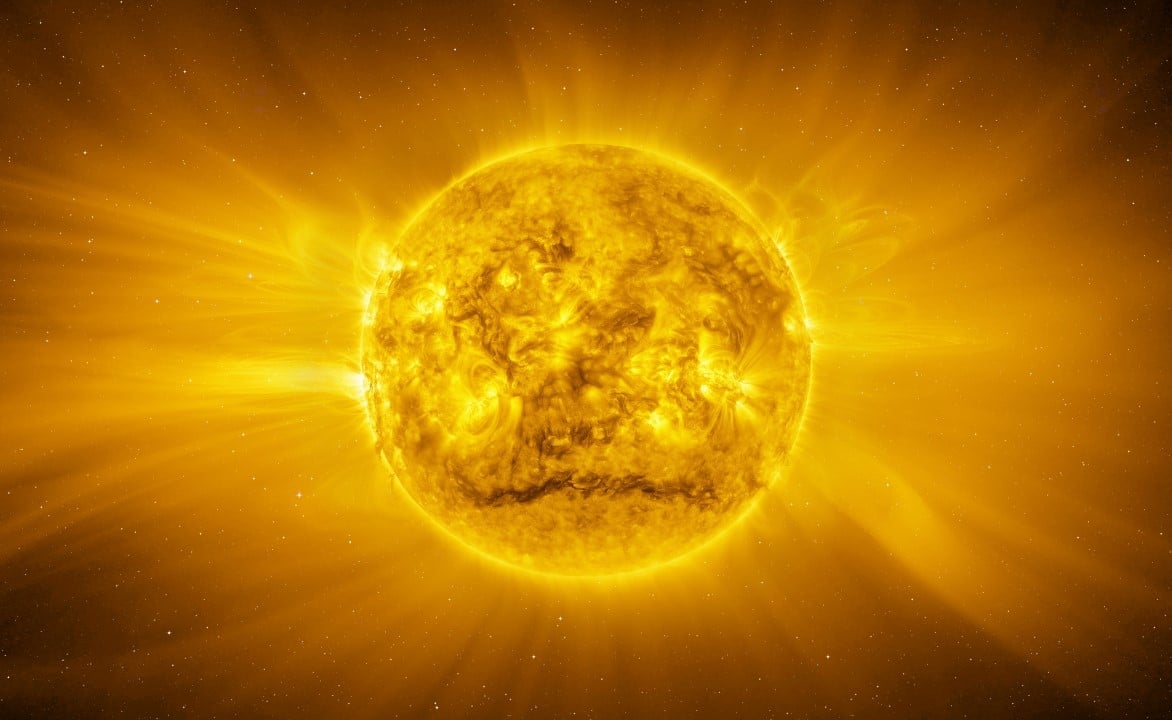
AR 4366 active region highlighted
Sunspot AR 4366 concentrates all of the recent explosive activity observed in Sol. Sua complex structure, with intertwined magnetic fields, favors the sudden release of accumulated energy.
Observations of Observatório of Dinâmica Solar of Nasa show that the region maintains continuous growth. Monitoramentos diaries indicate potential for new eruptions in the coming days.
Classification of solar flares
Scientists use a scale that divides solar eruptions into classes according to the intensity of radiation emitted in X-rays. The categories range from A and B, the weakest, to X, which represents the most energetic events.
Within class X, decimal numbers indicate relative strength. For example, an X8 eruption exceeds an X1 in magnitude.
- Class A and B: low energy events, without noticeable impacts on Terra.
- Class C: moderate, with possible slight radio interference.
- Class M: strong, capable of causing radio blackouts in polar regions.
- Class X: extreme, with risk for satellites and electrical networks.
Sequence recorded in February
Class X eruptions occurred at a rapid pace from February 1st. The first reached X1.0, followed by more intense events.
Records confirm at least these major explosions:
- X1.0 at the beginning of the 1st.
- X8.1 or X8.3 in the same period, considered the most powerful in the current cycle.
- X2.8 in close sequence.
- X1.6 and X4.2 in the following days.
This cadence over a few days characterizes the episode as unusual.
Expected effects on the Earth’s atmosphere
Coronal mass ejections associated with flares travel toward Terra at high speeds. When interacting with the planetary magnetic field, they cause geomagnetic storms.
Among the visible phenomena is the increase in the intensity of the aurora borealis and australis. Regiões as well as Canadá, Alasca and north of Europa register a higher probability of observation.
Interference to high-frequency radio communications also occurs during peak activity. Sistemas GPS navigation systems face possible temporary distortions at high latitudes.
Continuous monitoring by space agencies
Nasa and NOAA maintain permanent surveillance of solar activity through dedicated satellites. The Observatório of Dinâmica Solar captures real-time images of the solar surface.
Updated forecasts guide satellite and power grid operators. Alertas in advance allow preventive measures in cases of high risk.
International collaboration involves space forecasting centers in several countries. Shared Dados contributes to more accurate assessments.
Solar cycle 25 in peak phase
Sol goes through activity cycles with an average duration of 11 years. The current cycle, called 25, reached a maximum phase that was more intense than initially predicted.
Peak periods favor the emergence of complex sunspots. Essas magnetic structures concentrate energy that is released in eruptions.
History shows that intense cycles produce more class X events. The current one records higher numbers than recent previous cycles.
Technological impacts of intense eruptions
Solar flares release radiation that reaches the Earth’s ionosphere within minutes. Isso causes absorption of radio waves at certain frequencies.
Satellites in low orbit face greater atmospheric drag during geomagnetic storms. Operadores adjust trajectories to compensate for variations.
Power grids at high latitudes monitor current inductions that can overload transformers. Episódios extremes in the past have led to improvements in protection.
Aurora observation possibilities
The arrival of solar particles between February 5th and 6th increases the chances of visible auroras. Locais with clear skies and low light pollution offer better conditions.
Photographers and enthusiasts in the northern hemisphere prepare equipment to record the phenomenon. Aplicativos forecast help identify ideal times.
Even at mid-latitudes, strong events occasionally make auroras noticeable. Registros records confirm sporadic occurrences further south.
Solar activity remains high
The AR 4366 region continues to rotate towards the center of the solar disk as seen from Terra. Essa position increases the probability of ejections aimed at the planet.
Forecasts indicate maintenance of moderate to high levels in the coming days. Novas Class M or higher flares remain possible.
Scientists follow the evolution of the spot until its disappearance on the opposite side of Sol. Ciclos of rotation is completed approximately every 27 days.
Natural behavior of Sol
Solar flares are part of the normal functioning of the star. Campos magnets generated inside emerge and reorganize on the surface.
Accumulated energy is released in flashes that last minutes. Parte of this energy accelerates particles traveling through space.
Improved understanding allows you to predict impacts earlier. Continuous Observações refine spatial prediction models.
The sequence observed in February 2026 reinforces the importance of constant monitoring. Dados collected contribute to long-term studies on solar behavior.



