


The Toyota is preparing one of the most significant updates for its most successful global sports utility vehicle. The sixth generation of the RAV4 is in advanced development and promises to break with the current design, adopting an aesthetic inspired by the “hammerhead shark” visual concept, which already guides other recent launches by the brand. The main novelty, in addition to the look, is the strategy of offering the model with an exclusively hybrid engine, reinforcing the manufacturer’s commitment to the electrification of its portfolio.
Information from international markets indicates that the official launch is scheduled for the end of 2025, with sales starting progressively in the main global markets throughout the following year. Construído on the improved TNGA platform (Toyota New Global Architecture), the new RAV4 seeks not only a stronger visual identity, but also improvements in drivability, safety and interior space, remaining competitive in one of the most competitive segments in the world.
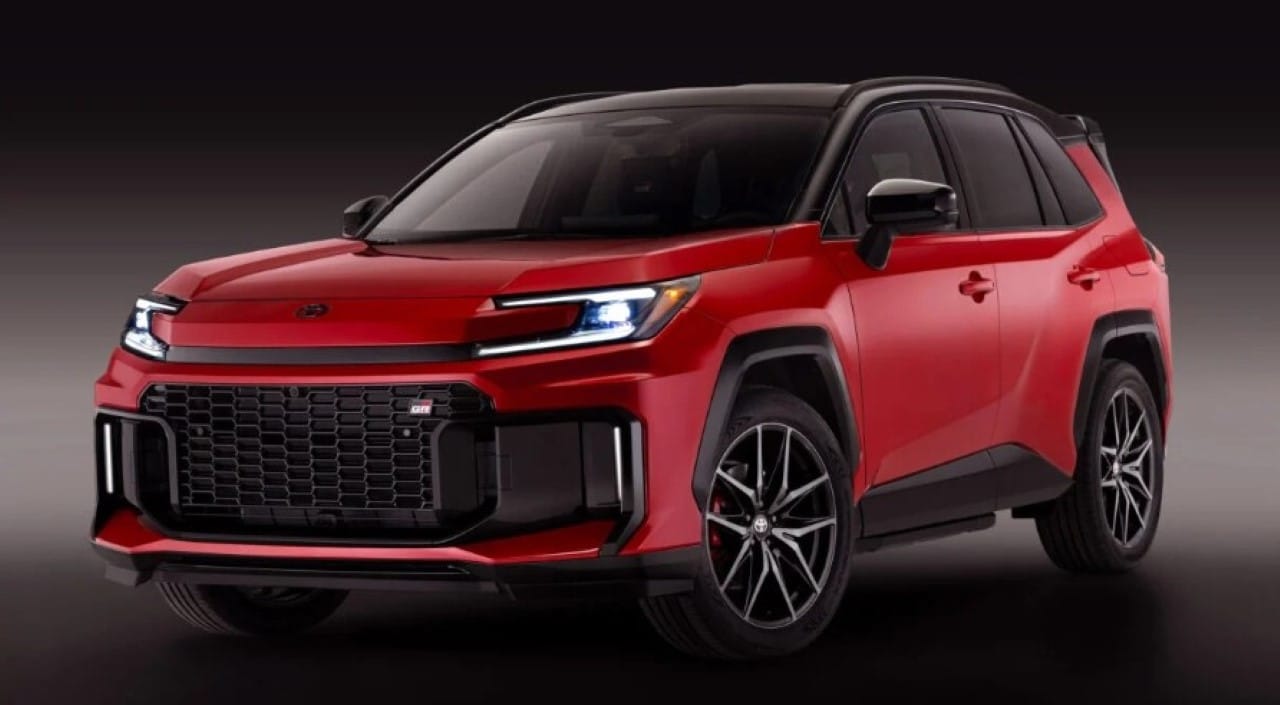
The design change is a direct response to market evolution and the need to keep the model attractive to a new generation of consumers. The front of the vehicle will be the area of greatest transformation, with “C”-shaped headlights and a more imposing grille, which give it a more robust and technological appearance. The expectation is that this new visual identity will become an important differentiator compared to direct competitors.
The “hammerhead” design that redefines the SUV
The “Hammerhead” visual identity is Toyota’s big bet for the new RAV4. The Este concept manifests itself in an aggressive front end, characterized by tapered LED daytime running lights positioned at the top, while the main headlights are housed lower, creating a distinctive and modern lighting signature. Essa approach not only gives the SUV a striking presence on the road, but also optimizes aerodynamics, contributing to the energy efficiency of the hybrid package. The body lines become more angular and sculpted, abandoning the smoother curves of the current generation for a profile that conveys greater robustness and capacity.
At the rear, the transformation continues with interconnected LED taillights, a design trend that expands the perception of the vehicle’s width and sophistication. The bumper has also been redesigned to complement the stronger overall appearance. The TNGA platform, in its evolved version, allows for shorter front and rear overhangs and a potentially longer wheelbase, which translates into better directional stability and greater use of internal space. Detalhes as new alloy wheels and two-tone paint options should complete the package, offering more personalization to customers.
Renovated interior with a focus on technology and comfort
Inside, the cabin of the new Toyota RAV4 will undergo a complete modernization, in line with the brand’s latest releases and raising the standard of finishing and technology. The dashboard will be dominated by a new multimedia center with a touchscreen of up to 14 inches in the most complete versions, operating a faster and more intuitive infotainment system, with wireless connectivity for Apple CarPlay and Android Auto. The instrument panel will also be fully digital, with a high-resolution screen that will allow the driver to personalize the information displayed, from driving data from the hybrid system to navigation and safety alerts. Toyota invested in improving the materials used, with more soft-touch surfaces, brushed metal details and new covering options for the seats, seeking to create a more premium and welcoming atmosphere. Ergonomics was another point of attention, with the reorganization of controls to facilitate access and operation while driving, making the onboard experience more pleasant and safe. The structure based on the TNGA platform guarantees generous space for five occupants and a trunk with competitive capacity, reinforcing the versatility that is a trademark of the RAV4.
Hybrid powertrain as standard for the new generation
The sixth generation of the RAV4 will mark a turning point in its engine strategy, starting to be offered exclusively with hybrid technology in many markets. The main system must be an evolution of the current set, which combines a 2.5-liter Atkinson cycle combustion engine with electric motors.
The combined power is expected to surpass the 226 horsepower of the current version, providing more agile acceleration and more direct responses. The improvement of the energy management system will also result in greater fuel efficiency, one of the model’s main attractions.
In addition to the conventional hybrid version (HEV), the Toyota will continue to offer a variant Plug-in
Improved security with new Toyota Safety Sense
Safety will be a fundamental pillar in the development of the new RAV4. The SUV will come equipped with the latest version of Toyota Safety Sense, the brand’s suite of driver assistance technologies, which will receive important updates.
The pre-collision system will have its detection capacity expanded, identifying pedestrians, cyclists and motorcyclists with greater precision, even in low light conditions or at intersections.
The Controle of Cruzeiro Adaptativo (ACC) will be improved to operate more smoothly in congested traffic and will include a curve speed adjustment function based on data from the navigation system.
Other features, such as the lane keeping assistant and the traffic sign recognition system, will also be refined. The introduction of a high-definition 360-degree camera and new parking sensors will make maneuvering in tight spaces easier.
Versions and positioning in the global market
To meet different consumer profiles, Toyota plans a diverse range of versions for the new RAV4. Modelos like the “Adventure” and “Woodland” are expected to be retained, offering more rugged appeal and improved off-road capability, with mixed-use tires, raised suspension and specific driving modes for low-grip terrain.
In contrast, versions with “Z” or “Limited” trim will focus on luxury and technology, with all comfort and convenience features available. With this strategy, Toyota seeks to strengthen the RAV4’s position as one of the best-selling SUVs in the world, directly facing strong competitors such as the Honda CR-V, Volkswagen Tiguan and Hyundai Tucson.
Release expectations and prices
The global schedule foresees the start of mass production in the second half of 2025, with the model reaching dealerships in markets such as Japão and Estados Unidos at the end of the same year. Para o Brasil and other regions, the arrival should take place throughout 2026.



