
Risk of battery fire leads BYD to recall almost 90,000 Qin Plus DM-i model vehicles in China


Chinese electric and hybrid vehicle manufacturer BYD has initiated a major recall process in the Chinese market, involving 88,981 units of its popular hybrid sedan, the Qin Plus DM-i. The measure was motivated by the identification of a defect in the battery pack that presents a potential fire risk, raising new discussions about the safety of components in new energy vehicles.
The call covers vehicles manufactured between January 2021 and September 2023, a period of more than two years of production. The specific fault lies in the battery’s power distribution unit, where a non-conformity in the manufacturing process can lead to loosening of the component. Essa condition significantly increases the likelihood of an internal short circuit, which, in extreme cases, can result in an uncontrolled overheating event, known as thermal runaway, and subsequent fire.
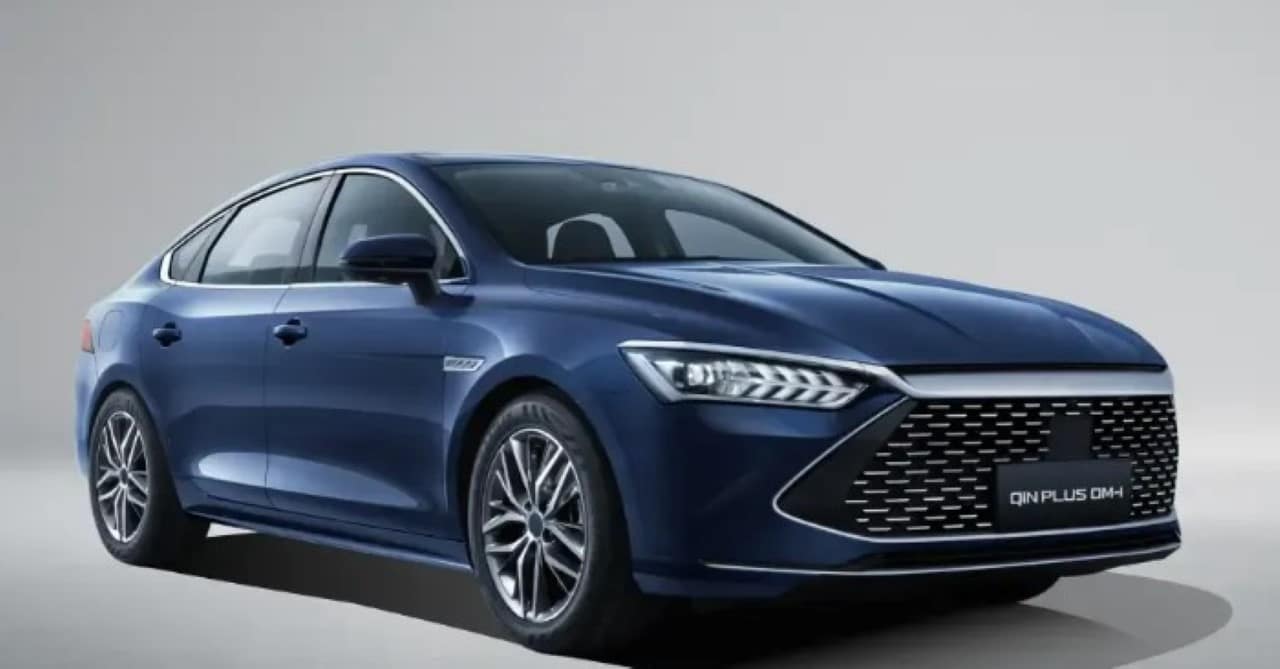
The announcement was formalized with Administração Estatal of Regulação of Mercado of China (SAMR), the government body responsible for supervising product quality and consumer safety in the country. BYD’s action follows a series of investigations into isolated incidents that pointed to a possible systemic failure in the component, forcing the company to take large-scale preventative action to mitigate risks to owners.
Technical details of battery failure
The BYD-led investigation revealed that the core problem is located in the battery pack’s power distribution unit sampling bus. A flaw in the assembly process can cause this component to not be properly fixed, creating a gap that, with normal vehicle vibration, can lead to undue contact between metal parts.
This contact generates a low resistance path for the electric current, characterizing a short circuit. In a high-voltage system like that of a hybrid vehicle, a short circuit can release an immense amount of energy in a short space of time, overheating the battery cells and starting the dangerous chain reaction of thermal runaway.
Solutions proposed by the manufacturer
To fix the problem, BYD outlined a two-pronged action plan. The first step consists of a remote software update, known as Over-The-Air (OTA), to the Sistema of Gerenciamento of Bateria (BMS) of affected vehicles.
This new software improves monitoring algorithms, making the system more sensitive to abnormal temperature and voltage variations that could indicate the beginning of a short circuit. Caso an anomaly is detected, the system will alert the driver through an audible and visual warning on the dashboard, instructing him to stop the vehicle safely.
The second part of the solution, and the most definitive, involves the physical inspection of vehicles at authorized dealerships. Technicians will check the power distribution unit and, if an assembly defect is found, they will completely replace the defective component with a new part, at no cost to the owner.
The role of the Chinese regulatory agency
Administração Estatal of Regulação of Mercado (SAMR) plays a crucial role in protecting consumers in China. Este body is responsible for monitoring the quality of products sold in the country, from food to motor vehicles.
In the case of the BYD recall, SAMR acted as the entity that received official notification from the manufacturer and will oversee the entire process to ensure that it is conducted in a transparent and effective manner.
The agency monitors the progress of the recall, the number of vehicles repaired and customer satisfaction. SAMR’s intervention ensures that companies comply with their legal obligations and take the necessary measures to correct failures that put public safety at risk.
This type of strict inspection has become increasingly common in the Chinese automotive market, which is the largest in the world, especially with the rapid expansion of electric and hybrid vehicles, which bring new safety and quality challenges.
Context of other BYD recalls
This Qin Plus DM-i recall is not an isolated event in BYD’s recent history. The company, which has become one of the largest manufacturers of electrified vehicles in the world, has faced challenges related to quality control as it expands its production at a rapid pace. Nos In recent years, the automaker has already carried out other important recalls that affected tens of thousands of vehicles. Entre notable cases include the recall of more than 115 thousand units of the Tang DM-i and Yuan Pro models, also related to possible failures in the electrical and battery system. Outra significant campaign involved almost 97 thousand units of the Dolphin and Yuan Plus models due to a defect in the battery’s cooling system that could compromise its integrity.
These recurring episodes highlight the complexity and challenges inherent in mass producing high-density battery technologies. Enquanto BYD leads the market in sales volume, surpassing global competitors, the frequency of recalls serves as a constant reminder of the importance of rigorous quality control and component validation processes. How the company manages these issues is critical to maintaining consumer trust, both in the Chinese domestic market and in its ambitious international expansion, where a reputation for safety and reliability is a decisive factor in success.
Impact on brand image and the market
The recall of nearly 90,000 vehicles represents a significant challenge to BYD’s image, especially at a time of intense competition in the new energy vehicle sector. Battery safety is a top concern for consumers considering the transition to electric or hybrid cars, and incidents like this can fuel public hesitation. Embora the proactive attitude of carrying out a recall is seen as a sign of corporate responsibility, the repetition of problems related to critical components can raise doubts about the robustness of the company’s engineering and manufacturing processes. Para a brand that bases much of its marketing strategy on the innovation and reliability of its “Blade” battery technology, news of a fire risk could be particularly damaging. In the long term, BYD’s ability to resolve the issue quickly and efficiently, communicating transparently with its customers, will be decisive in mitigating the damage to its reputation and maintaining its leadership position in the competitive global market.
Communication with vehicle owners
BYD has already started the process of notifying owners of vehicles included in the recall through its official communication channels, including direct contacts and alerts through the dealership network. Customers can check whether their car is affected by consulting the brand’s official website or contacting customer service, providing the Número of Identificação of Veículo (VIN).



