


The Volkswagen is preparing a profound restyling for the Nivus, scheduled for launch in 2027. The coupe SUV, which has become a sales success in the national market, will receive a new generation based on the MQB Hybrid platform, incorporating a long-awaited flex hybrid system and a design strongly inspired by the European T-Roc model. Production will be concentrated at the Anchieta factory, in São Bernardo of Campo (SP), as part of the automaker’s robust investment plan in the country.
Among the main new features are the adoption of the 1.5 TSI Evo2 engine combined with an electrical system and the inclusion of a sunroof, an item highly requested by consumers and present in its main direct competitors. Essas changes aim to position the Nivus at a higher level of technology and sophistication, increasing its competitiveness in the fierce compact SUV segment.
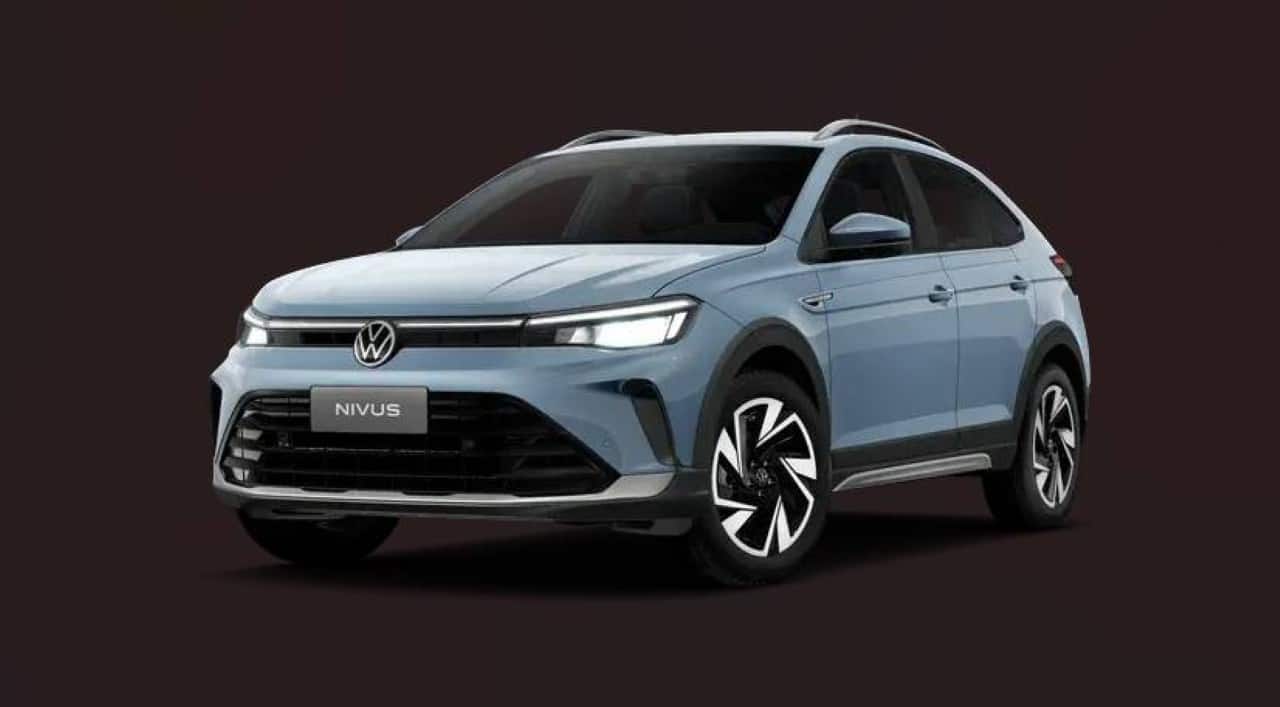
Prototypes of the new model are already in the testing phase in Brazilian territory, indicating that the project is at an advanced stage. The changes will not be limited to the engine and appearance, but will also include improvements to the interior space, finishing and the list of safety and connectivity equipment, aligning the vehicle with the German brand’s latest global trends.
Renewed design and European inspiration
The visual identity of the next generation of the Nivus will be its biggest differentiator, abandoning part of the current lines to adopt an aesthetic aligned with that of the T-Roc 2026, known informally as the “SUV of the Golf”. The European influence will bring a visually larger and more imposing size, with an even more accentuated roofline to reinforce the coupe silhouette. The LED headlights will be more tapered and connected by an illuminated bar that runs through the front grille, a design feature already seen in more recent Volkswagen models, such as the Taos and the Tiguan. The rear will also be completely redesigned, with interconnected taillights and the brand’s logo illuminated, creating a modern and easily recognizable lighting signature. The increase in dimensions will be noticeable, with the wheelbase expected to grow from the current 2.56 meters to around 2.63 meters, resulting in a significant gain in space for rear seat occupants and greater overall comfort in the cabin.
New flex hybrid engine
The heart of the new Nivus will be the modern 1.5 TSI Evo2 engine, which will be produced at the São Carlos (SP) factory from 2026. The combustion engine will deliver 150 hp of power and 25.5 kgfm of torque, while the small electric motor will assist with a boost of up to 24 hp and 20 kgfm in specific situations, such as acceleration and starting.
This MHEV system The transmission will be the automated seven-speed dual-clutch DSG, known for its quick and precise changes, which complements the high performance and efficiency package. The technology does not require external recharging, which makes it ideal for Brazilian infrastructure.
The long-awaited sunroof as a differentiator
In response to a recurring request from consumers, the Volkswagen will finally include the option of a sunroof on the Nivus. The absence of the item in the current generation, even in the most expensive versions, was a point of criticism and a competitive disadvantage in relation to rivals such as the Fiat Fastback.
The inclusion of the panoramic sunroof, likely available on top-of-the-line trims, elevates the SUV coupe’s premium appeal. Esse equipment is especially valued by the younger and urban public, reinforcing the brand’s strategy of positioning the Nivus as a more sophisticated and desirable product.
Improved technology and finish in the interior
The interior of the new Nivus will undergo a revolution, mirroring the design of the European T-Roc. The panel will be dominated by a floating multimedia center with a screen measuring up to 12.9 inches, which should integrate voice assistants and artificial intelligence features for a more intuitive interaction.
The instrument panel will be fully digital, with a 10-inch screen, and the more equipped versions will be able to feature a head-up display, which projects essential information directly onto the windshield.
Another significant change will be the replacement of the traditional gear lever with a selector positioned behind the steering wheel, freeing up space in the center console for an induction cell phone charger and new rotary controls. The finish will also receive attention, with better quality materials and perforated leather coverings.
Safety package and semi-autonomous driving
The new Nivus will come equipped with a robust suite of driver assistance technologies (ADAS). Recursos such as adaptive cruise control (ACC), lane keeping assistant and autonomous emergency braking with pedestrian detection will be present.
The expectation is that the system will evolve to offer a more complete semi-autonomous driving experience, aligning the model with the most demanding safety standards on the global market.
The MQB Hybrid platform, in addition to being adapted for electrification, also offers greater torsional rigidity, which contributes to better driving dynamics and greater protection in the event of collisions.
Volkswagen studies which advanced technologies from the European T-Roc, such as automatic lane changing, will be maintained in the Brazilian version, seeking a balance between innovation and the final cost of the product for the local consumer.
Market strategy and positioning
With the launch of the new generation of the Nivus, the Volkswagen intends to consolidate its leadership in the SUV segment, which currently represents a significant portion of vehicle sales in the Brasil. The model will maintain its SUV coupe profile with sporty appeal, differentiating itself from the T-Cross, which will be increasingly positioned as a family and rational option. The coexistence of the new generation with the current one is a possibility, with the older one acting as an entry option for the brand’s line of sports utility vehicles.
Release schedule on Brasil
Development of the new Nivus is accelerating. Production of the 1.5 TSI Evo2 engine in São Carlos is scheduled to begin in 2026, while manufacturing of the complete vehicle at the Anchieta plant will begin in 2027. Udara pickup and the hybrid version of the T-Cross.



