
BYD announces massive recall in China for 89,000 Qin Plus DM-i model cars due to battery failure


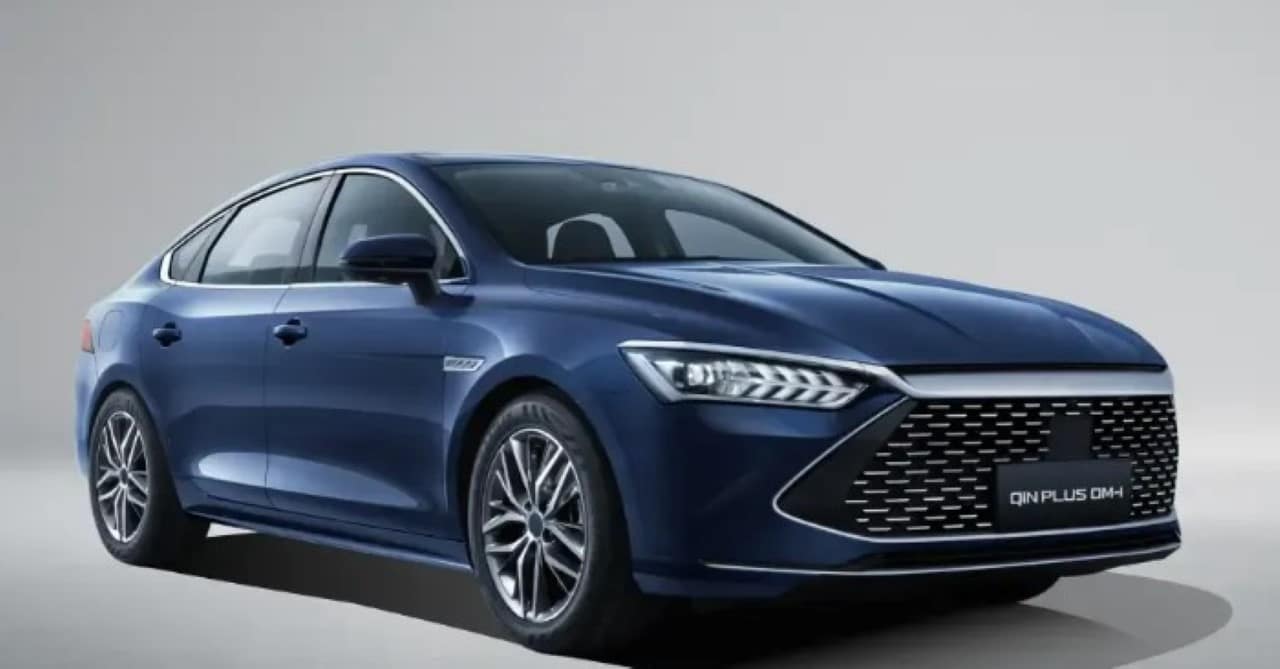
BYD, one of the world’s largest electric vehicle manufacturers, announced a large-scale recall on China involving 88,981 units of its popular plug-in hybrid sedan, the Qin Plus DM-i. The measure was motivated by the identification of a potential failure in the lithium battery pack, which presents risks to the safety of occupants. The affected vehicles were produced over a period of almost three years, between January 2021 and September 2023.
The call was formally registered with Administração Estatal of Regulação of Mercado of China (SAMR), the country’s regulatory body, which will supervise the process. The fault is specifically linked to the battery management system (BMS), an electronic component crucial to the safe and efficient operation of electric vehicles. The automaker has already started the process of communicating with the owners of the vehicles involved to schedule the necessary repairs, which will be carried out free of charge.
This recall adds to other recent preventive actions by the brand, reflecting an increase in the rigor of safety standards and supervision of the growing new energy vehicle market in the China. The company seeks, with this measure, to guarantee the integrity of its products and consumer confidence in its technology.
Technical details of battery system failure
The investigation conducted by BYD engineering pointed out that the root of the problem lies in an inconsistency in the software of the Sistema of Gerenciamento of Bateria (BMS). Este system is responsible for monitoring and controlling vital battery parameters, such as voltage, current and temperature of each cell individually. The identified fault may cause the BMS to perform inaccurate calculations about the state of charge and overall health of the battery. In extreme situations, this inaccuracy can result in an overload condition or excessive heating of some cells, increasing the risk of a thermal runaway event, which can culminate in a fire. Thermal runaway is a chain reaction of overheating within a lithium-ion battery that is difficult to contain once it starts. The software failure compromises the protection mechanisms that should prevent exactly this type of occurrence, making the recall an essential preventive measure to mitigate any potential danger to vehicle users.
BYD’s Action Plan for Owners
To effectively and comprehensively address the issue, BYD developed a two-step action plan. The first consists of remotely updating the BMS software. Essa update will be sent “over-the-air” (OTA), that is, over the internet, directly to affected vehicles. The new software has improved algorithms that correct the calculation flaw and reinforce security protocols, improving the accuracy of battery monitoring and the system’s responsiveness to any anomaly.
The second stage of the plan is aimed at cases in which the software update is not sufficient or for vehicles that already show some sign of degradation. In Nestas situations, owners will be instructed to take their cars to an authorized dealer. On site, specialized technicians will carry out a detailed inspection of the battery pack. If any damage or potential risk is detected, the battery pack will be replaced with a new one at no cost to the customer.
How owners will be notified
BYD said it will contact all owners of vehicles included in the recall directly. Essa communication will be done through official channels, such as correspondence, email and brand applications.
In addition to direct notification, customers have the option to proactively check whether their vehicle is among those affected. The query can be made through the automaker’s customer service channels.
It is also possible to use the vehicle identification number (VIN) to search the official SAMR portal, ensuring transparency and access to information.
The Importance of Battery Management System (BMS)
The Sistema of Gerenciamento of Bateria, or BMS, is often called the “brains” of an electric vehicle’s battery. Sua function goes far beyond simply measuring the remaining charge. Ele is critical to the safety, performance and longevity of an electric car’s most expensive component.
Among its main responsibilities are:
- Monitor the voltage and temperature of each battery cell.
- Balance the load between cells to ensure even wear.
- Protect the battery against overcharging, deep discharging and overheating.
- Calculate battery state of charge (SoC) and state of health (SoH).
Context of recalls in the electrical market
This BYD recall is not an isolated event in the electric vehicle sector. With the rapid evolution of technology and the exponential increase in production, recalls for software and hardware adjustments have become more frequent around the world.
The complexity of electronic systems and high-voltage batteries requires continuous monitoring and, sometimes, corrections after the products are released onto the market.
Regulatory bodies in China, Europa and América of
For automakers, carrying out recalls is seen as a necessary practice to maintain consumer trust and demonstrate commitment to safety, especially in such a competitive market.
Position of the automaker and the Chinese market
China represents the largest and most competitive electric vehicle market on the planet, with dozens of brands competing for a share of sales. BYD has established itself as one of the leaders, not just locally, but on a global scale, surpassing established competitors in production volume and sales. Manter a reputation for reliability and security is therefore vital to the company’s continued growth strategy.
The decision to recall almost 90 thousand units, although it represents a significant logistical and financial cost, is interpreted as a proactive action to protect customers and the brand’s image. Transparency in reporting failure and agility in presenting a solution are crucial factors to mitigate negative impacts on public perception and to reinforce the company’s position as a responsible player in the sector.
Vehicles affected by the call
The recall specifically covers 88,981 units of the BYD Qin Plus DM-i sedan. The models were manufactured between January 1, 2021 and September 30, 2023.
BYD recall, electric car battery failure, Qin Plus DM-i China, electric vehicle safety
What to do in case of BYD electric car recall



