
Hybrid car offensive in Brazil will bring 24 new models with SUV dominance and national production


The national automotive scenario will undergo a significant transformation with the confirmed arrival of at least 24 new hybrid vehicle models. The expansion of the offer covers a wide range of segments, including SUVs of all sizes, pickup trucks and sedans, reflecting a strategic shift by automakers to serve a new phase of the consumer market.
This movement is driven by the growing demand for more fuel-efficient vehicles with lower pollutant emissions. The offensive is led by Chinese brands such as BYD, Caoa Chery and Geely, which invest in plug-in and flex technologies, but also has the strong participation of traditional manufacturers such as Jeep, Fiat,
A determining factor for this new era is the nationalization of production. Diversas automakers are adapting or building plants in locations such as Camaçari, in Bahia, and Goiana, in Pernambuco. Local manufacturing is essential to make prices more competitive and ensure greater availability of vehicles on the market, facilitating consumer access to hybrid technology.
Chinese brands lead electrification with plug-in technology
Manufacturers of Chinese origin take a leading role in the list of launches, bringing to the Brasil advanced hybrid technologies, many of them plug-in (PHEV), which offer greater autonomy in electric mode and the convenience of recharging at sockets. Compatibility with ethanol in flex systems is also an important competitive differentiator for these companies.
Among the highlights, BYD plans to introduce multiple vehicles, including the Song Pro in a flex hybrid version, the Yuan Pro PHEV, the Seal EM-i sedan and an innovative pickup truck. The Caoa Chery, in turn, will present the imposing Tiggo 9 PHEV, with more than 500 horsepower, and the Tiggo 5X with HEV system (full-hybrid).
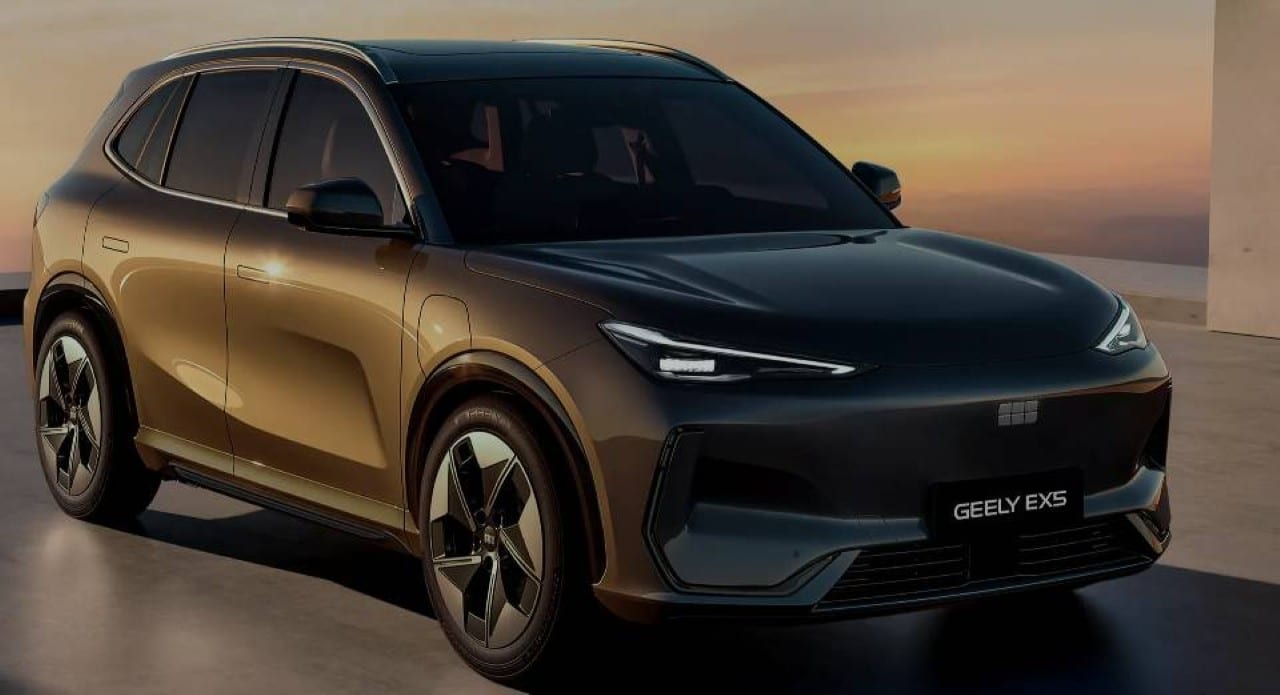
Other brands reinforce this trend. The Omoda Jaecoo group will bring the Jaecoo 8 PHEV, with an impressive 605 hp, and the Omoda 4 HEV. The Jetour debuts with the T1, T2 and S06 models, all equipped with a 339 hp PHEV system. Geely also joins the group, starting local production of the EX5 EM-i HEV, consolidating the strength of the Chinese industry in the country.
Stellantis bets on mild-hybrid systems for national models
The Stellantis group, owner of brands such as Fiat and Jeep, is preparing a package of six hybrid launches with Brazilian production. The company’s strategy focuses mainly on the implementation of mild-hybrid (MHEV) systems, 12V and 48V, which help the combustion engine to optimize the energy efficiency of vehicles already established on the market.
Highly successful models such as the Jeep Renegade, Compass and Commander will receive MHEV versions associated with the 1.3 turbo flex engine, which will now feature a small electric motor to assist with acceleration and reduce consumption. The Fiat Toro pickup will also adopt the same mechanical set. Além In addition, the new Jeep Avenger, positioned as an entry-level model, will have a mild hybrid option manufactured in the country.
Volkswagen, Renault and Honda reinforce their portfolios
Traditional automakers are also moving to avoid losing space in this new market. The Volkswagen, for example, will apply mild-hybrid technology to two of its most important vehicles, the Amarok pickup truck, which will have a version with around 300 hp of total power, and the Nivus compact SUV.
Renault, in turn, plans to launch the SUV
The Kia also participates in the market update, bringing new versions for the Sportage and the Stonic, both equipped with 48V systems to improve efficiency. The Honda bets on a different niche with the Prelude HEV, a sports car that uses the Civic platform to deliver 203 hp with a focus on drivability and low consumption.
These launches significantly expand the options available to consumers in strategic segments such as mid-size pickup trucks, SUVs of different sizes and even sports cars, demonstrating that electrification is becoming a reality in all vehicle categories in the Brasil.
Understand the different hybrid technologies reaching the market
The new models cover different levels of electrification, each with specific characteristics. Mild-hybrid technology (MHEV), which will be adopted by most of the Stellantis and Volkswagen models, uses a small electric motor, generally 12V or 48V, to assist the combustion engine in moments of greater effort, such as starting and accelerating. Esse system does not allow the car to run in purely electric mode, but it contributes to a reduction of up to 10% in fuel consumption and does not require external recharging, being a low-cost solution to increase efficiency.
Full-hybrid (HEV) systems, such as the one that will equip the Honda Prelude, have a more robust electric motor and a larger capacity battery, allowing the vehicle to run in 100% electric mode at low speeds or for short distances. The battery is automatically recharged by the combustion engine and the energy generated during braking. Finally, plug-in technology (PHEV), the main focus of Chinese brands, offers the highest level of electrification. With even larger batteries, these vehicles can be recharged using sockets and offer a significant electric range, which in some cases, like the Jaecoo 8, can reach 175 km, allowing daily use without wasting fuel.
The importance of local production for the expansion of hybrids
The strategic decision to produce many of these new hybrid vehicles in the Brasil is one of the pillars for making this new phase of the automotive market viable. Manufacturing in national territory, such as that which will be carried out by BYD in Camaçari (BA), by Stellantis in Goiana (PE) and Porto Real (RJ), and by Geely in São José of the Essa tax advantage is directly reflected in the final price to the consumer, making the technology more accessible. Além In addition, local production optimizes distribution logistics, guarantees the availability of spare parts and stimulates the creation of jobs and the development of a supply chain specialized in components for electrification, strengthening the national industry and preparing it for the future of mobility.
Options for SUVs, pickup trucks and sedans among launches
The diversity of the 24 launches guarantees that there will be options for practically all consumer profiles. The SUV segment, which continues to be the favorite of the Brazilian public, will benefit most, with alternatives ranging from large ones, such as the Jaecoo 8 and the Tiggo 9, to compact ones, such as the Omoda 4 and the Jeep Avenger. Para For those who need a work or leisure vehicle, the pickup truck segment will be reinforced with the hybrid versions of the Fiat Toro and Volkswagen Amarok, as well as a new pickup truck from BYD. Sedans and sports cars are also present with models such as the BYD Seal EM-i and the long-awaited Honda Prelude.
Prices and consumption expectations for new vehicles
Price estimates for new hybrid models vary considerably depending on the segment and onboard technology. Espera Compact vehicles with a mild hybrid system start at a range close to R$150,000, while larger SUVs and more sophisticated plug-in models can exceed R$300,000, positioning themselves in the premium segment of the market.
Regarding efficiency, expectations are high. Alguns models with full-hybrid technology (HEV) promise to achieve consumption averages above 26 km/l in a combined cycle. Já plug-in models (PHEV) stand out even more, with numbers that can reach impressive marks, such as the 55 km/l declared for the BYD Yuan Pro, representing substantial savings in fueling costs for owners.
Beatriz Lima é colaboradora da redação do Mix Vale, portal de notícias com cobertura de Brasil e mundo. Produz conteúdo nas editorias de economia e benefícios, com foco em informação de serviço para o leitor brasileiro. Escreve para o portal desde 2024.



