

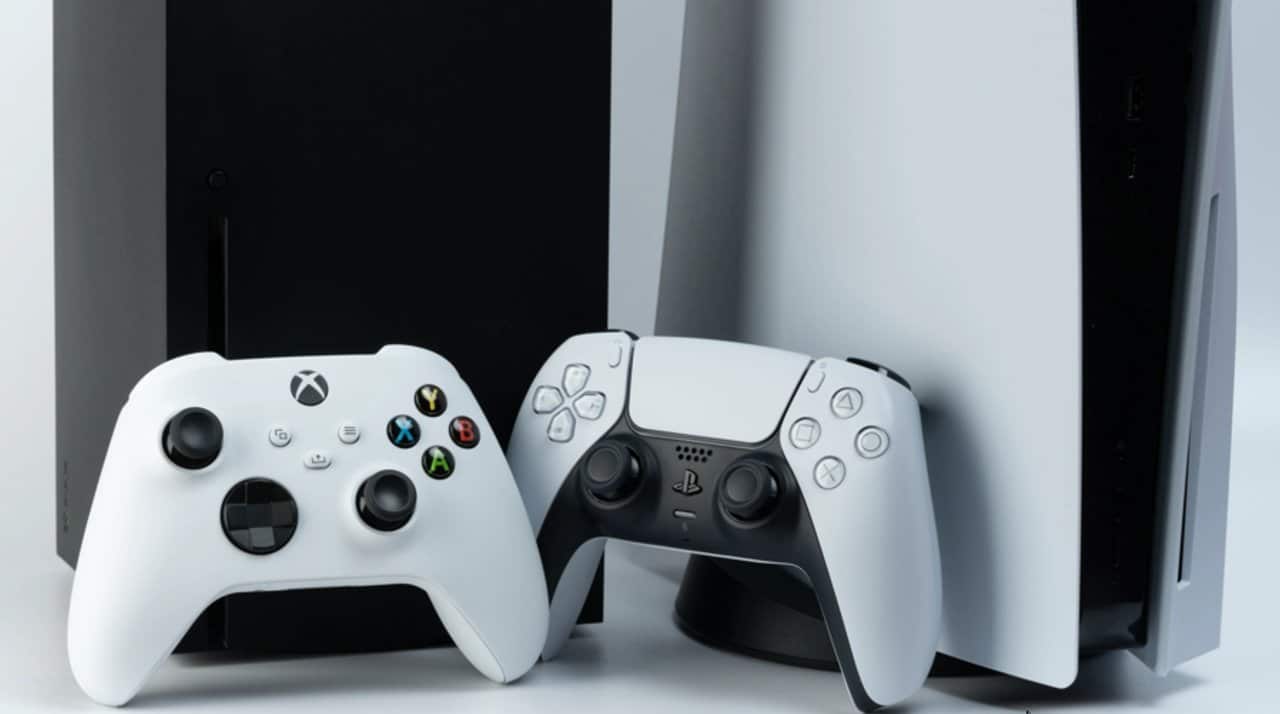
The gaming industry is on alert in the face of a new challenge that threatens the schedule for the next generation of consoles. Relatórios insiders at Sony and Microsoft indicate that both tech giants are reevaluating the release dates for their upcoming PlayStation and Xbox. The main reason is the unprecedented escalation in prices and the shortage of essential components, especially RAM.
This instability in the supply chain is directly driven by the growing demand from the artificial intelligence sector. Grandes technology corporations are acquiring the lion’s share of high-performance memory production to power their data centers and language models, leaving consumer electronics manufacturers in a secondary position in the supply queue.
As a result, the traditional seven-year life cycle of consoles is under severe pressure. What was previously expected for 2027 or 2028 can now be postponed to 2029 or even the following decade, while companies wait for the semiconductor market to normalize to ensure the commercial viability of their new products.
Artificial intelligence as a catalyst for the crisis
The exponential growth of artificial intelligence has reconfigured the priorities of the global semiconductor industry. Fabricantes of RAM memories are gearing their production to fulfill lucrative contracts with cloud computing companies and AI developers, who require huge volumes of high-speed memory to train and operate their algorithms. Essa strategic change resulted in a reduced offer for other sectors, including electronic entertainment. Console production, which relies on a large amount of RAM to render complex graphics and ensure fast loading times, has become a direct victim of these new market dynamics, facing manufacturing costs that have risen drastically in a short period.
The consumer’s final price dilemma
One of the biggest fears of Sony and Microsoft executives is the need to launch a console with a prohibitive retail price. The inflated production costs would have to be passed on to the consumer, which could result in a final value up to 40% higher than the previous generation, alienating a large part of the player base.
Historically, companies subsidize hardware in the early years, selling consoles with minimal profit margins or even at a loss, to build a user base and profit later from the sale of games and services. A high manufacturing cost makes this business model unsustainable.
In emerging markets, the situation would be even more critical. The combination of an already high base price with import taxes and currency fluctuations could make the new consoles luxury items, unaffordable for the majority of the public and severely limiting global sales potential.
Repercussions for the current generation of consoles
The component crisis not only affects future plans, but also the present. Production of the PlayStation 5 and Xbox Series X|S is already feeling the pressure of rising replacement parts costs. Analistas of the market do not rule out the possibility that the suggested prices of currently available consoles will be readjusted upwards, if the upward trend in RAM memory values persists in the coming months.
In addition to the price, the availability of the devices may be compromised. Qualquer bottleneck in the delivery of memory modules can cause significant delays on assembly lines, impacting the entire logistics chain. Isso could lead to new periods of stock shortages in stores, a problem that marked the launch of the current generation and which appeared to have been overcome.
New horizons for the hardware lifecycle
The most likely consequence of this scenario is the extension of the useful life of the PlayStation 5 and the Xbox Series X|S. The traditional seven-year cycle can easily turn into an eight- or nine-year period, changing expectations for players and developers alike.
This change would force companies to adopt new strategies to maintain public interest, such as releasing improved versions of current consoles or focusing on software optimizations to extract more performance from existing hardware.
For game development studios, a longer cycle means more time to master the current architecture, which can result in more polished and technically impressive titles later in the generation’s lifespan.
However, the counterpart is the postponement of more significant technological innovations, which depend on a leap in processing power that only completely new hardware could offer to content creators.
The slow expansion of global productive capacity
The ultimate solution to the supply crisis is to build new semiconductor factories, but this is a slow and extremely expensive process. Empresas in the sector have already announced billion-dollar investments in new industrial plants in different parts of the world.
However, these new facilities will take two to three years to become fully operational. Esse schedule coincides with the period in which a possible postponement would position the launch of the next generation, reinforcing the thesis that waiting for market stabilization is the most prudent decision.
Strategies and mutual surveillance between competitors
The competitive landscape between Sony and Microsoft plays a crucial role in decisions. Nenhuma of companies want to launch their new console alone in an unfavorable market, running the risk of having a more expensive or less powerful product than the competition.
Launch parity is a historic strategy in the industry. Portanto, if one of the giants officially chooses to postpone, it is almost certain that the other will follow the same path to avoid a competitive disadvantage and ensure that both face the same market conditions.
Software optimization as an alternative
With hardware evolution temporarily on pause, the responsibility to innovate falls to software engineers. Internal teams and partner studios will be challenged to fully exploit the potential of PlayStation 5 and Xbox Series, using advanced programming techniques to deliver experiences that continue to surprise players, even without a new console on the near horizon.



