


Tesla has officially announced that production of the Model S, the electric sedan that redefined the high-performance vehicle market, will end in the second quarter of 2026. The decision marks the end of an era for the automobile that, since its launch in 2012, proved that electric cars could be synonymous with luxury, speed and cutting-edge technology, forcing the entire industry to accelerate its electrification plans.
The move is part of a broad strategic restructuring of the company led by Elon Musk. The company will redirect resources and production capacity to projects considered priority, such as the development of the humanoid robot Optimus, the expansion of production of the Cybertruck and the launch of a new, more accessible vehicle platform.
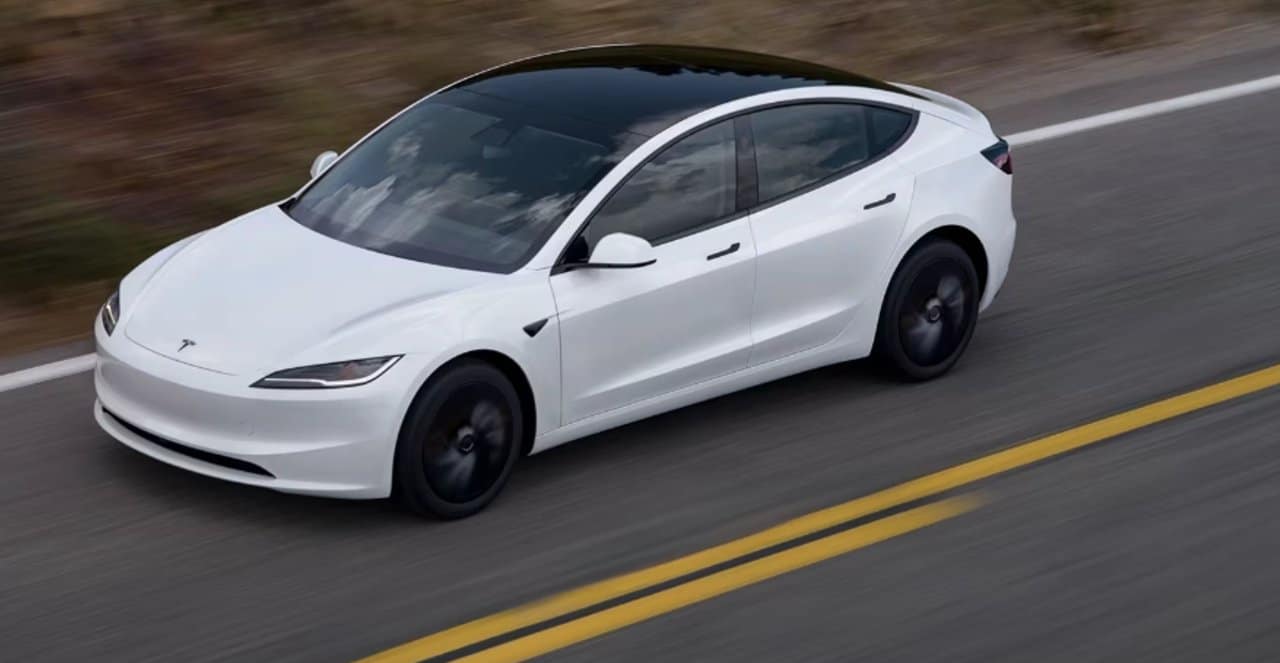
Launched more than a decade ago, the Model S not only established the Tesla as a dominant force in the industry, but also introduced innovations that have become industry standard. The vehicle was responsible for popularizing concepts such as remote software updates (over-the-air), a gigantic central control screen and acceleration performance that rivaled the most renowned combustion supercars.
A legacy of innovation and performance
When the Tesla Model S arrived on the market, it broke established paradigms about electric vehicles. Longe from the image of slow cars with low range, the sedan presented an elegant design and surprising performance, setting new range records on a single charge and proving to be a practical vehicle for daily use and long trips. The introduction of the Autopilot system was a milestone, offering semi-autonomous driving capabilities that continually evolved through software updates, a revolutionary concept that treated the car as a constantly improving technological device. The iconic 17-inch dashboard screen centralized virtually all of the vehicle’s controls, eliminating physical buttons and creating a minimalist, futuristic user experience that was widely copied by other automakers in the years that followed. Esse set of features transformed the Model S from a simple car into an object of desire and a symbol of technological status.
The evolution to Plaid and performance dominance
Throughout its production, the Model S underwent several updates that maintained its competitiveness at the top of the market. The incessant search for performance reached its peak with the launch of the Plaid version in 2021. Equipado with three electric motors that generate more than 1,000 horsepower, the Model S hypercars that cost millions of dollars.
This show of force was not just an engineering exercise, but a declaration that electric technology was superior in terms of instantaneous performance. Além of acceleration, improvements in battery technology have allowed the model’s range to exceed the 600 kilometer mark on a single charge, cementing the vehicle’s position as a viable and superior option for long distances, eliminating the “range anxiety” that was previously a major obstacle to the adoption of EVs.
Impact on the industry and the response of competitors
The success and acclaim of the Model S sent shockwaves throughout the traditional automotive industry.
Luxury automakers such as Porsche, Audi and Mercedes-Benz, which previously dominated the high-performance sedan segment, have been forced to drastically accelerate their electric vehicle development programs to avoid losing relevance.
The launch of models like the Porsche Taycan, with its 800-volt architecture for ultra-fast charging, was a direct response to the threat posed by the Tesla, adopting and, in some cases, trying to surpass the American brand’s innovations.
The Model S’s influence has also extended to interior design and software architecture, with many brands abandoning traditional dashboards in favor of large screens and complex operating systems that control the car’s functionality.
Change of scenario in the current market
In recent years, the global automotive market landscape has undergone a significant transformation, with a clear consumer preference for sport utility vehicles (SUVs).
Within the Tesla portfolio itself, the Model Y, an SUV built on a similar platform, cannibalized part of the sales of the Model S, becoming the best-selling car in the world due to its greater practicality and internal space.
This market trend is not exclusive to Tesla; sedans of all brands have lost space to SUVs. Diante In this scenario, maintaining the production of a niche model with lower volume became less strategic for the company.
Tesla’s strategic focus in the future
The decision to discontinue the Model S is directly linked to Elon Musk’s vision of the future for the Tesla, which transcends the automotive sector.
The company is investing heavily in the development of Optimus, a humanoid robot designed to perform repetitive tasks, which Musk believes has greater market potential than automobiles.
The transition to new platforms
Closing the assembly line for an older vehicle, such as the Model S, frees up capital and physical space to implement more modern and efficient manufacturing processes, such as those being developed for the next generation of Tesla vehicles, which promise to drastically reduce production costs.
Farewell to an automotive pioneer
The end of production of the Model S symbolizes the closing of an important chapter in the history of the automobile.
His legacy, however, is lasting. The sedan not only proved the viability of electric cars, but made them desirable, fast and smart, paving the way for the energy transition that defines the automotive industry today.



