


The Toyota is preparing one of the most significant updates for its most successful SUV globally. The sixth generation of the RAV4 is in an advanced stage of development and promises to break with the current design, adopting a more aggressive and futuristic aesthetic, in addition to consolidating the brand’s strategy of focusing exclusively on hybrid engines for the model in most markets. Informações behind-the-scenes reports from the automotive industry indicate that the official presentation is scheduled for the end of 2025, with the start of global sales occurring gradually throughout 2026.
Built on an enhanced version of the global TNGA (Toyota New Global Architecture) platform, the new RAV4 will pursue not only a stronger visual identity, but also substantial improvements in drivability, safety and interior space. The change represents a direct response to market evolution and the need to keep the SUV competitive in one of the most competitive segments in the world, where electrification and onboard technology have become decisive factors for the consumer.
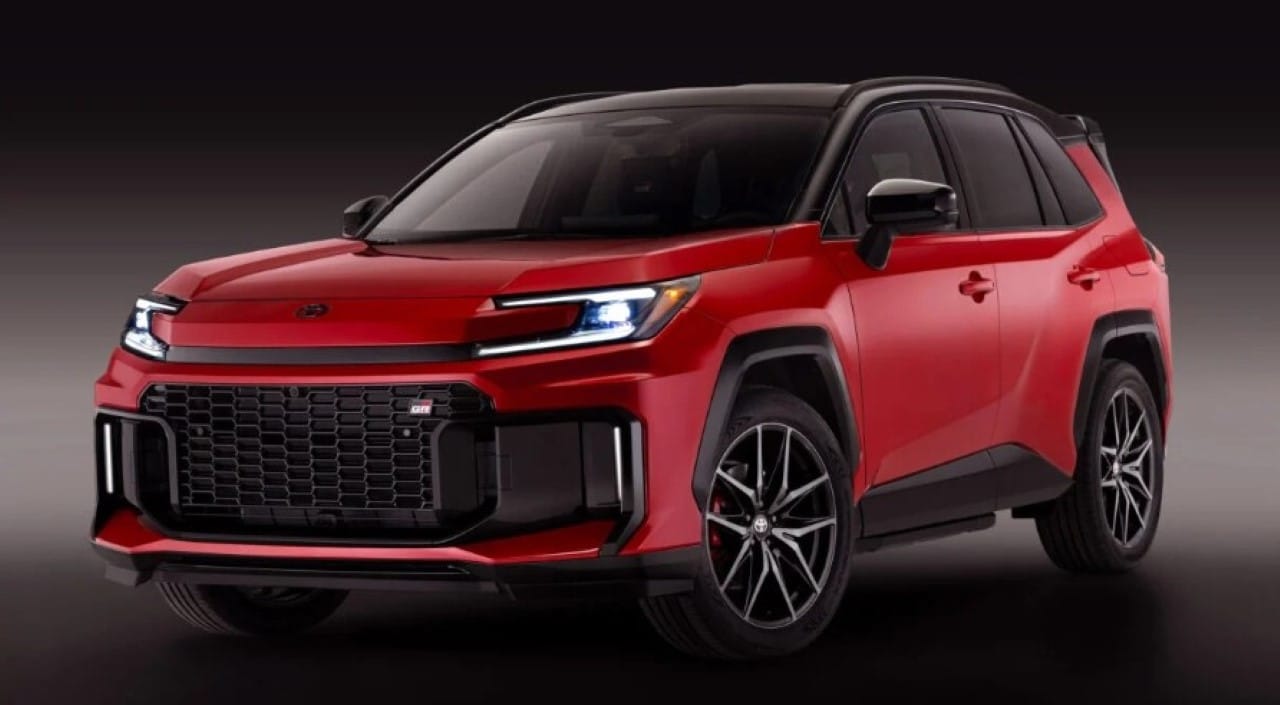
The main novelty of the model will be its strategic engine reorientation. The expectation is that the new RAV4 will completely abandon pure combustion engine options in key markets, such as Europa and América of the Norte, offering only hybrid packages. Esta decision reinforces Toyota’s commitment to the electrification of its portfolio and aligns the SUV with the latest trends in sustainability and energy efficiency. The new generation therefore aims to consolidate the RAV4’s leadership as one of the best-selling hybrid vehicles on the planet.
A design that redefines the SUV
The visual transformation will be the most impactful point of the new generation. Inspirado in the “hammerhead” concept, already seen in recent launches such as the Prius and the C-HR, the RAV4 will adopt a completely redesigned and much more aggressive front end. The main feature will be the divided optical assembly, with the “C”-shaped LED daytime running lights positioned at the top, while the main headlights will be housed lower, in the bumper. Essa configuration, combined with a more prominent front grille and accentuated creases on the hood, will give the SUV an imposing and technological presence. The general lines of the body will abandon the softer curves of the current model in favor of a more angular and sculpted profile, with wider fenders and a high belt line, reinforcing the feeling of robustness. The rear will also undergo a complete modernization, with the expectation of LED lights interconnected by a light bar, a trend that expands the perception of the vehicle’s width and sophistication. The new rear bumper, with a cleaner and more integrated design, will complete the package of changes, ensuring that the SUV stands out from all angles.
Modernized cabin with a focus on technology
Inside, the cabin of the new Toyota RAV4 will undergo a complete modernization, in line with the brand’s latest releases and raising the standard of finishing and technology. The dashboard will be dominated by a new fully digital instrument cluster, likely with a 12.3-inch screen, which will allow the driver to customize the information displayed. In the center, a new multimedia center with a floating screen, which can reach 14 inches in top-of-the-line versions, will run the Toyota’s latest operating system, offering a faster, more intuitive interface and wireless connectivity for Apple CarPlay and Android Auto.
Toyota will also invest in improving the quality of materials used in the cabin, with greater use of soft-touch surfaces, brushed metal details and new seat covering options. The objective is to create a more sophisticated and welcoming environment, which conveys a feeling of greater added value. Ergonomics will be another point of attention, with a new design for the central console that will facilitate access to controls and offer more storage spaces. Graças the optimization of the TNGA platform, passenger space and trunk volume are expected to remain competitive, reinforcing the versatility that is one of the RAV4’s trademarks.
The exclusively hybrid engine strategy
The sixth generation RAV4 will mark a turning point in its powertrain offering. The Toyota will focus its efforts on hybrid technology, which will become standard for the model.
The main system should be an evolution of the current set, which combines a 2.5-liter Atkinson cycle engine with electric motors. Espera There is an increase in combined power, surpassing the 226 hp of the current version, to provide more vigorous acceleration and greater energy efficiency.
In addition to the conventional hybrid version (HEV), the Toyota will continue to offer the Plug-in Hybrid (PHEV) variant, which will feature a higher capacity battery. The range in purely electric mode should exceed 100 kilometers, making it ideal for daily urban use without polluting emissions.
Improved safety and drivability
Safety will continue to be a key pillar in the development of the new RAV4, which will come equipped with the latest version of the Toyota Safety Sense package.
This suite of driver assistance technologies will receive important updates, including a pre-collision system with improved ability to detect pedestrians, cyclists and motorcycles, even in low light conditions.
The Controle of Cruzeiro Adaptativo (ACC) will operate more smoothly and predictively, especially in congested traffic, and may include a curve speed adjustment function based on data from the navigation system.
Features such as lane keeping assist and the traffic sign recognition system will also be refined. A new 360-degree camera with higher resolution and more accurate parking sensors will make maneuvering in tight spaces easier.
Versions for different consumer profiles
To serve a wide range of customers, Toyota must maintain a diverse range of versions. Modelos with more adventurous appeal, such as the “Adventure” or “Woodland” configurations, should continue, offering exclusive aesthetic details, elevated suspension and mixed-use tires.
On the other hand, the more luxurious versions, such as the “Limited”, will focus on comfort and sophistication, bringing items such as a panoramic sunroof, premium sound system and high-standard interior finishes to compete with SUVs from premium brands.
Fierce competition in the segment
The new RAV4 will face strong and consolidated competition. Seus main rivals include the Honda CR-V, which also bets heavily on its hybrid version, the Volkswagen Tiguan and the Hyundai Tucson.
With a bold design, total focus on the efficiency of hybrid propulsion and a cutting-edge technological package, the Toyota seeks not only to defend, but to expand its leadership in one of the most important and profitable segments of the global automotive market.
Global launch and expectations
The global schedule foresees the start of mass production in the second half of 2025. The first markets to receive the new SUV will be Japão and Estados Unidos, later in the same year. Para other regions, like Brasil, are expected to arrive throughout 2026, maintaining the model as a key piece in the brand’s electrification strategy in the country.



