


Toyota officially revealed the sixth generation of the RAV4, one of the best-selling SUVs in the world, marking a strategic turning point for the model. The main novelty is the automaker’s decision to completely abandon exclusively combustion engines, offering the vehicle only with a hybrid engine. Esta change aligns the RAV4 with the company’s global goal of accelerating the electrification of its portfolio and reducing carbon emissions.
The new model arrives with the promise of maintaining leadership in an increasingly competitive segment, combining the brand’s already known reliability with a robust package of innovations in design, technology and safety. The official debut took place at Japão, with a launch scheduled for other international markets in the coming months.
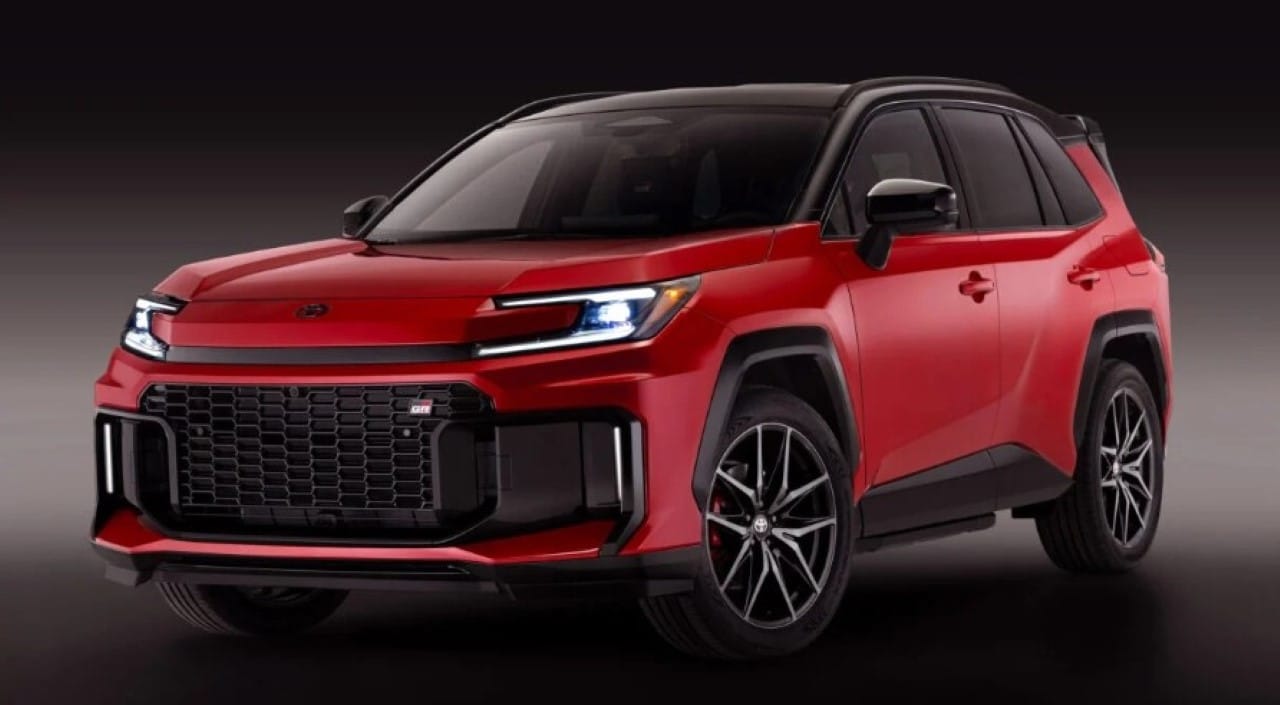
Test units have already been spotted in circulation at Brasil, indicating that preparations for the national launch are underway. The SUV is expected to arrive in the country in the first half of 2026, possibly with flex hybrid technology adapted to the local market.
A visual revolution with the ‘hammer head’ design
The aesthetic update of the new Toyota RAV4 is one of its biggest highlights, representing the most profound change in the model’s appearance in years. The front end has been completely redesigned to incorporate the brand’s new design concept, known as “hammerhead”, already seen in recent launches such as the Prius and the C-HR.
This new visual identity is characterized by tapered “C”-shaped LED headlights and a more horizontal front grille integrated into the bumper, giving the SUV a more modern and aggressive appearance. The change is not just aesthetic, as the new design also optimizes aerodynamics, which contributes to greater energy efficiency and reduced wind noise at higher speeds.
Modernized interior with a focus on technology and ergonomics
The interior of the RAV4 has undergone a complete modernization, with a focus on improving the driver and passenger experience. The dashboard is now dominated by a new multimedia center with a floating screen that, in the most equipped versions, can reach 14 inches. The system has been updated to offer faster processing and greater intuitiveness.
Connectivity is a strong point, with support for remote updates (Over-The-Air), which allow the vehicle to receive software improvements without the need for a visit to the dealership. Além In addition, Apple CarPlay integration and Android Auto now work wirelessly, providing greater convenience in using navigation and music apps.
Despite advances in digitalization, the Toyota maintained physical controls for essential functions, such as air conditioning and sound system volume. Essa decision has been praised by experts, as it increases safety by allowing the driver to make adjustments without taking their attention off the road.
The end of combustion engines and the total focus on hybrids
The sixth generation of the RAV4 marks the end of an era, with the retirement of versions equipped only with combustion engines. Toyota’s decision reflects a global trend and reinforces the brand’s commitment to sustainability. From now on, the SUV will be sold exclusively with hybrid propulsion systems.
The flagship configuration combines a 2.5-liter gasoline engine, which operates on the Atkinson cycle for greater efficiency, with electric motors. Essa combination delivers a total power of 226 horsepower in entry-level versions, ensuring agile performance and faster acceleration compared to the previous generation. The transmission remains the e-CVT type, which intelligently manages torque delivery.
For selected markets, the Toyota will also offer a plug-in hybrid (PHEV) version. Este model has a larger capacity battery, which provides a range in pure electric mode of more than 100 kilometers, ideal for daily urban use without pollutant emissions. Essa versatility allows drivers to complete most of their daily journeys using only electricity.
The SUV will be available with both front-wheel drive (FWD) and the E-Four all-wheel drive system. Esta technology uses a dedicated electric motor to drive the rear wheels, distributing torque intelligently to improve stability and traction capacity on different types of terrain.
Improved platform and superior driving dynamics
The new RAV4 was built on an updated version of the TNGA platform (Toyota New Global Architecture), which was already used in the previous generation. The structure has received significant reinforcements to increase torsional rigidity, which translates into a more stable and comfortable ride. The upgrades were essential to accommodate the new hybrid powertrain and the latest safety technologies.
The suspension and steering system have also undergone new calibration, with the aim of offering more direct responses and a more engaging driving experience. Essas improvements improve the vehicle’s agility in urban maneuvers and guarantee greater safety at high speeds on the roads. The low center of gravity, a hallmark of the TNGA platform, has been maintained, helping to minimize body roll in corners and increase driver confidence.
Enhanced security with new Toyota Safety Sense package
Safety is a fundamental pillar in the new RAV4, which is equipped with the latest version of the Toyota Safety Sense technology package. Este suite of driver assistance systems has been enhanced with higher capacity sensors and cameras to offer even more comprehensive protection. The pre-collision system, for example, now has an improved detection capability for pedestrians, cyclists and motorcyclists, working with greater accuracy even in low light conditions. The Controle of Cruzeiro Adaptativo (ACC) has been refined to operate in all speed ranges, with smoother acceleration and braking, which reduces driver fatigue in traffic jams. The lane keeping assistant has also been optimized, making more subtle and precise steering corrections to keep the vehicle centered, making long journeys safer and more relaxing.
Versions for different global markets
Toyota plans a diversified release strategy to meet the demands of different markets around the world. No Japão, the model will be launched in two main configurations: the “Adventure”, with a more robust look and details aimed at off-road use, and the “Z”, with a more sophisticated and urban finish. Essa differentiation allows the consumer to choose the style that best aligns with their usage profile.
Expectations for the Brazilian market
The arrival of the sixth generation of the Toyota RAV4 to the Brasil is taken for granted, especially after confirmation that test units have been running in the country since mid-2025. The official launch is expected to take place during the first half of 2026, consolidating the model’s presence in the competitive medium SUV segment.
The big bet for the national market is the introduction of hybrid flex technology. Esse system, already established in the locally produced models Corolla and Corolla Cross, allows the combustion engine to be fueled with ethanol. The adaptation would make the RAV4 even more efficient and sustainable, aligned with the Brazilian energy matrix and with the potential to become a reference in its segment.



