
BYD recalls almost 90,000 Qin Plus DM-i sedans due to risk of loss of battery power


Chinese electric vehicle giant BYD began a broad recall campaign on China, recalling 88,981 owners of the Qin Plus DM-i plug-in hybrid sedan. The preventative measure was adopted after the detection of a critical fault in the lithium battery pack, which could result in a sudden loss of power and increase the risk of accidents.
The call for repair covers units manufactured over an extensive period, between January 2021 and September 2023. The call was duly registered with Administração Estatal of Regulação of Mercado of
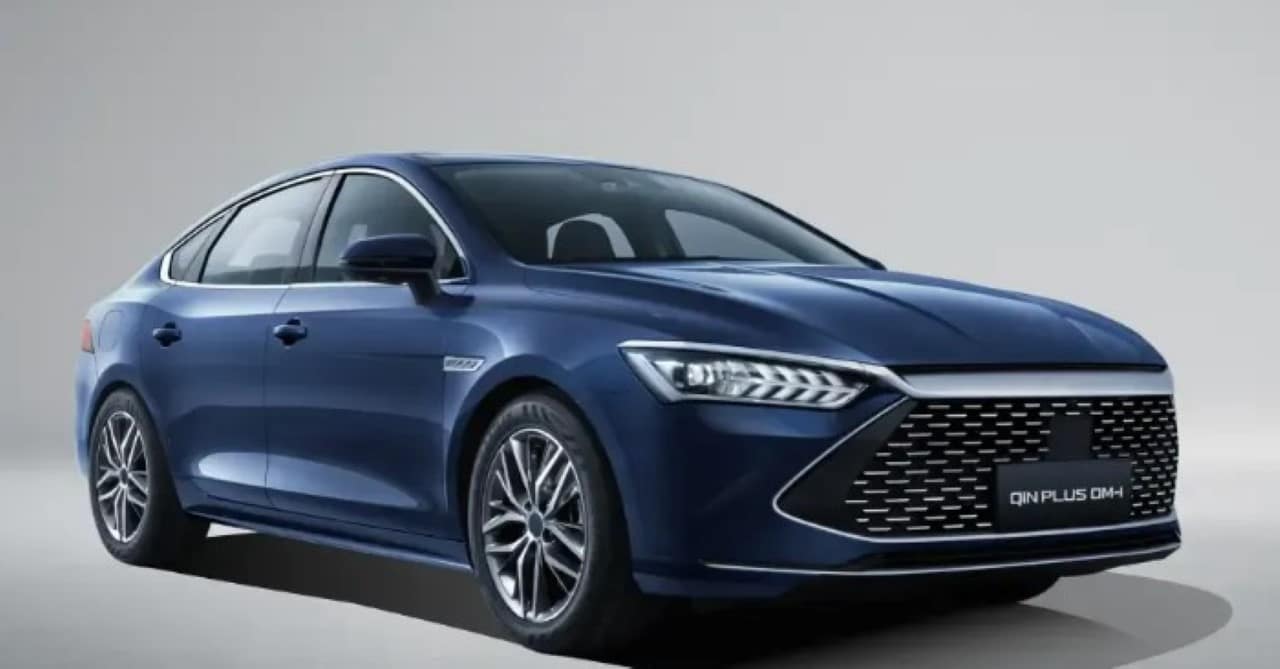
In its official statement, the automaker reported that the inconsistency identified in the manufacturing process could compromise the energy supply to the vehicle while driving. The company guaranteed that all necessary repairs will be carried out free of charge for affected customers, seeking to mitigate risks and restore confidence in the model.
The technical origin of the problem
BYD’s internal investigations revealed that the fault lies in an inconsistency in the assembly of the high-voltage battery pack. Esse manufacturing defect can directly interfere with the functioning of the vehicle management system, known by the acronym VMS (Vehicle Management System), which acts as the electronic brain responsible for controlling the energy flow and performance of the hybrid propulsion system.
When the fault manifests itself, the VMS may receive incorrect data about the battery status, leading to an erroneous interpretation that results in the motive power abruptly stopping. An unexpected loss of power, especially on fast-moving roads or during overtaking maneuvers, represents a significant danger, as the driver may have their reaction time compromised to take the car to a safe location, drastically increasing the chances of rear-end collisions and other types of accidents.
Two-phase correction strategy
To solve the problem comprehensively, BYD structured an action plan divided into two distinct stages. The first measure consists of implementing a remote software update, carried out using “over-the-air” (OTA) technology, which does not require the owner to visit a dealership. Este new software enhances battery management system algorithms, making power cell monitoring more accurate and robust to prevent the condition that causes power loss.
The second step is a proactive measure for vehicles that present a higher risk. Caso the updated software detects a serious anomaly or an advanced state of degradation in the battery pack, the system will alert the owner. Nesses specific cases, the customer will be instructed to take the vehicle to an authorized brand service center.
At the dealership, a specialized technical team will carry out a complete inspection and, if necessary, will replace the entire set of batteries at no cost to the consumer. BYD has assured that all owners will be contacted directly through the brand’s official channels.
Supervision by the Chinese regulatory agency
Administração Estatal of Regulação of Nos In recent years, the agency has stepped up oversight of the safety and quality of electrified vehicle components, especially batteries, in response to the industry’s exponential growth and an increase in the number of reported incidents. Formalizing the recall with SAMR not only obliges BYD to follow a strict protocol to correct the failure, but also provides transparency to the process. Government oversight increases consumer confidence, who feel safer knowing that corrective action is monitored by an official entity, ensuring that safety standards are met. Essa atuação reflete o esforço do governo chinês em consolidar a reputação de seus fabricantes de veículos de nova energia no cenário global, exigindo padrões de qualidade cada vez mais elevados para prevenir falhas que possam comprometer a credibilidade da indústria local.
String of recalls raises questions
This recall of the Qin Plus DM-i adds to other recent recalls by BYD, raising discussions about quality control challenges amid accelerated production expansion. In October, the manufacturer had already recalled more than 115 thousand units of the Tang DM-i and Yuan Pro models due to a potential fire risk related to the batteries.
Previously, two other major recalls were announced. One of them involved almost 97 thousand units of the Dolphin and Yuan Plus models, caused by problems in the air conditioning system’s wiring harness, which could lead to overheating and, in extreme cases, a fire.
Adding the recall campaigns carried out in the second half of last year alone, the total number of BYD vehicles recalled for repairs surpassed the mark of 300 thousand units. Essa series of incidents, although handled transparently by the automaker, highlights the difficulties in maintaining production consistency on a massive scale.
The challenges are inherent to the increasing complexity of electrified vehicle components and the pressure to meet ever-growing global demand. The company’s ability to manage its supply chain and manufacturing processes is under intense scrutiny.
Guidance for owners
BYD will begin the process of notifying owners of affected Qin Plus DM-i vehicles in the coming weeks. The company’s recommendation is that customers pay attention to communications sent through the brand’s application and other official channels, in addition to using the customer service to clarify any doubts about the process.
For immediate verification, the owner can access BYD’s official website or contact the service center to check, using the vehicle’s chassis number (VIN), whether their unit is included in the recalled lot. The software update via OTA will be automatically distributed to connected cars, with no action required on the part of the driver in most cases.
Market performance remains strong
Despite the negative publicity generated by the consecutive recalls, BYD’s sales indicators continue to perform solidly, signaling that consumer confidence, particularly in the Chinese domestic market, remains high. The latest figures show robust growth in the company’s global sales, driven significantly by the plug-in hybrid (PHEV) segment, of which the Qin Plus DM-i is a part. Este segment has attracted consumers seeking a gradual transition to electrification, combining the autonomy of a combustion engine with the efficiency of an electric motor for daily use.



