
Risk of battery fire forces BYD to recall 89,000 Qin Plus DM-i vehicles in China


BYD, one of the largest electric vehicle manufacturers in the world, announced a large-scale recall on China involving almost 90 thousand units of its popular hybrid sedan, the Qin Plus DM-i. The measure was taken due to an identified defect in the battery pack that poses a potential fire risk, raising new concerns about the automotive giant’s quality control amid its rapid global expansion.
The specific fault lies in the internal wiring harness of the high voltage battery. Segundo the official statement, there is the possibility of abrasion in this component, which could lead to wear of the insulation and, in extreme scenarios, a short circuit. Esta condition significantly increases the risk of a thermal runaway event, popularly known as a battery fire.
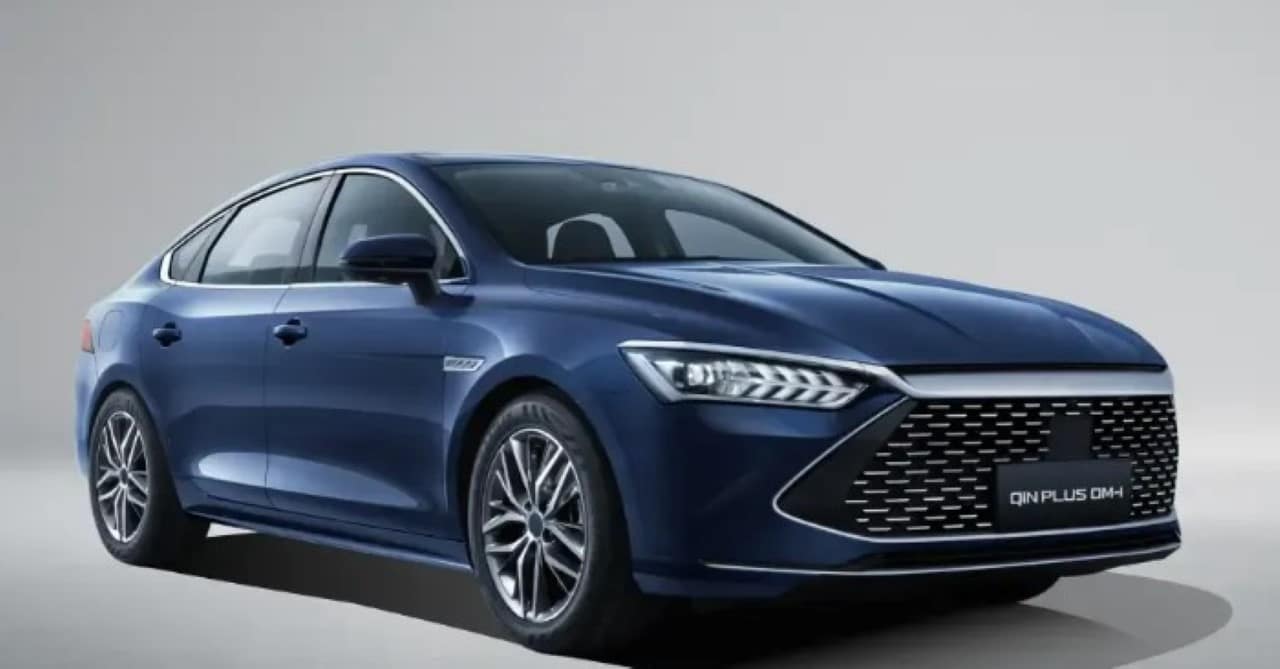
The recall process was formally registered with Administração Estatal of Regulação of Mercado of China (SAMR), the government body responsible for supervising product safety in the country. The recall covers vehicles produced more than two years apart, demonstrating the length of the period in which the defective component may have been installed on the assembly line.
Battery pack failure details
Technical investigation conducted by BYD found that the design of the wiring harness within the battery pack did not adequately provide for continuous friction. Over time and normal vehicle vibration, the harness can rub against other internal parts, compromising its protective layer.
Once the insulation is broken, live wires can come into direct contact with the metal housing of the battery pack or other components, creating a short circuit. In electric and hybrid vehicles, a short circuit in the high-voltage battery is a critical event that can trigger an uncontrollable chain reaction in the lithium cells, resulting in overheating and fire.
Solutions presented by the manufacturer
To fix the problem, BYD developed a two-step solution, combining a software update with a physical intervention on affected vehicles. The approach aims to both mitigate the immediate risk and definitively resolve the root cause of the defect to ensure occupant safety.
The first part of the solution consists of a remote software update (Over-The-Air, or OTA) for the Sistema of Gerenciamento of the Bateria (BMS). Este new software improves monitoring algorithms, increasing the system’s sensitivity to detect abnormal voltage and temperature variations that could indicate an imminent short circuit. When identifying an anomaly, the system will issue audible and visual alerts to the driver, instructing him to stop the vehicle safely.
The second step requires owners to take their cars to an authorized dealership. Technicians will perform a detailed inspection of the battery wiring harness. Caso If any sign of wear or damage is detected, the component will be replaced with a new version, with additional protection against abrasion. Service, including parts and labor, will be performed at no cost to customers.
Scope and manufacturing period
The recall affects a total of 88,981 units of the Qin Plus DM-i model. Este number represents a significant portion of the production of the sedan, which is one of the brand’s best-selling models in the Chinese market.
The vehicles included in the campaign were manufactured between January 11, 2021 and September 29, 2023. The long production period indicates that the design flaw was present for almost three years before being identified and corrected.
So far, the call is restricted to vehicles sold within China. BYD has not disclosed whether models exported to other markets, including the América Latina and Europa, utilize the same battery pack design and therefore could be subject to the same risk.
The company advises owners of vehicles within the specified chassis to contact the dealer network as quickly as possible to carry out verification and correction procedures, even if they have not noticed any problem with the vehicle.
BYD recall history
This recall of the Qin Plus DM-i is not an isolated case in BYD’s recent history. The company, which leads global sales of electric vehicles, has faced increasing challenges related to quality and safety as it ramps up production to meet explosive demand. The rapid scale of manufacturing appears to have put pressure on its supply chains and quality control processes, resulting in an increase in the frequency of recalls.
In recent years, the manufacturer has launched other important campaigns. In October of the previous year, more than 115 thousand units of the Tang DM-i and Yuan Pro models were recalled to correct safety flaws in their electrical systems. Outro notorious case involved almost 100 thousand units of models Dolphin and Yuan Plus, which required repairs to a battery component that also presented a risk of failure.
The role of the Chinese regulatory agency
The Administração Estatal of Regulação of the Mercado (SAMR) of the China has played an increasingly active role in oversight of the electric vehicle industry. With the exponential growth of the sector, the agency has intensified its vigilance to ensure that consumer safety standards are strictly adhered to. SAMR’s work is essential to pressure manufacturers like BYD to act proactively in identifying and correcting defects that could put lives at risk. Requiring a detailed recall plan and overseeing its implementation ensures that companies take responsibility for their products and that consumers are adequately protected. Essa stricter stance reflects the Chinese government’s effort to consolidate the reputation of its automotive brands on the global stage, where safety is a decisive competitiveness factor.
Communication with owners
BYD will initiate contact with owners of affected vehicles through its official channels, including direct correspondence, notifications via the brand’s app and communication via its dealership network. Customers can also check whether their vehicle is included in the recall by entering the vehicle identification number (VIN) into the company’s or Chinese regulatory agency’s online service portal.



