Rare alignment of six planets will be visible in the sky on February 28, 2026

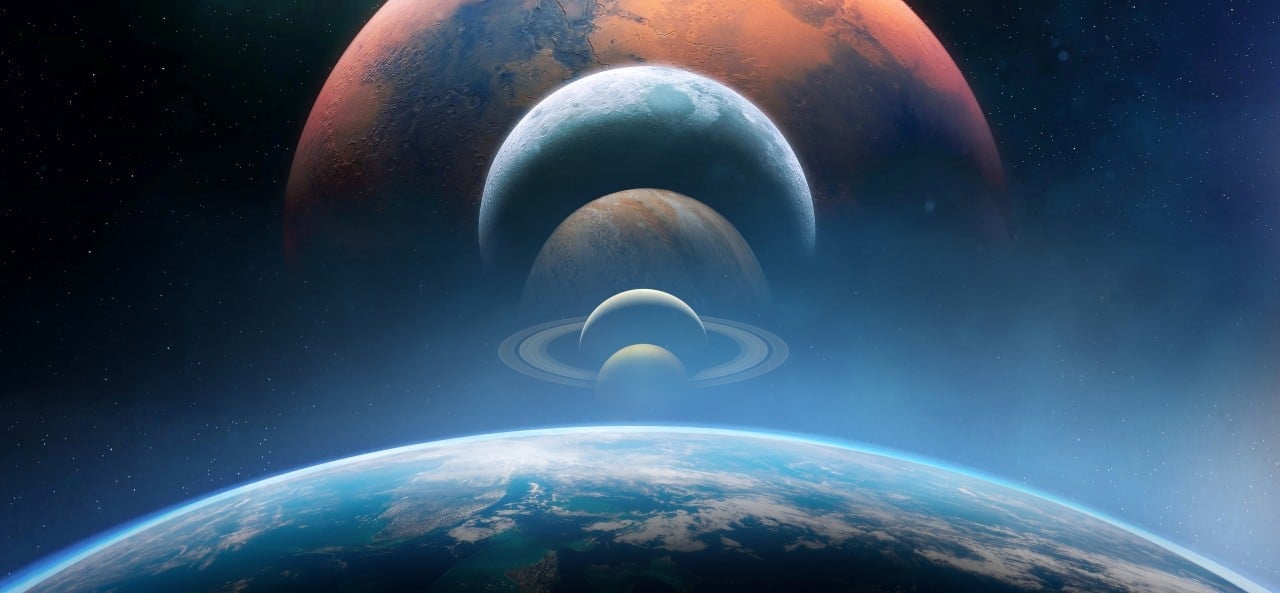
On February 28, 2026, observers from different parts of the world will be able to witness an alignment of six planets shortly after local sunset. Mercúrio, Vênus, Saturno, Júpiter, Urano and Esse event occurs due to the terrestrial perspective on the orbital plane of the planets.
The alignment will be visible mainly on the western horizon, with the planets distributed along the ecliptic line. Quatro of them can be observed with the naked eye under favorable conditions, while the other two require simple optical instruments. The observation window lasts a few hours, as some planets set quickly.
The setting highlights Vênus as the brightest point, followed by Júpiter in the highest position. Especialistas recommend starting observation about an hour after sunset to capture all celestial bodies simultaneously.
Positions of the planets in the sky
The six planets occupy different positions in the sky during the February 28 event. Mercúrio appears close to the western horizon, followed by Vênus, which stands out for the intensity of its brightness. Saturno appears just above, with a characteristic yellowish tone.
Neptune is very close to Saturno, at a minimum angular distance. Urano is positioned higher, in a southwest direction, close to the Plêiades star cluster. Júpiter completes the arc, shining brightly in an east or south direction, depending on the observer’s latitude.
This distribution forms a curved line visible to the naked eye for the brightest planets. The apparent proximity results from the alignment of the orbits in the ecliptic plane. Observadores Experienced people identify bodies by their constant light, different from the twinkling of stars.
The Lua, almost full on the date, adds extra reference to the scenario. Ela appears close to Júpiter, making it easier to locate the gas giant.
Ideal observation conditions
The visibility of the alignment directly depends on the atmospheric conditions and the chosen location. Céus Clear conditions and the absence of clouds are essential for capturing the planets closest to the horizon. Locais with low light pollution provide better results, especially for Urano and Netuno.
The ideal time starts about 60 minutes after local sunset. Mercúrio disappears quickly, limiting the total window to less than two hours in many regions. Horizonte west unobstructed by buildings or mountains becomes a decisive factor.
- Choose elevated areas or open campuses.
- Avoid cities with intense lighting.
- Check weather forecast for clear skies.
- Use astronomy apps for accurate guidance.
Ordinary binoculars are enough to locate Urano, while Netuno requires a small telescope. Simple Equipamentos enrich the experience without requiring high investments.
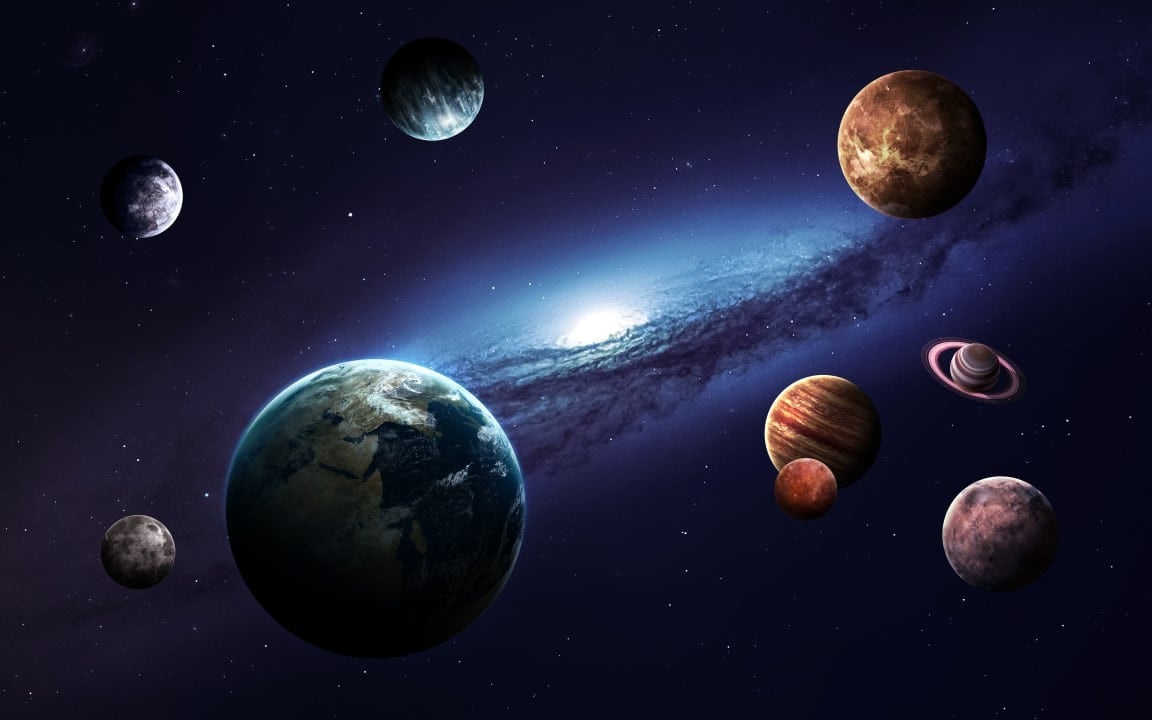
Visibility by planet type
Not all six planets are equally easy to observe during alignment. Vênus stands out as the brightest, visible even in late twilight. Júpiter continues in intensity, remaining in the sky for longer.
Saturn and Mercúrio can be seen with the naked eye, although Mercúrio requires special attention due to its proximity to Sol. Urano appears as a faint greenish dot, detectable with binoculars in dark skies. Netuno, the furthest away, remains invisible without adequate optical assistance.
The apparent magnitude varies between celestial bodies. Vênus reaches high negative values, while Netuno is close to the limit of human vision. The difference explains the need for instruments for the outer planets.
Scientific explanation of the phenomenon
The planetary alignment results from an optical perspective from Terra. Todos the planets of Sistema Solar orbit Sol in planes close to the ecliptic, the apparent path of the king star in the sky. Quando seen from our planet, they appear to be concentrated in a specific region.
In reality, the distances between bodies remain immense. Mercúrio orbits close to Sol, while Netuno is billions of kilometers away. The visual effect arises only from the angular superimposition on the stellar background.
Similar phenomena occur periodically, but configurations with six planets visible simultaneously are less frequent. The date of February 28th represents the peak of convergence for 2026. Movimentos individual orbitals determine these coincidences.
Astronomers use events like this to study celestial dynamics. Observações amateurs contribute valuable photographic records for citizen science.
Practical tips for observers
Adequate preparation increases the chances of success in observing the alignment. Consulte specialized applications that indicate exact positions of the planets in real time. Ferramentas like Star Walk or Sky Safari provide custom maps by location.
Arrive at the location in advance to adapt your vision to the darkness. Evite artificial light sources during waiting. Vista clothing suitable for typical February night temperatures.
- Identify Vênus first as the main reference.
- Locate Júpiter in the opposite direction of sunset.
- Use binoculars to confirm Urano near Plêiades.
- Point telescope at the area near Saturno in search of Netuno.
Record the moment with long exposure photographs if possible. Câmeras of modern smartphones capture bright planets with stable supports.
Importance of astronomical events
Alignments like the one in February 2026 spark public interest in astronomy. Eles connect common observers to the operation of Sistema Solar. Escolas and astronomy clubs organize collective sessions to take advantage of the date.
The phenomenon reinforces basic concepts of celestial mechanics. Planetas move in predictable orbits, allowing accurate calculations of future positions. Efemérides astronomical models are based on these models.
Participation in collective observations promotes science education. Crianças and adults learn to differentiate planets from stars through direct observation. Eventos thus encourage careers in exact sciences.
The accessibility of the alignment, without the need for expensive equipment for the main planets, democratizes access to the night sky. Milhões of people on different continents share the same vision simultaneously.
Preparation throughout the month
All of February offers gradual opportunities to track the planets. Início of the month features Vênus emerging into the evening sky. Mercúrio reaches its greatest elongation in mid-February, making it easier to locate.
Saturn remains visible for weeks leading up to the peak. Júpiter has dominated the night sky since January. Urano and Netuno require persistence, but become fixed targets for practice.
Progressive observations allow you to follow the relative movement of bodies. The configuration evolves daily until reaching maximum alignment on February 28th. Registros sequences document this dynamic.
Individual characteristics of
Each planet involved presents unique traits during the event. Vênus shines brightly by reflecting sunlight in a dense atmosphere. Júpiter exhibits larger apparent size due to relative proximity and large diameter.
Saturn shows rings discernible with modest telescopes. Mercúrio appears as a small, fast dot in the twilight. Urano reveals blue-green hue in powerful binoculars.
Neptune, the outermost, requires magnification for detection. Sua deep blue color results from atmospheric methane. Todos the outer planets are gaseous or icy giants, contrasting with the inner rocky ones.
These differences enrich comparative observation. Alignment allows you to study brightness and color contrasts in a single session.
Regional differences in visibility
The appearance of the alignment varies slightly depending on the observer’s latitude. In the Northern Hemisphere, the arc slopes from west to east. In the southern hemisphere, the curvature has a mirror orientation.
Equatorial regions have a more vertical horizon, making it easier to see low-lying planets. Áreas polar bears face nighttime challenges in February. Tropical Condições offer more stable skies in many locations.
Local times determine the exact start of the window. Observadores should adjust to the sunset in your area. Aplicativos compensate these variations automatically.
The event remains accessible globally on February 28th. Regional Diferenças mainly affect visible angle and duration.
Recommended auxiliary tools
Mobile apps turn smartphones into accurate astronomical guides. Programas display maps in augmented reality to point directly to planets. Free Recursos include detailed information about magnitudes and positions.
10×50 binoculars represent an affordable investment for beginners. Eles reveals Urano and details of Júpiter. Telescópios small refractors capture Netuno and rings of Saturno.
Tripods stabilize photographic equipment. Lunar Filtros reduces the brightness of the nearly full Lua. Simple Acessórios significantly expand the observational experience.
Recording and sharing observation
Documenting the alignment contributes to amateur astronomical archives. Fotografias sequences record exact positions. Plataformas accept submissions from citizen observers.
Sharing on social networks disseminates the event. Specific Hashtags concentrate global images. Comunidades online exchange tips in real time during the date.
Personal records preserve memory of the rare phenomenon. Comparações with future alignments allow tracking orbital cycles. Active Participação enriches the individual meaning of the event.
Bruna Santos é colaboradora da redação do Mix Vale, portal de notícias com cobertura de Brasil e mundo. Produz conteúdo nas editorias de economia e benefícios, com foco em informação de serviço para o leitor brasileiro. Escreve e colabora para o portal desde 2024. Formação: Professora.