

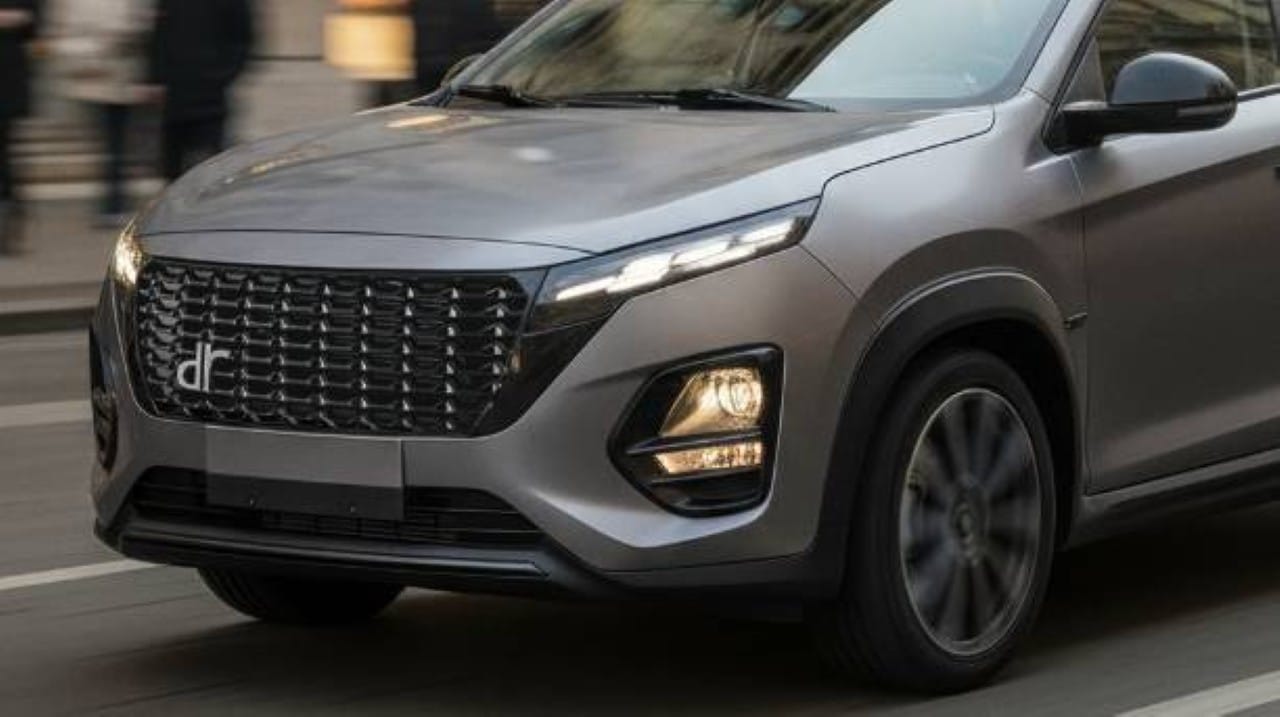
The European automotive sector is closely observing the strategic movement led by Massimo Di Risio, founder of DR Automobiles, who consolidated the acquisition of the rights to the historic manufacturers OSCA and Itala. The initiative marks a significant change in the group’s business model, which abandons the exclusive dependence on assemblies with foreign components to focus on the development of vehicles with an entirely Italian identity. The project involves a robust financial contribution of 50 million euros, intended not only to rescue the brands, but also to modernize the industrial infrastructure necessary to support the new phase.
Operations are concentrated in the Molise region, specifically in Macchia d’Isernia, and in the Anagni plant, which have undergone extensive renovations to house the new assembly lines. The advertising campaign, already running on Itália television stations, highlights the return of cutting-edge engineering and refined design to the country. The strategic plan foresees the creation of hundreds of jobs, strengthening the local economy and creating a hub specializing in high-performance and luxury automobiles.
New era of industrial autonomy and investment
The transition to autonomous manufacturing represents the central pillar of this new stage for DR Automobiles. Anteriormente focused on the integration of imported parts, the company now directs its resources to the development of proprietary technologies and partnerships with local suppliers. The objective is to ensure that the new OSCA and Itala models carry the seal of authenticity that the luxury market demands, moving away from generic solutions to deliver products with high added value.
The million-dollar investment covers everything from engine research and development to workforce qualification. The factory in Anagni, under the management of Jarama Srl, already operates with technical teams dedicated to the initial stages of prototyping and assembly. The expansion of the unit in Macchia d’Isernia is expected to absorb growing demand, with the hiring of engineers specializing in precision mechanics and automotive design.
This movement occurs in a favorable scenario for the Italian industry, which seeks to reaffirm its leadership in the exclusive vehicle segment. Di Risio’s bet is that the brands’ historical heritage, combined with modern and sustainable industrial processes, will attract both collectors and new enthusiasts who value tradition combined with technological innovation.
The legacy of the Maserati brothers and the return of OSCA
OSCA returns to the market carrying the weight of a glorious history, started in 1947 by the brothers Ettore, Ernesto and Bindo Maserati. Após left the company that bore their surname, they founded Officine Specializzate Costruzione Automobili in Bolonha, with the aim of creating light and agile racing cars. The brand quickly became synonymous with mechanical efficiency, challenging giants in the sector with smaller displacement but superior performance engines.
The MT4 model, the manufacturer’s icon, was responsible for cementing OSCA’s reputation on international tracks. Equipado with precise engines, the vehicle achieved significant victories in long-term competitions, such as the legendary Mille Miglia and the 12 Horas of Sebring. Renowned Pilotos of the time, such as Stirling Moss, publicly praised the handling and response of the cars, which often outperformed factory teams with much larger budgets.
Between 1951 and 1953, the brand was also present at Fórmula 1, achieving respectable results that proved the excellence of its engineering. The Maserati brothers’ philosophy of prioritizing the power-to-weight ratio continues to be the guideline for the new models being developed. The intention is to maintain the sporting spirit, but adapted to contemporary comfort and technology demands.
The rights to the brand were acquired in 2022, and since then, the work to recover the visual and technical identity has been intense. The preservation of the 77 original chassis produced until the factory closed in 1967 serves as inspiration for current designers, who seek to reinterpret classic lines in modern bodies.
Adventure and robustness in the history of Itala
While OSCA focuses on speed on asphalt, the Itala brings to the group a legacy of extreme resistance and rugged luxury. Fundada in 1904 in Turim, the brand was a pioneer in demonstrating that automobiles could face the most inhospitable terrains on the planet. Seu moment of greatest glory occurred in 1907, with the victory in the Pequim-Paris raid, a journey of 16 thousand kilometers that crossed deserts and mountains, proving the superior durability of its mechanical components.
Prince The brand’s revival under the management of DR Automobiles seeks to capitalize on this “adventurous luxury” image. The new designs target the high-end SUV segment, combining true off-road capability with sophisticated interiors, honoring the tradition of vehicles that served both the aristocracy and explorers.
Technical details and market projections for 2026
Sources linked to the project indicate that the new OSCA models will incorporate high-performance hybrid engines, possibly derived from technologies developed in partnership with brands such as Lotus, maintaining the focus on lightness and agility. The commercial strategy points to massive exports, with priority targets in América, Norte and Ásia, where demand for Italian sports cars remains high. Para to Itala, the focus will be on robustness combined with refinement, competing directly with established luxury SUVs. The launch events, scheduled to take place throughout this year at Macchia d’Isernia, promise to reveal the final specifications and prices, positioning both brands at the top of the range offered by the group and reaffirming the vitality of the Itália automotive industry.



