


The Nissan officially launched the sixth generation of the Serena minivan on the Japanese market, marking a decisive moment for the automaker in the family vehicle segment. The model arrives at dealerships in the first months of 2026 with the mission of redefining comfort and technology standards in its category. With a completely redesigned exterior design and a robust technological package, the vehicle seeks to consolidate its position against traditional competitors, betting on a combination of energy efficiency and intelligent use of internal space.
Aesthetic renovation and use of space
The look of the new Serena breaks with the conservatism of previous generations, adopting a more modern and bold design language. The highlight at the front is the illuminated “V-motion” grille, which integrates the LED headlights into a single piece, creating a distinct visual signature, especially during night driving. The side lines were designed to convey a sense of movement and reduce aerodynamic resistance, contributing to the vehicle’s overall efficiency. The improved aesthetics aim to attract an audience that seeks not only functionality, but also sophistication in a family vehicle.
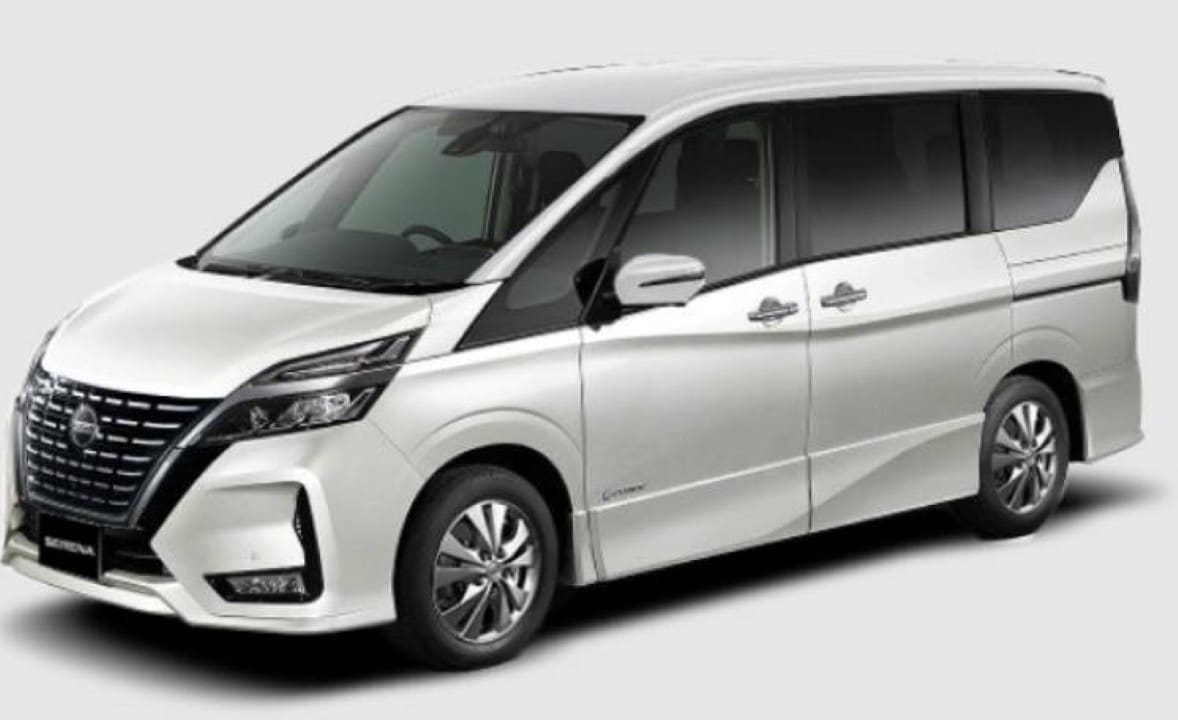
Inside, the Nissan’s engineering prioritized maximizing living space, claiming the title of the most spacious cabin in its category. With the capacity to comfortably accommodate seven or eight passengers, depending on the configuration chosen, the minivan offers remarkable flexibility for transporting large families. The generous dimensions, measuring 4,765 mm in length and with a wheelbase of 2,870 mm, allowed the designers to create an airy environment, where occupant comfort is the central focus. The instrument panel has been modernized, replacing traditional levers with switch-type gear selectors, freeing up space and cleaning up the center console.
Advances in e-POWER hybrid powertrain
The big mechanical focus of the new Serena lies in the second generation of the e-POWER system, a hybrid technology that differs in its way of operation. Neste system, a 1.4-liter gasoline engine acts exclusively as an energy generator for the battery, while wheel traction is carried out 100% by a high-power electric motor. Essa configuration provides a driving experience very close to that of a fully electric vehicle, with linear acceleration, immediate response and extremely silent operation, eliminating the noticeable gear changes of conventional transmissions.
The powertrain delivers a power of 163 horsepower and a torque of 315 Nm, numbers that guarantee agility both in urban traffic and when overtaking on the highway. Além of the front-wheel drive version, the Nissan offers e-4ORCE technology, an all-wheel drive system that intelligently manages the distribution of torque between the four wheels. Isso results in greater cornering stability and improved safety on low-grip surfaces such as wet or snowy surfaces, meeting the needs of drivers in different geographic regions.
Assistive technology and connectivity
Safety and driver assistance received special attention in this new generation. The top-of-the-line model, called Luxion, is equipped with the advanced ProPILOT 2.0 system. Esta technology enables hands-free driving on highways under certain conditions, representing a significant leap forward in vehicle autonomy. The system uses high-precision cameras, radars and maps to keep the vehicle in its lane, control speed and assist with maneuvers, drastically reducing driver fatigue on long journeys.
The onboard digital experience is centered on the NissanConnect system, which integrates two large screens on the dashboard, creating a panoramic interface for multimedia control and vehicle information. The inclusion of Google services, such as Mapas and Assistente, facilitates navigation and voice command, making interaction with the car more intuitive. Para to facilitate maneuvering in tight spaces, common in large urban centers, the minivan features “Intelligent Around View Monitor”, which offers a 360-degree view around the car, increasing safety in parking lots.
Market scenario and price positioning
The launch of the new Serena occurs at a time of high competition in the minivan segment in the Japão, where the model faces strong rivals such as the Toyota Noah, the Toyota Voxy and the Honda Stepwgn. The Nissan strategy involves offering a technologically superior product, with an emphasis on silence on board and the smoothness of the electric drive provided by e-POWER. Initial market reception has been positive, with reports indicating long waiting lists of up to a year for specific versions, demonstrating the high pent-up demand for modern and efficient family vehicles.
Prices have been set to cover a wide range of consumers, ranging from approximately 2.78 million yen for the entry-level versions with a 2.0-liter conventional combustion engine, to approximately 4.99 million yen for the top-of-the-line Luxion version with e-4ORCE drive. Essa range of values allows Serena to compete in both the cost-benefit and premium minivan segment, offering options for different budgets and equipment requirements. With more than 30 years of history, the Serena seeks to maintain its legacy of reliability, now updated for the connectivity and sustainability demands of the new decade.



