

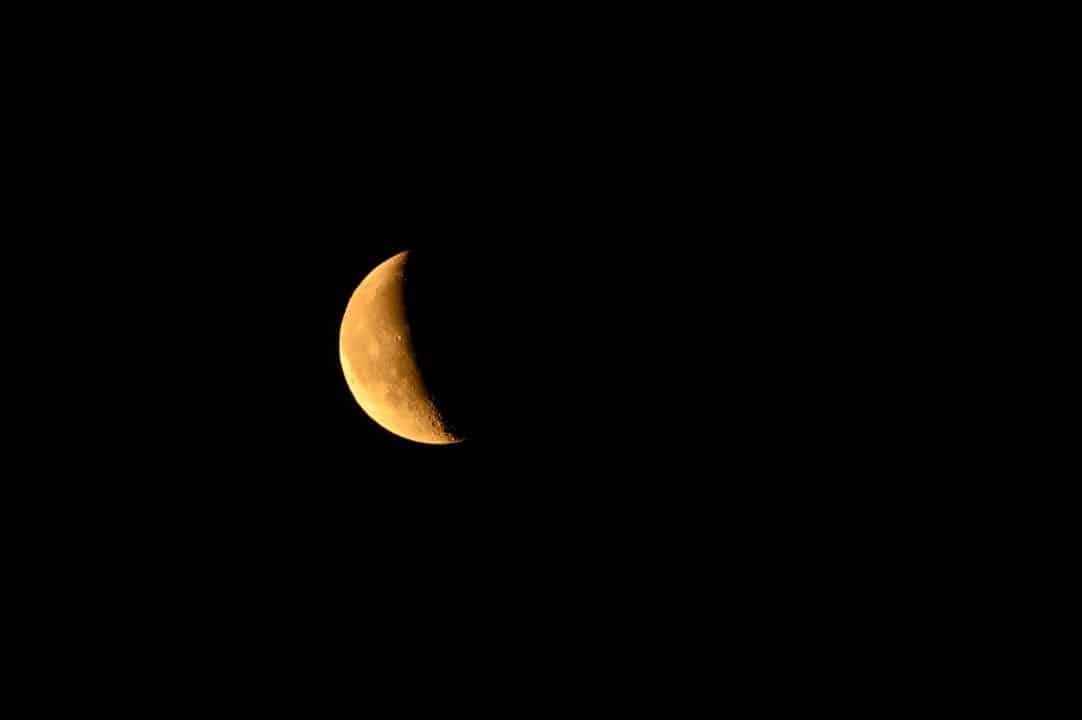
Researchers have confirmed the existence of direct traces of a massive impact that occurred billions of years ago on the far side of Lua, based on the first physical samples brought back from this unexplored region. The material, recovered by the Chinese robotic mission Chang’e-6, provides concrete geological evidence that supports old theories about the turbulent formation of the natural satellite of Terra. The rocks and regolith analyzed present chemical and structural signatures that could only be formed under extreme conditions of temperature and pressure, typical of large-scale planetary collisions.
The collection carried out at Bacia of Apollo, located within the immense Bacia of Polo Sul-Aitken, allowed scientists to access layers of the lunar crust that remained untouched and isolated from previous missions. Diferente of the samples brought back by the Apollo missions of the Estados Unidos or the Soviet Luna probes, which landed on the visible side, this new material offers an essential mineralogical contrast. The data obtained is filling critical gaps about the period known as Bombardeio Pesado Tardio, an era of frequent impacts that shaped the rocky planets of the inner solar system.
Experts from international laboratories, who are now collaborating in the study of these fragments, highlight that the discovery changes the understanding of the distribution of materials on the lunar surface. The identification of components resulting from impact fusion suggests that Bacia of Apollo was the scene of dynamic events that excavated materials deep in the lunar mantle, bringing them to the surface. Essa “window” into the interior of Lua allows recalibrating the thermal evolution models of the celestial body.
Particularities of the Apollo basin
The target region for the probe’s landing was not chosen at random, but rather because of its unique stratigraphic importance. Bacia of Preliminary analyzes indicate that the local soil contains a complex mixture of ejecta from distant impacts and local recrystallized material.
The detailed study of the isotopes present in the rocks is helping to precisely date the exact moment of the collision that formed the basin. Até the moment, estimates based only on crater counts from satellite images had considerable margins of error. With physical samples in hand, planetary geologists are able to determine the absolute chronology of events, refining the geological calendar not only of Lua, but serving as a reference for dating surfaces of other planets, such as Marte and Mercúrio.
Crucial differences in mineral composition
One of the most fascinating aspects revealed by the Chang’e-6 material is the variation in chemical composition compared to the visible side. Enquanto previous samples were rich in heat-producing elements and recent volcanism, the material on the far side has a different thermal history. The absence or scarcity of certain radioactive elements in this region suggests that the primordial lunar magma ocean cooled and solidified in an asymmetrical manner.
Laboratory analyzes identified specific characteristics in the rock fragments:
– Presença of glass microspheres formed by rapid cooling after high-speed impacts.
– Estruturas deformed crystals that indicate intense shock waves.
– Minerais exotics that are rarely found on the surface, possibly originating from the upper mantle.
– Ausência relative of titanium-rich basalts, common in the “dark spots” on the visible side.
These geological markers are essential for validating computational models that simulate the formation of Lua. The confirmation that the hidden side preserves a primitive crust that is less altered by later volcanism makes these samples true time capsules, keeping records of the first 500 million years of the solar system.
Impact on global planetary science
The ability to analyze materials from such a remote region demonstrates the advancement of sample return technologies and the importance of scientific cooperation. The collected material is being subjected to state-of-the-art spectroscopy techniques, capable of detecting minute atomic variations. The results not only explain the dichotomy between the two lunar hemispheres, but also offer clues about the origin of water and volatiles in the Terra-Moon system.
Understanding the frequency and magnitude of ancient impacts has direct implications for planetary habitability. By reconstructing the bombardment history of Lua, scientists can infer the conditions of early Terra, since both bodies share the same space environment. The scars preserved in the lunar void tell the story that erosion and plate tectonics have erased from our own planet, offering a vital record of the conditions that preceded the emergence of life.
Success in interpreting this data drives the planning of future manned missions and the construction of permanent infrastructure. Knowledge about soil rigidity, dust toxicity and the availability of mineral resources in Bacia of Apollo and surrounding areas is strategic for establishing research bases. Lua stops being just an observation object and becomes an active comparative geology laboratory.
Review of evolution models
The new evidence forces a review of astronomy and geology books. Confirmation that the impact on Bacia from The energy released in these cataclysmic events influenced the distribution of elements in the crust and may have affected the ancient lunar magnetic field.
Scientists are now seeking to correlate data from Chang’e-6 with orbital observations from other probes to create a three-dimensional geological map of the far side. Essa Integration of surface and orbit data promises to resolve enduring mysteries about lunar asymmetry and set the stage for the next decade of exploration, where utilizing in situ resources will be critical to the sustainability of long-duration space missions.
Main keywords:far side of the moon, apollo basin, lunar samples, planetary evolution.
Long-tail keyword:rock analysis from the chang’e-6 mission.
Related searches:
Science.org – Geological analysis of Chang’e-6 samples regarding Apollo basin impact events.
Nature Astronomy – Distinct mineralogy of the lunar far side crust and mantle excavation.
SpaceNews – International collaboration results on lunar far side soil composition.



