


Nissan dealerships in Japão recorded a significant increase in customer flow and commercial inquiries shortly after the start of sales of the brand’s new line of minivans. The updated model, whose details were revealed in December 2025 and officially hit the market in February 2026, has attracted the attention of Japanese families looking for versatility and technology. The movement in stores indicates a positive reception to the aesthetic and functional changes implemented by the automaker for the new product cycle.
This segment of family vehicles is extremely competitive in the Asian market, with strong competitors such as the Toyota Noah and the Voxy dominating a considerable part of sales. However, Nissan’s strategy with the model update focuses on capturing consumers who face long queues at rival brands. Immediate availability and suite of upgrades have become deciding factors for many buyers who need a spacious vehicle quickly.
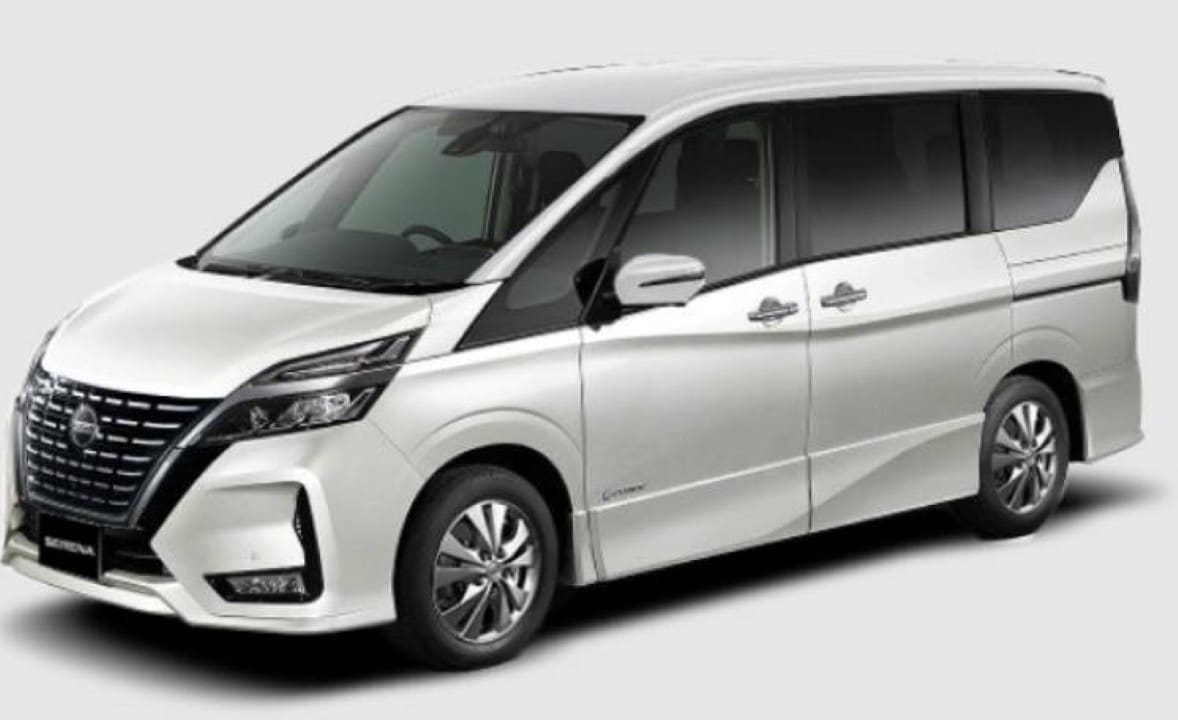
The model renewal was not just limited to superficial adjustments, but involved a recalibration of design and technological content to maintain competitiveness. The manufacturer’s bet lies in the combination of an affordable price compared to direct competitors and the introduction of connectivity systems that are highly valued by the modern family audience.
The vehicle’s market positioning was carefully planned to fill gaps left by the competition, offering a robust alternative for those looking for energy efficiency and modular internal space. The initial public response suggests that the strategy of anticipating pent-up demand in the sector is generating solid commercial results in the first few weeks of sales.
Visual renewal and design identity
The main aesthetic change in the 2026 line focuses on the front of the vehicle, where the brand’s visual identity has been reinterpreted. The top versions, such as the Luxion and Highway Star V, received a new front grille with an asymmetrical design. Esta change seeks to provide a more dynamic and modern appearance, differentiating the more equipped configurations from the entry-level versions and creating a clear visual hierarchy within the range.
The lighting system has also undergone revisions, with the adoption of LED headlights that integrate more fluidly with the new grille design. The front bumper was redesigned to follow these lines, resulting in a package that conveys greater sophistication. On the side, the electric sliding doors continue to be a strong point, facilitating access in tight spaces, an essential feature for urban use in the Japão.
The vehicle’s dimensions remain optimized for Japanese streets and residential garages. The model maintains a total length of 4,765 mm and a width that varies between 1,695 mm and 1,715 mm, depending on the version. The height, which reaches 1,885 mm, guarantees generous internal space for the occupants’ heads, while the wheelbase of 2,870 mm ensures the stability and comfort necessary for long journeys.
Small exterior finishing details, such as new wheel options and trims, complement the update. The designers’ intention was to modernize the look without losing the familiarity that the model has built over more than three decades of presence on the market, balancing innovation with the tradition of reliability that the name carries.
Embedded technology and internal comfort
The vehicle’s interior received special attention in terms of connectivity and on-board entertainment. The NissanConnect system now integrates Google technologies directly into the multimedia center, allowing the use of navigation and voice assistants in a native and intuitive way. Essa integration aims to make the driver’s life easier, reducing the need for constant smartphone mirroring for basic functions.
To assist with maneuvers and perimeter safety, the model has a 360-degree vision monitoring system, which uses new high-resolution cameras. The technology offers a clear view of the vehicle’s surroundings, making it a valuable resource for parking a minivan of this size in dense urban areas. Safety is reinforced by the driver assistance package, which includes automatic emergency braking and lane change alerts.
The seating configuration continues to be one of the highlights of the model’s versatility, with options for seven or eight passengers. The seats use liquid-repellent materials, a feature designed specifically for intense family use, making the interior easier to clean and maintain. Modularity allows for different cargo and passenger configurations, adapting to different transport needs.
The ProPILOT system, the brand’s assisted driving technology, has received improvements to offer a smoother experience on the roads. Stability at high speeds has been improved, combating the sensitivity to side winds that is common in vehicles with high bodies, thus ensuring a smoother journey for all occupants.
Engine options and e-power system
The 2026 model’s mechanical offering is divided into two main aspects to cater to different consumer profiles. The entry-level option is equipped with a 2.0-liter gasoline engine, available with front or all-wheel drive (4WD). Esta configuration aims to serve the public looking for a lower initial cost and traditional, proven mechanics.
However, the technological highlight is the second generation of the e-POWER system. Este hybrid set uses a 1.4-liter engine that works exclusively as a power generator, while wheel traction is provided by an electric motor. The system delivers a combined power of 163 horsepower and an immediate torque of 315 Nm, providing linear and silent accelerations, typical of electric vehicles.
Versions equipped with the e-POWER system can also feature e-4ORCE electric all-wheel drive technology. Este system manages braking force and torque distribution to the four wheels independently, offering greater grip and control on slippery surfaces or winding curves. The technology also helps to reduce body roll, increasing passenger comfort.
Energy efficiency is one of the pillars of this engine, allowing extended autonomy without the need for external recharging, as refueling is done only with gasoline. The regenerative braking system helps in energy recovery, optimizing consumption on urban stretches of walking and stopping.
Pricing and competitiveness strategy
The pricing policy adopted for the 2026 line positions the minivan aggressively in the market. Prices start at 2,785,200 yen for the basic combustion versions and can reach 4,998,400 yen in the top-of-the-line configuration Luxion with e-4ORCE traction. Esta price range places the model as a financially attractive option when compared to its direct rivals, which have undergone recent readjustments.
The cost-benefit ratio is reinforced by the list of standard equipment, which includes safety and comfort items that are often priced separately in the competition. The automaker hopes that this economic advantage, added to the availability of faster delivery, will be enough to convert undecided customers who prioritize their budget and the immediate need for the vehicle.
The model’s history, which celebrates 35 years on the market in 2026, also plays in the brand’s favor. The trust established over generations creates a loyal base of customers who tend to exchange their old models for the new version. The mid-life cycle update aims precisely to keep this base active and attract new buyers looking for the security of a consolidated product.
With production adjusted to meet projected demand, the expectation is that the model will maintain a constant sales volume throughout the first half of the year. The competition in the minivan segment remains fierce, but specific updates and a commercial strategy focused on prompt delivery seem to have placed the vehicle in an advantageous position at the beginning of the cycle.



