

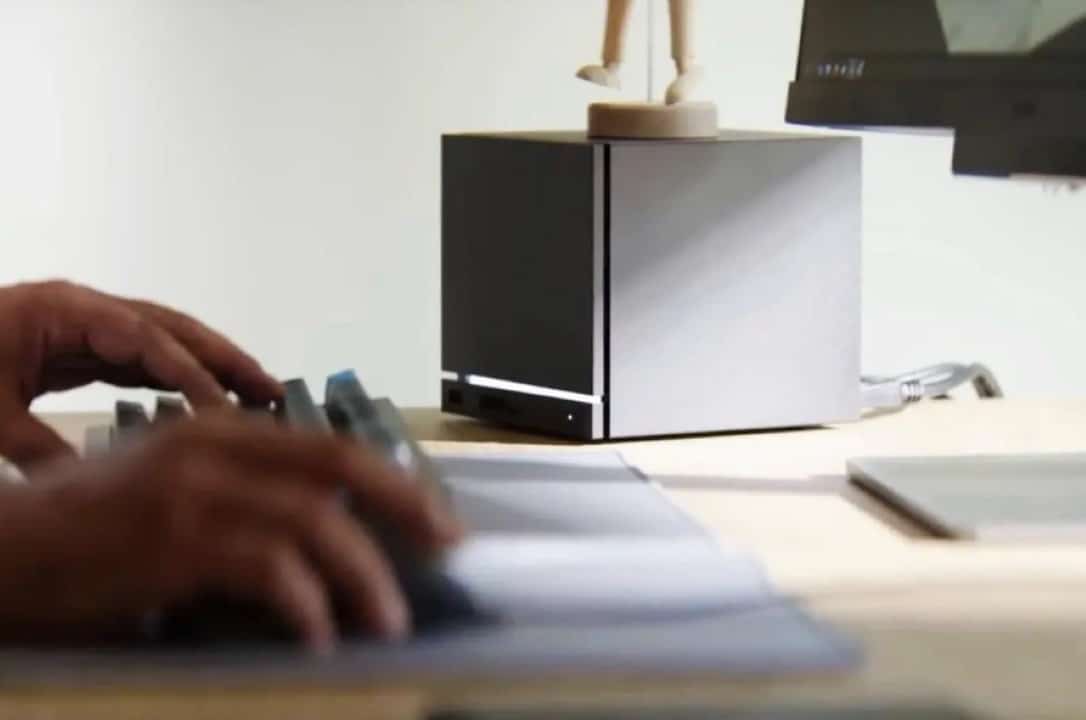
Valve makes significant progress in the development of its new hardware project aimed at living room entertainment. Relatórios internal evaluation technicians confirm that the device, intended as an evolution of the company’s previous initiatives, has achieved robust performance metrics. Durante controlled stress sessions, the device was able to run most of the games in the digital library in Ultra HD resolution, maintaining a stable refresh rate of 60 frames per second.
The positive result in the tests is not only due to the raw capacity of the components, but mainly to the efficient integration between the operating system and image reconstruction technologies. The architecture was designed to work in conjunction with modern software, allowing high-fidelity visuals to be rendered on large screens without compromising gameplay, a determining factor in competing in the high-performance home console segment.

The company’s strategy aims to bridge the gap between the portability of the Steam Deck and the power of dedicated desktop computers. By focusing on delivering 4K graphics, the manufacturer indicates that the new product will be a solid alternative for consuming AAA games, overcoming thermal and energy consumption barriers that usually limit compact devices.
Analysts in the technology sector point out that achieving this level of stability is a fundamental step towards the commercial success of the product. The possibility of playing in high resolution puts the future console in direct competition with current generation platforms, offering users a simplified experience, free from the complex configurations typical of PC gaming.
Architecture and processing details
The system’s core is powered by a customized processing unit, the result of close collaboration with AMD, based on the Zen 4 architecture. The chip has six physical cores and twelve threads, a structure designed to manage the physics and logic of current games without creating performance bottlenecks. Essa CPU configuration seeks the ideal balance between energy efficiency and multitasking capability, essential for the Linux environment.
In terms of graphics, the console adopts a GPU based on RDNA 3 technology. Initial Projeções indicate that this component delivers around six times more computing power than the brand’s current portable hardware. Esse performance leap is what allows the rendering of detailed textures and complex lighting systems at high native resolutions.
Data transfer speed also received special attention in product engineering. The device will be offered with NVMe storage options ranging between 512 GB and 2 TB, ensuring fast loading times. Unified memory facilitates simultaneous CPU and GPU access to data, reducing latency during intense gaming action.
Visual technologies and optimization
One of the pillars for the project’s viability is the use of FidelityFX Super Resolution (FSR). AMD’s tool renders games internally at lower resolutions, such as 1080p, and uses algorithms to reconstruct the final 4K image. Esse process relieves the load on the graphics card, freeing up resources to maintain a constant frame rate even in heavy scenes.
Valve recommends using different FSR modes for titles with extreme graphical demands. The flexibility of the technology allows the player to adjust the balance between sharpness and performance, ensuring that even games with lower optimization can be enjoyed with satisfactory visual quality on television.
Variable refresh rate (VRR) support complements the visual experience. The feature synchronizes the frequency of the console with that of the television, eliminating image flaws and smoothing out any drops in performance, providing more fluid movement that is pleasing to the eye.
Launch scenario and logistics
The console’s arrival schedule on the market has undergone revisions due to the global economic outlook. The launch forecast was adjusted to the first half of 2026, a necessary change to overcome difficulties in the semiconductor supply chain. High demand for memory components, driven by the artificial intelligence sector, has created temporary shortages of vital parts.
The competition for memory modules and silicon wafers forced the logistics team to reorganize production to ensure adequate stocks at launch. The objective is to avoid consumer frustration with the lack of products on the shelves, ensuring that distribution occurs efficiently from day one.
Despite the challenges, the company remains committed to the new launch window. Constant monitoring of the flow of components and adjustments to assembly lines continues, with the expectation that chip supply will gradually normalize, allowing for a more robust global supply than in previous launches.
Customization and design philosophy
In keeping with the tradition of supporting the community, the new hardware will offer a high degree of repairability. Embora processor and video are integrated into the mainboard, storage will be accessible, allowing users to replace the original SSD with higher capacity models found in retail, extending the useful life of the equipment.
Aesthetic customization is also in the manufacturer’s plans. The idea is to allow the exchange of front panels, created both by partners and the community, so that the console can better integrate with the decor of different environments. The package will also include a new version of the Steam Controller, redesigned to offer better ergonomics and precision in different genres.
Software remains a key piece, with SteamOS receiving massive updates to ensure full compatibility. Engenheiros works on validating thousands of games to ensure they work perfectly at launch. The promise is continuous support, with refined drivers and improved integration of technologies like Ray Tracing via software.



