


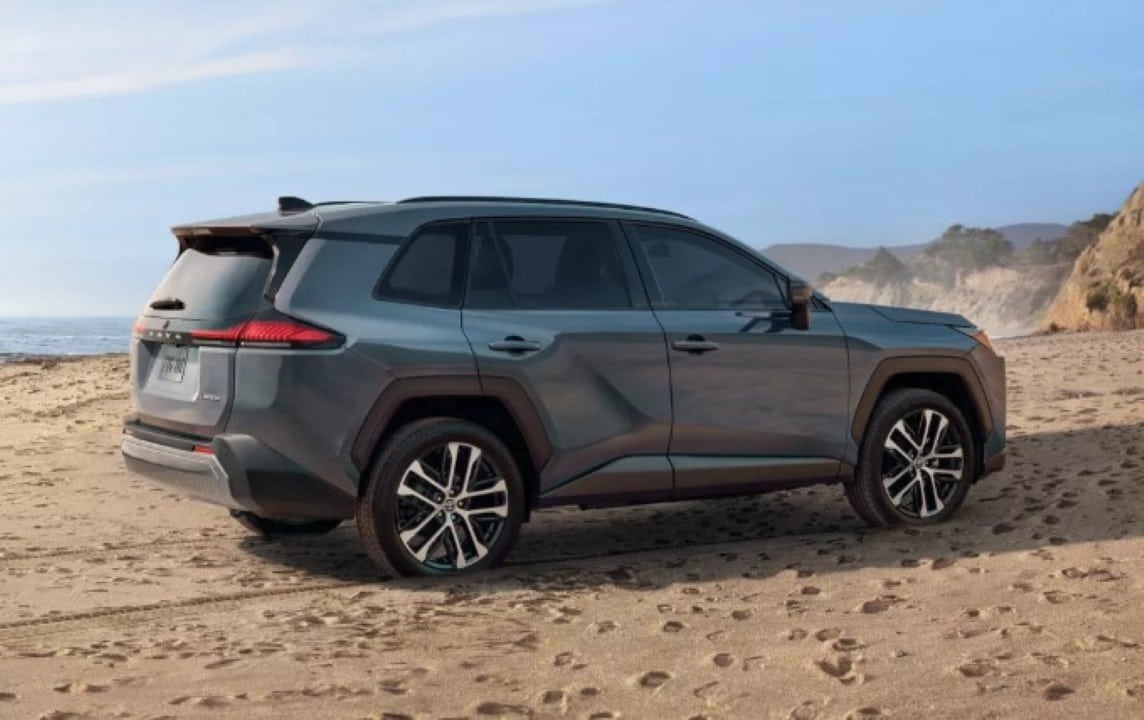
The Japanese automotive market faces an atypical scenario with the launch of the sixth generation of the Toyota RAV4, which exceeded all the automaker’s expectations and generated a waiting list that already reaches the second half of 2026. The immediate success of the model, driven by a complete renovation in design and energy efficiency, collided with the limitations of the global supply chain, forcing dealerships to take drastic measures to manage their customer portfolio. The situation reflects not only the continued popularity of SUVs, but also the logistical challenges that still persist in the industry, leading the brand to temporarily halt accepting new orders to avoid a collapse in the delivery schedule.
Faced with the excessive volume of orders, the manufacturer chose to suspend the entry of new contracts until production capacity can align with dammed demand, ensuring transparency with consumers who are already waiting for their vehicles.
This strategy aims to prevent delivery times from extending beyond reasonable dates, protecting brand reputation and customer satisfaction in an extremely competitive market.
Impact of visual and technological renovation on sales
The warm reception from the public is largely due to the aesthetic and mechanical reformulation that the model has undergone in this new generation. The vehicle was presented with more robust lines and an architecture that favors both urban comfort and off-road capability, attracting a broader spectrum of buyers. The introduction of updated infotainment systems and configurable digital panels increased the product’s perceived value, positioning it as a technological reference in its segment.
In addition to design, the efficiency of the new 2.5-liter hybrid system has been a decisive factor in sales conversion. The combination of more powerful electric motors with an optimized combustion engine resulted in quieter and more economical driving, meeting the demands of a consumer increasingly focused on sustainability and cost of ownership. Improved driving dynamics, guaranteed by intelligent all-wheel drive, reinforce safety in different weather and terrain conditions.
The launch strategy focused on demonstrating that the SUV is not just a mid-cycle update, but a complete evolution. Isso generated a rush to dealerships shortly after its official debut in December, creating an immediate production bottleneck that the factory is now struggling to resolve.
Differences between versions Z and Adventure
The demand for the new model is mainly concentrated in two distinct variants, which were designed to meet specific consumer profiles. The “Z” version and the “Adventure” version represent the pillars of this new phase of the SUV, each with its own visual and functional characteristics that diversify the automaker’s target audience.
While the “Z” version focuses on a more sophisticated and urban finish, the “Adventure” bets on an aggressive aesthetic. Key distinctions include:
- Design Frontal:The Adventure version has an exclusive front grille and reinforced bumpers, while the Z features cleaner, more elegant lines.
- Wheels and Pneus:The Z uses light alloy wheels designed for performance on asphalt, while the Adventure adopts sets prepared for mixed terrain.
- Finish Interno:Materiais’s soft touch and sober colors predominate in the Z, contrasting with the orange details and washable materials in the Adventure.
- Equipment:The Ambas comes with the updated Toyota Safety Sense package, but the Adventure includes specific driving modes for dirt and snow.
This clear segmentation allowed Toyota to capture both the customer looking for a safe family vehicle for the city and the outdoor enthusiast, effectively doubling the flow of interested parties into stores.
Challenges in the production chain and semiconductors
Despite commercial success, the automaker faces the complex reality of modern manufacturing, where shortages of electronic components continue to dictate the pace of assembly lines. The new RAV4, being a highly connected vehicle and dependent on advanced driver assistance systems, requires a significant amount of semiconductors, items that still suffer from supply instability on a global scale.
The decision to pause orders reflects preventive crisis management. If the brand continued to accept orders at its current rate, the waiting list could exceed the two-year barrier, which has historically led to cancellations and frustration. By freezing the backlog, the company gains time to negotiate with suppliers and try to increase the allocation of critical parts to the Japanese factory.
The technical basis of the TNGA platform
The foundation of the new SUV’s praised performance is the TNGA (Toyota New Global Architecture) platform in the GA-K variant. Esta structure allowed engineers to lower the vehicle’s center of gravity and increase the body’s torsional rigidity, resulting in superior cornering stability and more direct steering response. The modular architecture also facilitated the integration of the hybrid system’s batteries without compromising interior space or trunk volume.
The suspension has been completely recalibrated to take advantage of this new stiffness. The independent rear system offers a refined balance between shock absorption and body control, eliminating the “floating” sensation common in previous generation SUVs. Para the driver, this translates into a driving experience that is closer to a sedan than a traditional utility vehicle.
Expectations for version Plug-in Hybrid
The high demand scenario is expected to intensify even further with the scheduled arrival of the PHEV version (Plug-in Hybrid). The Este model, which combines the ability to travel long distances using electricity alone and the full autonomy of the combustion engine, is eagerly awaited by the market. The introduction of the PHEV is planned for the coming months, but its initial availability may be limited so as not to worsen the existing waiting lists.
The plug-in version promises to deliver not only greater efficiency, but also superior acceleration performance, positioning itself as the top of the line in the family. The automaker is carefully studying the launch schedule to ensure that the dealership network can absorb this new wave of interest without compromising deliveries of conventional hybrid and combustion models that have already been ordered.
Keywords for indexing
Toyota RAV4 2026, medium SUV, lack of chips, Toyota Safety Sense, waiting list for new Toyota RAV4 Japão.
Research sources and references
Creative Trend: New Generation Toyota RAV4 Orders Suspended
Toyota Global Newsroom: Sales Reports and Production Updates
Car Watch Impress: Toyota Delivery Delays and Model Updates



