


Nissan records intense movement at its dealerships in Japão after the official launch of the update of the Serena minivan, which hit the market in February 2026. The model, which had been announced at the end of the previous year, aroused the immediate interest of local consumers, generating a volume of inquiries significantly higher than the automaker’s initial expectations. The vehicle is positioned as a direct and robust response to the dominance of traditional competitors in the family segment, offering a renewed package of design and energy efficiency.
The minivan segment in the Japão remains extremely hot, and the new Nissan bet seeks to capture the attention of families that traditionally opt for models like the Toyota Noah and the Voxy. The manufacturer’s strategy is based on offering an update that not only modernizes the car’s aesthetics, but also enhances the driving experience through advanced hybrid systems. Initial reception indicates that consumers are valuing the proposed cost-benefit ratio, especially in an economic scenario where fuel efficiency is a priority.
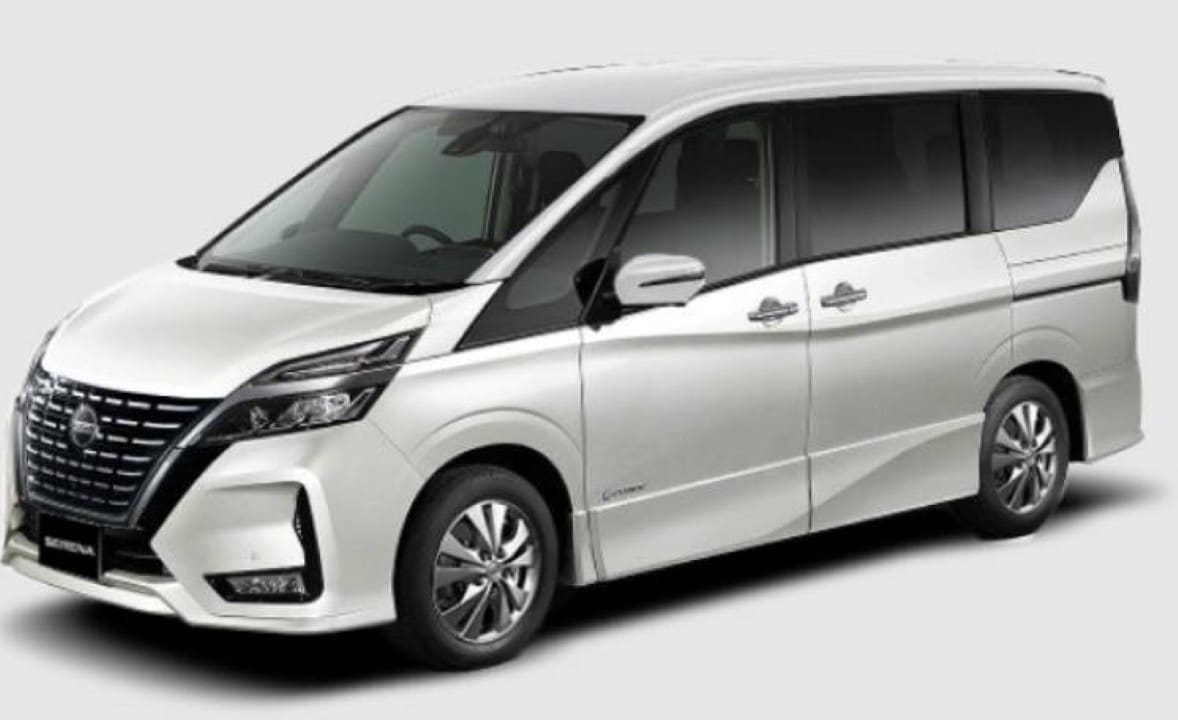
With prices ranging from 2,785,200 yen and can reach almost 5 million yen in top-of-the-line versions, the Serena maintains an aggressive competitive range. Immediate availability and optimized delivery times have been decisive factors for many buyers, who often face long queues when opting for vehicles from rival brands. Essa logistical agility, combined with technological innovations, strengthened the brand’s image among the public looking to renew their family fleet at the beginning of the year.
Aesthetic evolution and visual identity
The visual renewal is one of the highlights of the 2026 model, with emphasis on the reinterpretation of the front grille in the Highway Star V and Luxion versions. The Nissan abandoned traditional symmetry in favor of a bold, asymmetrical design, which gives the vehicle a more dynamic and modern presence on the streets. Essa change in design language seeks to differentiate the Serena in a market saturated with options with conservative visuals, attracting an audience that values aesthetics combined with functionality.
The optical package also received special attention, with the introduction of new LED headlights that harmoniously integrate with the new grille. The front bumper has been redesigned to convey a feeling of greater width and stability, while the sides retain the electric sliding doors, essential for accessibility in tight urban spaces. The overall dimensions of the vehicle were preserved to guarantee maneuverability, with the total length remaining at around 4.7 meters, ideal for Japanese garages.
Hybrid performance and e-POWER technology
Under the hood, the Nissan has refined its acclaimed e-POWER technology, now in its second generation. The system uses a 1.4-liter gasoline engine exclusively as a power generator, while traction is provided entirely by electric motors. Esta configuration delivers a maximum power of 163 horsepower and an instantaneous torque of 315 Nm, providing smooth and linear acceleration, characteristic of electric vehicles, but without range anxiety, as refueling is done with conventional fuel.
Stability and driving comfort have been improved with the inclusion of the e-4ORCE system in all-wheel drive versions. Esta technology controls braking force and torque distribution to the four wheels independently, minimizing body roll and reducing the feeling of motion sickness for passengers, something common on long journeys in a minivan. The 1,769 kWh lithium-ion battery ensures that the combustion engine operates silently and efficiently, only activating when necessary for recharging.
Advanced connectivity and security
The interior of the new Serena is designed to function as an extension of a family’s living room, incorporating the NissanConnect system with native Google service integration. Isso allows drivers to use real-time navigation and voice assistants with the same familiarity as their smartphones. Safety is reinforced by the 360-degree camera system, which uses high-resolution lenses to facilitate maneuvers and detect obstacles around the vehicle.
In addition to entertainment, the technology package includes ProPilot 2.0 in the most sophisticated versions, allowing semi-autonomous driving on highways under certain conditions. The vehicle also offers vital features such as automatic emergency braking, lane keeping assist and lane change alerts. With flexible configurations for seven or eight passengers, the minivan reaffirms its commitment to versatility, consolidating itself as one of the most complete and safe options for family transport in the current Japanese school and fiscal year.



